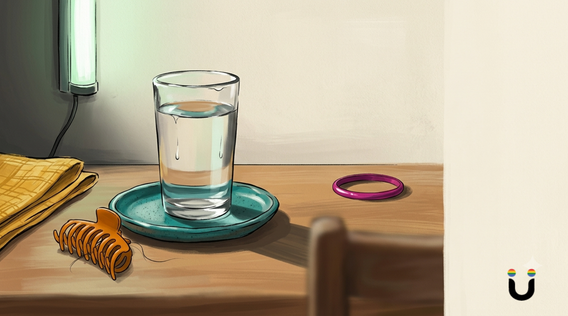
The headache arrives at about four in the afternoon, most days, behind the right eye. The shoulders have been up near the ears since the 9am standup. There's a tightness under the ribs that a gastroenterologist in Bandra has already told you is nothing, and a jaw your dentist mentioned, in passing, looks like it's been clenching at night. None of these has a diagnosis. All of them have a schedule, and the schedule matches the thinking.
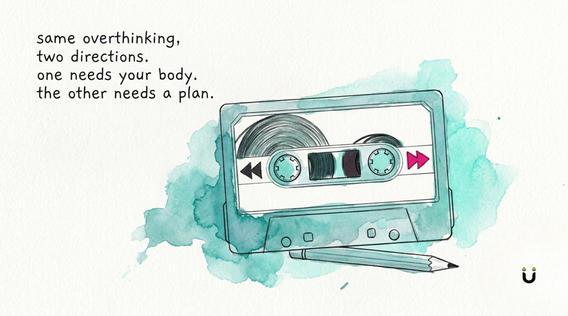
Overthinking reaches the body because the mind can't rehearse a threat without the body preparing for it. Every replayed argument and imagined disaster keeps the stress response switched on, so the muscles stay tense, the breathing stays shallow, and the gut slows down. Over months this surfaces as headaches, jaw pain, broken sleep and stomach trouble with no physical cause anyone can find.
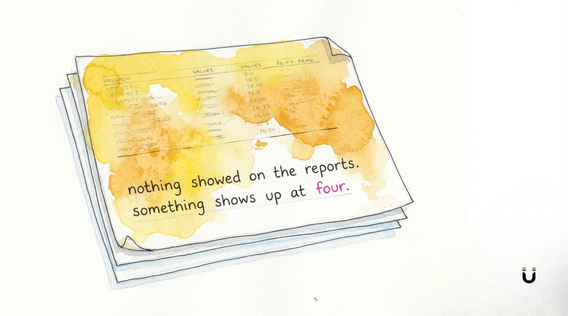
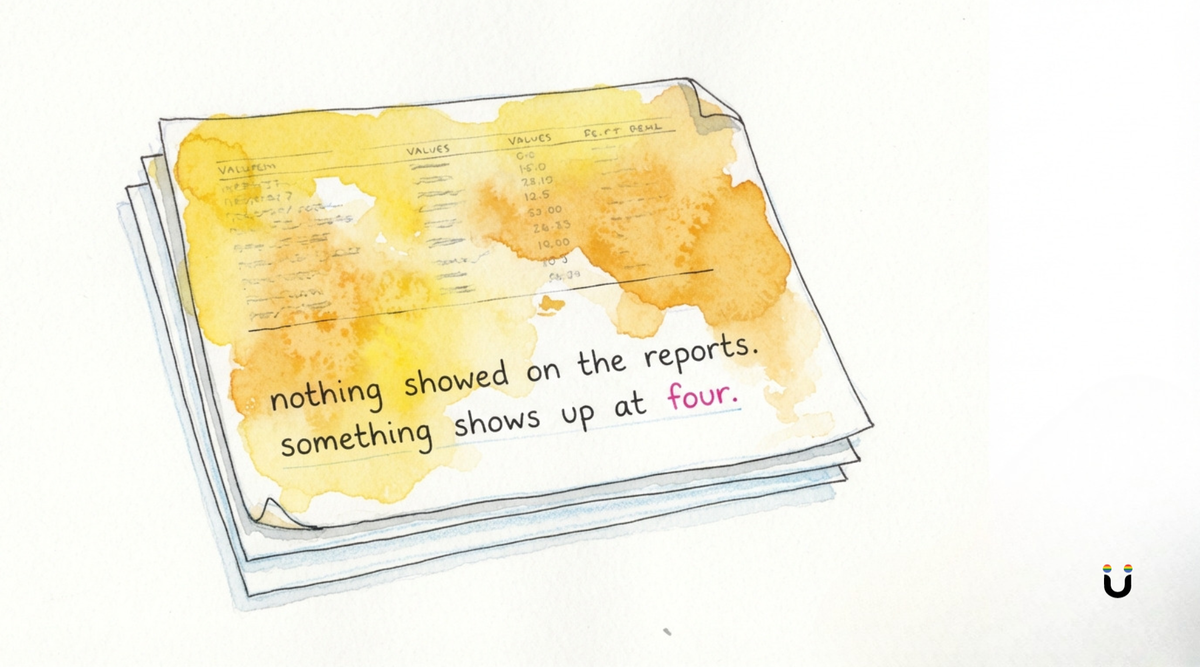
In our practice, this is the most common route by which someone who "doesn't have anxiety" ends up in the room. They've been to two doctors, sometimes five. The reports are clean. The body is not.
Why does overthinking show up in the body at all?
Because the body can't tell the difference between a threat and a thought about a threat.
When you replay the meeting where your manager went quiet, the same system that would ready you to run from an actual danger readies you again, a little, for the imagined one. The psychologists Jos Brosschot, William Gerin and Julian Thayer gave this a name in a 2006 review in the Journal of Psychosomatic Research: perseverative cognition. Their argument was that stress research had fixed its attention on what the body does during a stressful event and missed what it does before and after, while the person is still turning it over. Worry and rumination, they proposed, stretch the stress response far past the stressor itself. The event lasts ten minutes. The thinking lasts three days. The body pays for three days.
This is the mechanism under most of what people describe to us. The tension headache is a muscle group held ready for a fight that never comes. The stomach trouble is digestion slowed because the body has decided, working off the mind's information, that now is not a good time to eat. The exhaustion is the bill for being braced eight hours a day without ever once having acted on it.
What does overthinking feel like physically?
Different in different people, which is one of the reasons it goes unrecognised.
The most common presentations we see in Indian adults: a tension headache that turns up in the afternoon and eases by evening, jaw clenching that shows up as tooth wear before it ever shows up as pain, tightness across the shoulders and upper back, a heaviness or churn in the stomach that no pattern of eating explains, shallow chest breathing the person only notices when you ask them to breathe fully, and a particular tiredness that sleep doesn't touch. Some people get palpitations. Some get the sensation of a lump in the throat. Some get none of it and simply feel, in their own word, heavy.
The tell is timing. Physical symptoms with a physical cause don't usually care what day it is. Symptoms driven by overthinking do. They're worse before the appraisal and after the family call, worse on Sunday night, better on the first morning of a holiday. If your body keeps a calendar, the calendar is the diagnosis.
The event lasts ten minutes. The thinking lasts three days. The body pays for three days.
Why do Indians end up at a physician instead of a psychologist?
Because the body is allowed to be unwell and the mind is not.
In most Indian families a headache gets you a glass of water and a lie-down. Anxiety gets you a question about what you've got to be anxious about. So the distress travels where it's permitted to travel, and where it's permitted to travel is into the body. It's the family's own language, being used correctly.
The National Mental Health Survey of India, run by NIMHANS across 12 states in 2015 and 2016, noted that neurotic and stress-related disorders turn up commonly in primary care, where they're usually missed or misdiagnosed, and reported a treatment gap of 83.2 percent for this group. That's the clinical version of what we watch happen: the person has been seen, repeatedly, by someone in a white coat. Nobody has asked them what they were thinking about.
There's loneliness to this route. You've got proof you're unwell, in the form of pain, and proof you're not, in the form of the reports. Both are true. Holding both at once is exhausting, and the exhaustion feeds the loop. We wrote about the loop that keeps the body braced when nothing bad is happening in why your body shuts down when nothing bad is happening, and the piece on what the body keeps score of covers the longer arc.
Can overthinking actually make you ill?
The honest answer is that it can keep you unwell, and the research on whether it causes disease outright is still being argued over.
Brosschot and colleagues reviewed studies linking perseverative cognition to prolonged cardiovascular and immune activation, and to somatic complaints like headache and fatigue. But a good deal of that evidence came from questionnaires rather than measured bodies, and later work from the same Leiden group said as much, plainly. We'd rather tell you only what we can stand behind: the loop holds the body in a state it was built to leave quickly, and bodies held in that state hurt. Whether it shortens a life, we don't know. That it makes a year worse, we're sure of.
The complication we won't smooth over is that knowing all this does not release the jaw. Understanding the mechanism brings relief for about a day, and then the headache comes back at four, and now you feel foolish for still having it when you know exactly why. That layer, the frustration at a body that won't listen to a mind that finally understands, is itself a kind of overthinking. The body was never going to respond to an explanation. It responds to being treated as a body.
What does treating it as a body look like?
Working from the outside in, because the inside route is blocked.
The loop lives in words, and the body doesn't read. So the first interventions are physical, and frankly unimpressive: lengthening the exhale until it runs longer than the inhale, which is the fastest way to tell the nervous system the threat has passed; unclenching the jaw on purpose several times a day, since it won't do it by itself; walking after the family call instead of sitting down with it; something with the hands and the senses when the churn starts up. Dots To Ground You and the Ground Breaking cards were built for this layer, and the 4 7 8 breathing technique is the one we teach first, because it needs nothing at all.
Then, once the body has been persuaded that it is safe enough to listen, the thinking. Most of what looks like overthinking is unfinished feeling, and the body has been holding the feeling the mind would not. A psychologist is usually the first person to ask the four o'clock headache what it is about. The headache, it turns out, has been waiting to be asked.
We'd love to promise you the headache leaves the moment the feeling is finished. Some do. Some grow quieter and stay, a small weather system that tells you, before your mind does, that something in the week is unresolved. That's a body that has learned to speak first, and a person who has finally learned to listen when it does.
What else do people ask about overthinking and the body?
Can overthinking cause headaches?
Yes. Tension headaches are one of the commonest physical signs of persistent worry or rumination, because repetitive anxious thought keeps the muscles of the scalp, jaw and neck braced. The tell is timing: overthinking headaches follow the calendar of stress, arriving before appraisals and easing on holiday.
What are the physical symptoms of overthinking?
Tension headaches, jaw clenching, tight shoulders, stomach churn or slowed digestion, shallow breathing, palpitations, a lump in the throat, and a tiredness sleep doesn't fix. Brosschot, Gerin and Thayer's 2006 review linked worry and rumination to prolonged physiological stress activation both before and after stressful events.
Why do my medical tests come back normal?
Because the stress response isn't a disease; it's a healthy system left running too long. Tests look for damage. Overthinking produces sustained activation, which hurts without ever showing up on a scan. The NMHS notes that stress-related disorders are commonly missed or misdiagnosed in Indian primary care.
How do I calm my body when I am overthinking?
Work from the outside in. Lengthen the exhale, unclench the jaw deliberately, move after a stressful call, use something tactile and sensory. The body doesn't respond to explanations. Once it settles, turn to the thinking, ideally with a psychologist who can ask what the symptoms have been holding.
Sources
Brosschot JF, Gerin W, Thayer JF. The perseverative cognition hypothesis: a review of worry, prolonged stress related physiological activation, and health. Journal of Psychosomatic Research, 2006, 60(2), 113 to 124. Narrative review; a later Leiden thesis from the same group (Verkuil, 2010) notes that the 2006 review relied largely on trait questionnaires. PubMed record
Gururaj G, Varghese M, Benegal V et al. National Mental Health Survey of India, 2015 to 16: Summary. NIMHANS Publication No. 128, 2016. Neurotic and stress related disorders commonly missed or misdiagnosed in primary care (p. 21); treatment gap 83.2 percent (Figure 20). Full summary report (PDF)