Is This Anxiety or a Heart Attack? How to Tell the Difference
Image Source: AI Generated
Any time I got nervous, my chest would tighten, like something heavy had been set down on it. My heartbeat would go loud. So loud I could feel it everywhere in my body. With it came a restlessness I couldn't sit still inside of.
For a long time, I thought I might have a heart condition. I went to the doctor about it twice. Both times the tests came back clean. Nothing was wrong with my heart.
My body knew before I did.
Years later, as a therapist, I've sat across from many people describing the same thing. Tight chest, racing heart, shortness of breath, tingling, dizziness, the terrifying sense that something is seriously wrong. A lot of them are convinced they're having a heart attack. And often, after a round of consultations and scans and tests, they hear the same sentence I did: everything looks normal.
Only later do they learn the word for what they were feeling. Anxiety.
Why Didn't Anyone Teach Us This?
In a lot of Indian households, nobody teaches you how to handle your emotions, because nobody had taught them either. Call it an inheritance rather than a failing. The generations before us lived through things that were genuinely devastating: Partition, poverty, displacement, the work of rebuilding entire lives from nothing. When you're surviving at that scale, you don't get to stop and ask how does this make me feel? You put your head down. You keep going. You protect the people you love by refusing to become a burden to them.
That way of coping worked. It got people through. So it got passed down without anyone ever teaching it directly. It was simply the air in the room, the thing you watched the adults model every single day.
Somewhere in the handing down, though, survival strategies hardened into personality ideals. The father who never spoke about his stress became the strong one. The mother who held everything together without complaint became so resilient. The child who buried his anxiety and still topped his exams became so mature for his age. Endurance stopped being something people did when they had no choice and became something people were expected to be. A standard. A virtue.
And virtues come with shame attached to falling short of them. Crying was weak. Asking for help was making a fuss. Naming a feeling was thinking too much, or being too sensitive, or worse, ungrateful when others clearly had it harder. These weren't things said once and forgotten. They lived in the everyday language of the house, in what got praised and what got waved away and what got treated as though it didn't exist at all.
So the feelings didn't leave. They just stopped being spoken. And for a lot of people, what couldn't find words eventually found the body.
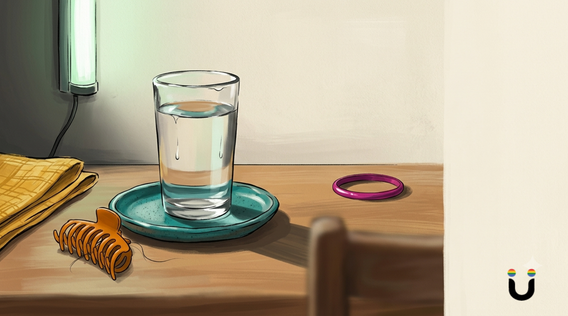
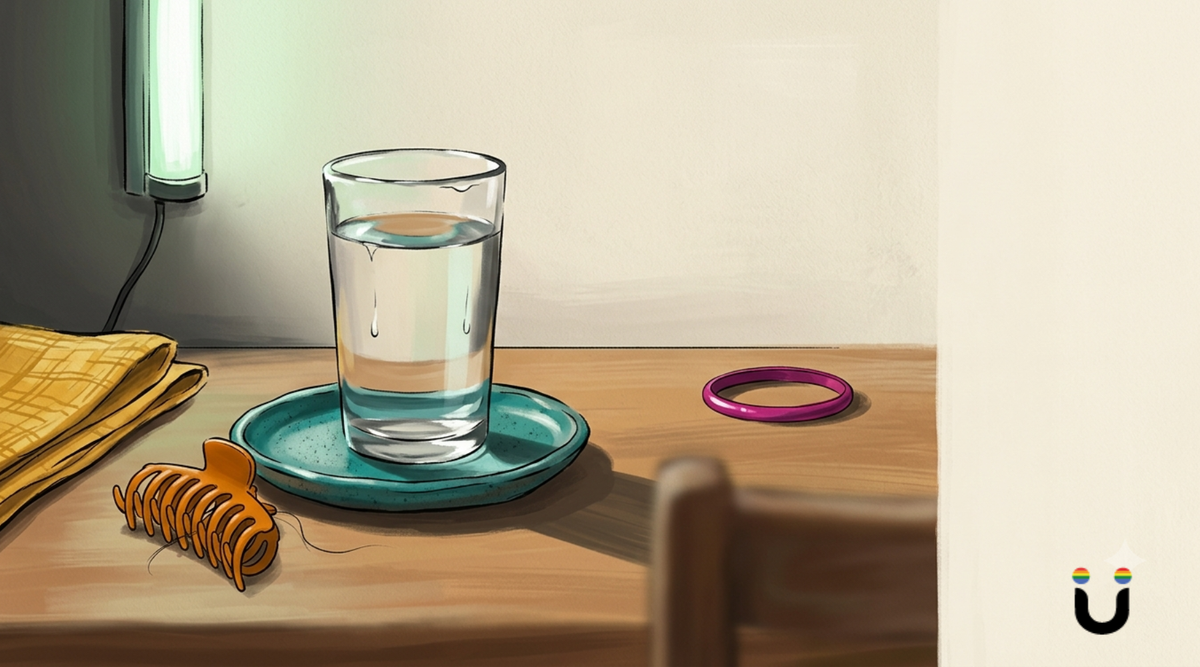
I think of a teenager I worked with, or rather the grown man he'd become by the time he sat across from me. Before his board exams, he told his mother his chest felt tight. She handed him a glass of water. Sab theek ho jayega. Don't think so much. She meant it with love. She wanted to soothe him, not silence him. But what he took from the moment was that whatever his body was doing wasn't worth discussing, that the correct answer to distress was reassurance and a change of subject. Twenty years on, he was describing the same tightness to me and had never once linked it to anything he felt. He'd simply learned, like so many of us, to keep moving.
Families say what they say because they want relief for someone they love and have no other tools to offer. You can only give what you were given.
But you can't correct anxiety with the right attitude. Weakness and ingratitude have nothing to do with it. What you're dealing with is a nervous system that learned, somewhere far back, that it isn't safe to rest, and it learned that long before you were old enough to argue with it. You can't talk a nervous system out of its own history. The body doesn't take instructions. It takes experience.
Why It Looks Different In Men And Women
How anxiety gets expressed, and hidden, is often shaped by what you were allowed to feel growing up.
For a lot of men, anger became one of the few acceptable negative emotions. Fear, vulnerability, and overwhelm got tucked underneath irritability, withdrawal, or silence. A man who snaps at his family every evening may have no idea he's been carrying anxiety all day. He knows something feels off. He calls it stress, never fear. And because his distress reads as frustration rather than panic, nobody, himself included, thinks to name it anxiety.
For a lot of women, even anger could get labelled too much or too emotional. So distress found quieter outlets: overthinking, people-pleasing, rumination, the low hum of worry that never fully switches off. A woman lying awake at 2am running through worst-case scenarios may have been told her whole life that her feelings were an overreaction. She believed it. The anxiety stayed and simply went underground, surfacing as exhaustion, gastric trouble, or the constant sense of bracing for something she can't name.
Either way, the body eventually speaks, through a tight chest or headaches or broken sleep, long after the mind has learned to keep quiet.
Is This Worry, Or Something Older?
We use worry, stress, and anxiety interchangeably, and lose sight of how differently they sit in the body. Worry usually has something attached to it, a thought you can name, a situation you can point at. What if I don't do well? What if this goes badly? You know what you're worried about, and when the situation resolves, the worry tends to ease with it.
Anxiety can work differently. It often shows up in the body before the mind catches up, the nervous system already on alert, heart going, chest tight, before a clear thought has formed. And it doesn't always need a reason. It can linger when everything is objectively fine, because it isn't reacting to your situation. It's reacting to a pattern learned long ago.
That's what makes it so disorienting. It can arrive with no crisis at work and no fight at home, just a tight chest every morning and a dread you can't name, sending you hunting for a reason you're never going to find. The nervous system decided long ago that staying alert was how you stayed safe.
What's Happening In Your Body?
When the brain registers a threat, real or imagined, physical or emotional, it fires the fight-or-flight response. The amygdala flags danger. Adrenaline floods in. Heart rate climbs, breathing goes shallow, muscles tense.
The catch is that the nervous system can't always tell a tiger from an emotional threat. And the emotional threats pile up quietly: conflict at home that never gets spoken about, disappointing parents after years of trying not to, a fear of failure that feels like a verdict on your worth. To the body, all of it still reads as danger.
So the tight chest is often muscle tension around the ribcage. The pounding heart is your cardiovascular system gearing up to run. The dizziness can come from a shift in your breathing. None of it is imaginary. The symptoms are real. What gets misread is the source, which sits in the nervous system rather than the heart.
Many Indian families built a far stronger vocabulary for physical symptoms than emotional ones. It's easier to say my chest feels tight than to say I feel overwhelmed. So people reach a cardiologist long before they consider a therapist. Rohan, 34, had been to three of them in two years. Every test came back normal. His wife thought he was being dramatic; his father told him to exercise more. He came to me as a last resort. In our third session he mentioned, almost in passing, that he'd been the sole financial support for his parents since he was 26, had never told anyone how exhausting it was, and hadn't taken a day off in four years. His body had been screaming what his mouth was never allowed to say.
A necessary word of caution: chest pain, breathing trouble, dizziness, or palpitations should always be medically evaluated first, and anxiety should never be self-diagnosed before physical causes are ruled out. But when the tests keep coming back normal, it may be worth asking a different question. Could my body be carrying a stress I haven't yet found the words for?
What To Do In The Moment
When the chest is tight and the heart is racing, thinking clearly is close to impossible. The body is usually the easier place to start.
One of the better-evidenced ways to calm acute anxiety is extended-exhale breathing. A longer exhale activates the parasympathetic nervous system, the part that slows everything down and signals that you're safe.
Sit or lie down somewhere comfortable and rest one hand on your belly. Breathe in slowly through your nose for a count of 4, letting your belly rise rather than your chest. If your chest is doing most of the moving, the breath is too shallow. Pause a moment at the top without clenching, then breathe out slowly through your mouth for a count of 6 to 8, as though you're exhaling through a straw or fogging up a mirror. Let the out-breath feel long and soft, almost a sigh. Notice the small stillness after the exhale, before the next breath starts. That pause is your nervous system easing off. Repeat for 4 or 5 cycles. Somewhere in the first two or three, your heart rate often begins to settle.
This won't cure anything. But it can interrupt the physical panic long enough for your mind to find its footing, and that footing is where the real work becomes possible.
A Note From Me
I don't say this often in a professional setting, but I know all of this from the inside.
For me, anxiety wore the costume of control. Always on guard, always scanning the room, always making sure everything sat where it should. I'd learned somewhere that if I didn't take charge of the moment, the people, the environment, it would all come apart. What I couldn't see for years was that the holding-together was itself what kept taking me apart on the inside.
From the outside I was functioning. Chores done, work handled, fine by most measures. But the moment some small, easily solved disruption arrived, I'd tip into panic, heart racing, eyes filling, the whole world apparently collapsing over nothing. The exhausting part was that I knew. I knew it wasn't helping, knew I needed to see it differently. So I tried everything: breathing, grounding, exercise routines. Each worked for a moment, then the anxiety came back, still eating at my relationships and my sense of who I was.
That's when I went to therapy. I hadn't collapsed. I'd just run out of things to try on my own.
Therapy didn't hand me another technique. It gave me a relationship with anxiety. Instead of escaping the feeling, I learned to stay with it, to ask what it was trying to tell me, to name what I felt and why, to accept parts of myself I'd spent years trying to fix or hide. That acceptance, more than any strategy, is what let me grow.
I still get anxious. But it's closer to worry now, the kind with a name and a reason, and it rarely reaches the point where my body takes the wheel. The racing heart and the sense of everything collapsing have quieted. The anxiety didn't vanish. I stopped running from it.
Which is why I don't think therapy is a last resort, or something only for people who can't cope. It's for anyone tired of coping alone, anyone who deserves to understand themselves more deeply than a breathing exercise can reach.
If any of this resonated with you, we'd love to hear from you. You can reach us at The Thought Co.
A Gentle Next Step
If this article felt familiar, you're not alone. Understanding anxiety is one thing. Learning to respond to it differently is another.
Our Ground Breaking Mindfulness Cards were created to help you slow down, reconnect with yourself, and build small moments of calm into everyday life. They're designed by therapists to support emotional awareness, reflection, and mindful living—one card at a time.