
"Who am I?"
This is one of the most difficult questions I've ever had to sit with. And truthfully, it's a question I still don't always have the answer to.
In psychology, "who am I?" is a question about identity and self concept: the picture you hold of yourself, and how stable that picture feels. It usually goes blank after a big shift, a move, a breakup, a new job, because the old picture no longer fits and the new one has not formed yet. The blankness is not a failure. It is the gap between the two.
A few weeks ago, I participated in a training where I was given an activity: write "the truth about myself." The moment I read that prompt, I froze. My mind went blank, almost like the first day of school when you're asked to stand up and introduce yourself. You know you should say something, but you're unsure what matters most or where to begin.
So I started with the basics. My name, my age, and what I do for work. The factual, surface level things. But when it came to writing about myself more intensely, I felt like I'd walked into scary territory. On one hand, it meant coming face to face with parts of myself I usually kept hidden. On the other hand, it made me wonder if I even wanted others to see those parts. Writing about myself felt incredibly vulnerable at first. As I continued writing, it also felt liberating.
When it was my turn to share with the group, I remember feeling very nervous, clutching my paper with sweaty palms. There were a few things I'd written that I couldn't bring myself to say out loud. Even though I was surrounded by people I trusted, the fear of being fully seen felt overwhelming.
Why Was That Exercise So Hard?
Now, sitting here writing this, I realize why that exercise was so difficult. I was going through a lot of changes at the time. A new job, a new home environment, and new responsibilities. So much of my life felt unfamiliar. And while I wasn't unhappy with how things were turning out, I often found myself asking: Is this who I really am? Is this what I want? Or have I become someone I never intended to be?
Some parts of me feel like they're growing beautifully, and I'm proud of them. But there are also parts that leave me confused, even angry at times. Wondering if this is really the direction I wanted my life, or my values, to take.
When that confusion tips into something heavier, a flatness or sadness that just doesn't lift, that's often where depression therapy in Mumbai can help you make sense of what's underneath it.
And I know I'm not alone in this. Many of my clients bring the same struggle into the therapy room. They sit across from me and ask, "I don't know who I am anymore. How do I even figure that out?" And every time I hear it, I think about how deeply human that question is. If you are asking it from Mumbai, with a therapist here or without one yet, you are in a very large room.
Often, this question shows up after a big life shift. A breakup, a move, a new job, a painful experience that shakes us. Or sometimes it's quieter. We meet friends from school and suddenly realize we don't recognize who we've become anymore.
What Makes It So Hard to See Ourselves?
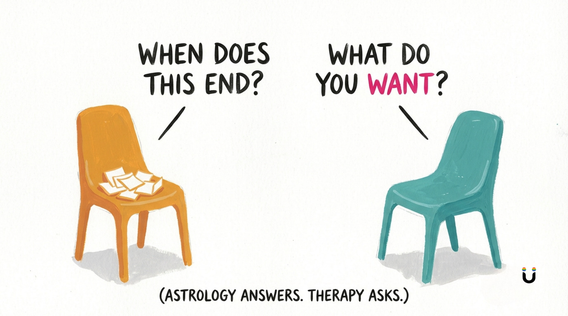
What makes it harder is how quickly we are to judge ourselves. Instead of simply noticing who we are in those moments, we criticize. Why am I like this? Shouldn't I be better? That judgment makes it even scarier to face ourselves. We have written before about why self compassion is harder than it sounds, and this is where it tends to fail first.
But what if, instead of judgment, we approached ourselves with curiosity? What if we asked: Where am I coming from? What is shaping me right now? Where do I want to go? It becomes so much easier then to accept ourselves and the experiences that are shaping us.
The truth is, the definition of "who I am" isn't constant. It shifts with the stages of life we move through, the roles we take on, the experiences that stretch us, the beliefs we carry. Sometimes it feels like I've finally figured myself out, only for life to throw something new at me that shakes everything I thought I knew. And that's hard because it means I have to revisit parts of myself I don't always like or even want to accept.
How Do We Discover Who We Are?
One of the most comforting things my therapist once told me is that we discover ourselves through our experiences and interactions with others. It's not always about sitting in isolation searching for some ultimate answer. Sometimes it's about noticing the choices we make when we're in a relationship with the world.
For example, I had a friend who, despite going through incredibly difficult times, still chose kindness again and again. Watching her made me want to bring that same kindness into my own life. And in doing so, I discovered something about myself. That I, too, wanted to live by that value.
The real invitation isn't to finally nail down one fixed answer to "Who am I?" It is to find some comfort in the discomfort of not fully knowing. To keep an open and accepting mind as we grow, stumble, and rediscover ourselves in new ways.
What Questions Help You Answer "Who Am I?"
If you've been wondering about your own answer, here are some questions you might sit with:
- What are the parts of me that I feel proud of right now?
- What are the parts of me that I find hard to accept?
- When was the last time I felt most like myself? What was I doing, and who was I with?
- How have my recent experiences or relationships shaped the way I see myself?
- If I removed judgment for a moment, what would I notice about myself with curiosity?
You might not find a clear, definite answer right away. And that's okay. What matters is simply beginning to ask the questions with a curious lens. If you would rather do that on paper than in your head, the Explore journal was built around exactly these prompts, and the Adulting journal is for the version of this question that shows up in your twenties, when every role is new at once.
Sometimes these questions are easier to sit with when you're not sitting with them alone. If you'd like a steadier space to explore who you are becoming, you can begin therapy with our team. And if you are not sure you even need that, that uncertainty is more common than you'd think.