Image Source: AI Generated
Picture Ananya, 29, in brand marketing in Bombay. She matched with someone on Hinge who texted her at 1am, told her she was different from everyone else, and then went silent for four days. She has spent those four days reading and rereading the last message, deciding what she said wrong. On the same app there is a second man. He replies within the hour, asks real questions, suggested a Sunday coffee at a fixed time and place. She cannot explain why, but she has nothing to say to him.
The signs of anxious attachment include a constant need for reassurance, reading silence as rejection, difficulty being alone, and a pull toward people who stay just out of reach. In Indian relationships this often shows up as chasing emotionally unavailable men, while a steady, available partner feels strangely flat and easy to overlook.
If you recognised yourself somewhere in that first paragraph, you are in very ordinary company. Insecure attachment is neither rare nor shameful. It is one of the most common ways human beings learn to love, and in India it now plays out most visibly on the apps, one match at a time. Whatever this is, it is not a private defect. It is closer to the water most of us learned to swim in.
What does anxious attachment actually look like?
Anxious attachment is a way of relating in which closeness feels necessary and also perpetually at risk. You want the other person near, and some part of you never quite believes they will stay. Psychologists call it a hyperactivating strategy: when the connection feels threatened, your system turns the volume up rather than down, reaching for contact and reassurance.
On the ground it looks like specific, recognisable things. Checking whether the message was read, then when it was read, then why the reply has not come. Drafting and deleting. Feeling settled the moment they respond warmly and unsettled the moment they go cool. Saying yes when you mean no because a no might cost you the relationship. Losing your appetite over an unresolved argument. Needing the other person to be okay with you before you can be okay yourself.
The word people reach for is needy. It is worth slowing down on that word. Need is not the problem. Everyone needs closeness, reassurance, the sense that they matter to someone. What anxious attachment does is make the need feel dangerous to have, so it comes out sideways, too big or too apologetic, and rarely as the plain sentence underneath: I would like to know you are still here.
Why are you drawn to emotionally unavailable men?
Because unavailability produces the exact emotional weather your system learned to read as love. If early closeness came and went without warning, a nervous system adapts by staying alert, and it comes to associate that alertness with attachment itself. A partner who is warm one day and gone the next keeps you in that familiar state of watching. Your body reads the watching as intensity. Intensity gets mislabelled as connection.
There is a plainer mechanism underneath the psychology. Unpredictable reward is the most habit forming kind. When affection arrives on no schedule, the not knowing keeps you pressing for more, the way a slot machine holds a player better than a vending machine ever could. The steady man who replies on time is a vending machine. You know what you will get, so the pull fades. This is not a sign he is wrong for you. It is a sign your system has confused suspense with desire.
The dull feeling around a kind, consistent person is not the absence of chemistry. It is the absence of anxiety, and you have not yet learned to tell the two apart.
This is the anxious and avoidant pairing that therapists watch form again and again. The one who chases finds the one who withdraws, and each confirms the other's oldest expectation. We wrote more about that specific pull in the real reason you keep choosing people who do not choose you. If the pattern in this piece sounds like your last three situationships, that one goes deeper into why.
What does anxious attachment look like on Hinge?
A dating app is a machine for manufacturing exactly the uncertainty an anxious system is primed to chase. The match that goes quiet, the read receipt with no reply, the person who is warm over text and vague about meeting. Each of these is a small hit of the old not knowing. For someone anxiously attached, the app is not neutral. It is a slot machine that also holds your self worth.
The Indian version has its own particular shape. Urban Indian singles are, by most industry accounts, among the most open to online dating anywhere in the world, and yet the pools stay lopsided. By most estimates women make up only ten to fifteen percent of users on mainstream Indian dating apps. When you are one of a small number of women in a heavily male pool, the attention arrives in floods and then vanishes, which is intermittent reward built into the structure of the thing. The app did not invent your pattern. It found it and fed it.
Hinge sits closest to the marriage question of the mainstream apps, the one you are meant to delete once you have found someone. Shaurya Gahlawat, a psychologist and couples therapist quoted in Forbes India, described how an endless supply of profiles can leave clients convinced someone better is one swipe away, until dating stops being connection and becomes a measure of self worth. For an anxious swiper that measurement runs all day. She is looking for reassurance she is wanted, and auditioning each match against a clock she did not set.
How does family expectation feed the pattern?
This is where the Indian context stops being background and becomes the engine. In many Indian families, being single past a certain age is treated as a problem to be solved rather than a life to be lived. The questions start gently and do not stay gentle. Beta, what is the plan. Log kya kahenge. A cousin younger than you is already engaged. The pressure is rarely cruel. It is usually love, delivered in the only language the family has, which is the language of settling down. This involvement is not only anecdotal. Aisle's Commitment Decade report, cited in Forbes India, found that the people shaping how young Indians date now reach beyond friends to include siblings and parents.
For an anxiously attached woman, that pressure lands on an already sensitised system. The fear of being left, which is the core of anxious attachment, meets the fear of being the one who did not marry, which is the core of a certain kind of Indian daughterhood. The two fears fuse. Now a man going quiet is not only a personal rejection. It is a referendum on whether you will be chosen at all, with an audience of relatives watching. No wonder you press harder. The stakes have been inflated by everyone at the dinner table.
There is a cruel efficiency to how this works. The family pressure to couple up quickly makes the unavailable man more tempting, not less, because the anxious system reads his intermittent attention as high value and the clock makes any attention feel like a lifeline. Meanwhile the steady, available man, the one a securely attached person would recognise as a relief, gets dismissed for the crime of not making you anxious. The very thing that would help feels like nothing at all.
Will a secure partner really feel boring?
Honestly, at first, yes. This is the part most articles skip because it does not comfort. When you are used to the spike and crash of an unavailable partner, a calm and consistent one can feel like flat soda. Your nervous system has been running on suspense for so long that steadiness reads as absence. You may find yourself inventing problems, testing him, or losing interest, not because he is wrong but because he is not activating the old alarm you had learned to call love.
So the work is not simply choose the secure one and be happy. If it were that easy, awareness alone would fix it, and it does not. The harder truth is that a securer relationship can feel, for a while, like withdrawal. You are asking your body to accept a kind of care it was never trained to trust. That is uncomfortable, and it is slow, and it does not resolve in the length of one good date. Some evenings the pull back toward the person who kept you guessing will be very strong. Sometimes you will give in. Recovery here loops. It does not run in a straight line.
So what actually helps?
What helps is not a cure. It is a set of places to put your attention while the pattern loosens, which it does, unevenly, over time. Think of these as starting points rather than a plan.
Name the activation as it happens. The next time your chest tightens because a message has gone unanswered, try saying to yourself, plainly, this is my attachment system, not evidence about my worth. Naming it does not stop the feeling. It puts a small gap between the feeling and the fourteen texts you were about to send.
Watch what you call boring. When a kind person leaves you cold, treat that as information about your nervous system, not a verdict on the person. You do not have to force attraction. You do have to notice that flat is not the same as wrong, and give steadiness longer than one meeting to register.
Get curious about the clock. A lot of anxious urgency in Indian dating belongs to the family, not to you. It can help to separate the two on paper, or in a journal, asking which fear is actually yours and which was handed to you at somebody's wedding. If putting it into words helps, TTC's journalling tools are one way to start.
And when the pattern is older than this year, when it has survived several relationships and a great deal of insight, that is usually the point at which it helps to have another person in the room. Attachment formed in relationship, and it tends to shift in relationship too. This is the honest case for working with a therapist, not to be fixed, but to practise a kind of steadiness with someone whose job is to stay. If you want the theory underneath all of this, our primer on attachment styles and relationships lays out where these patterns begin.
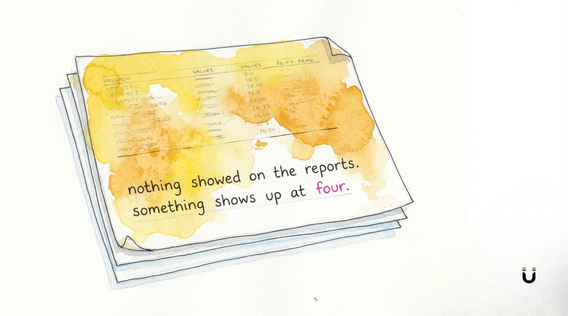
None of this ends with Ananya choosing the steady man and feeling instantly certain. More likely she notices, one evening, that she reached for her phone to check on the man who vanished, and this time she saw herself do it. She did not send the text. She sat with the four o'clock feeling instead of texting her way out of it. That is not a resolution. It is the first evening of a different pattern, and there will be many evenings after it that go the old way. The signs of anxious attachment do not disappear the day you can name them. They just stop being the only thing in the room.
Frequently asked questions
Is anxious attachment the same as being clingy?
No. Clinginess is one behaviour that can come out of anxious attachment, but the attachment style is the underlying pattern, a deep fear that closeness is unsafe and could vanish. The same fear can also look like people pleasing, testing a partner, or over analysing every message rather than obvious clinging.
Do anxious and avoidant people always attract each other?
Not always, though the pairing is common. The anxious partner seeks closeness and the avoidant partner needs distance, so each triggers the other's oldest expectation about love. The dynamic feels intense precisely because it recreates a familiar push and pull, which the anxious partner often mistakes for chemistry.
Can anxious attachment be healed inside an arranged or family arranged marriage?
Yes. Attachment patterns can shift inside any consistent, safe relationship, including an arranged one, because security is built through reliable responsiveness over time rather than through how the relationship began. A partner who stays steady and predictable can slowly teach an anxious nervous system that closeness is not a risk.
What causes anxious attachment in Indian families?
Inconsistent early caregiving is the main driver, where affection or attention arrived unpredictably. In many Indian households this can be shaped by joint family dynamics, caregivers stretched across many children, emotional needs treated as indulgence, and love expressed through provision rather than attunement, so a child learns that closeness must be earned and watched for.
This piece is for understanding, not diagnosis. If a pattern here is costing you sleep or self worth, that is reason enough to talk to someone.
Sources
Dating app demographics, user openness, family influence on young daters, and clinician commentary in India, 2025. Forbes India.
John Bowlby and Mary Ainsworth on attachment theory, and the hyperactivating strategy of anxious attachment as described in adult attachment research by Mikulincer and Shaver.