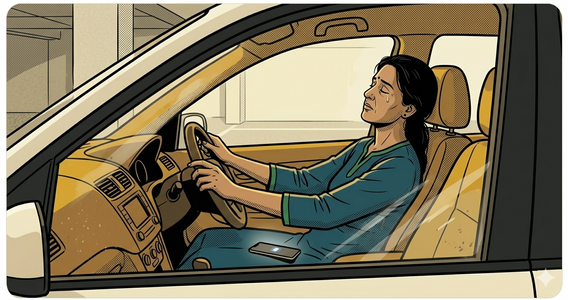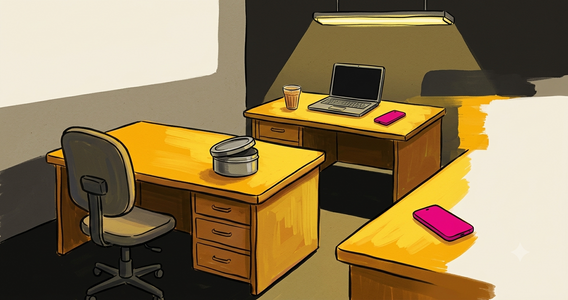
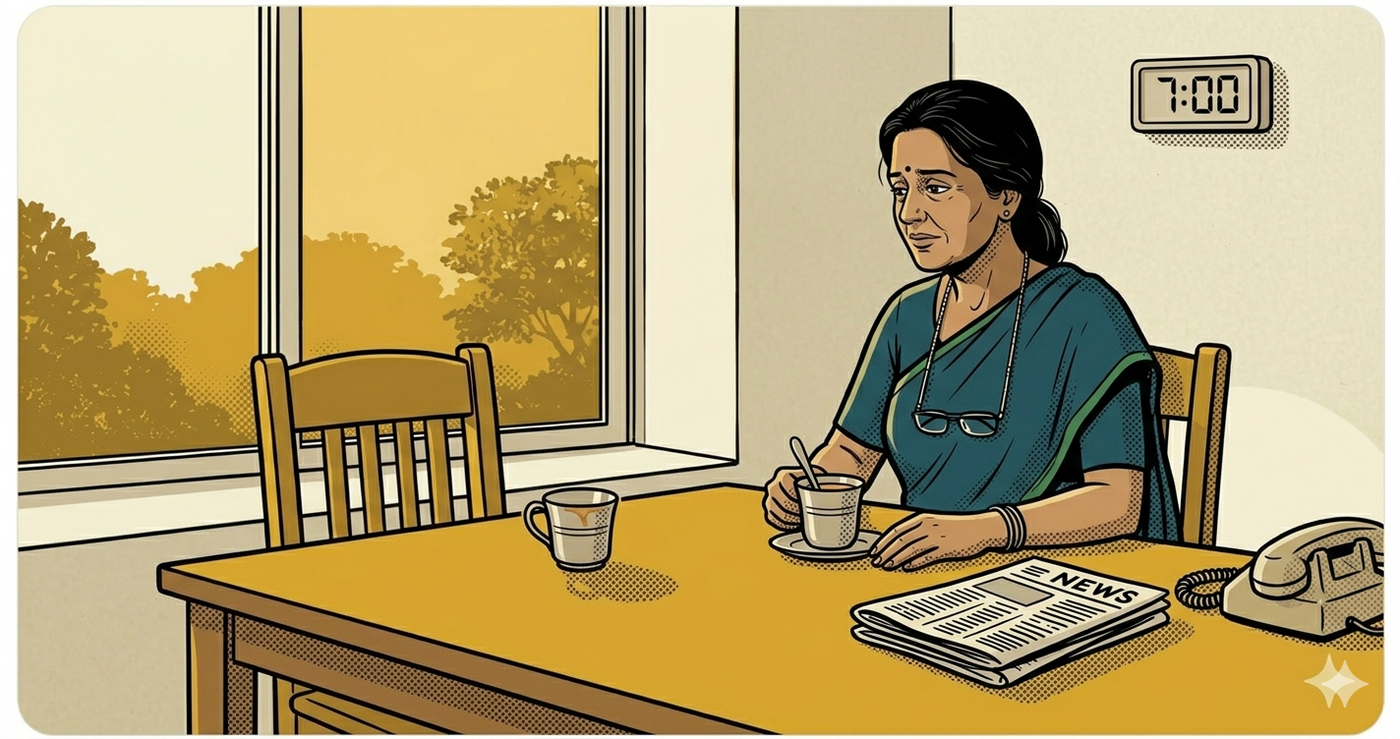
The loneliness after losing a spouse is not the loneliness anyone prepares you for. Nandita (name changed; shared with consent) came to see me about seven months after her husband died, and she did not want to talk about the death. She wanted to talk about 7 o'clock.
For thirty one years, 7 o'clock had a sound. The lift stopping on her floor. His keys. The word "chai?" said into the flat without him looking up from his shoes. Now 7 o'clock arrived and the flat stayed exactly the temperature it had been at 6. Her two daughters called every single day. Her sister had moved in for a month and reorganised the kitchen out of love. The building pressed food into her hands every evening. "Everybody keeps telling me I am not alone," she said, almost embarrassed to admit it. "I have never felt this alone in my whole life."
The flat was full of people. That was the part nobody could explain to her. She had never been surrounded by more love, and she had never felt more alone.
Why Does Losing a Spouse Feel Like Losing Several Things at Once?
Losing a spouse is rarely a single loss. You lose the person, and then you lose the daily structure that person held in place, and then you lose the version of yourself that only ever existed next to them. Grief literature calls these secondary losses, the ones that keep arriving in the months after the first one, long after the chairs have been returned to the neighbours.
The routine goes first. Who you made tea for. Who argued with you about the air conditioner. The whole shape of a Sunday, which was built around two people and now has to be invented from scratch by one. Nandita told me she had stopped knowing what time to eat dinner, because dinner had never been a meal. It had been a thing two people did together at a table.
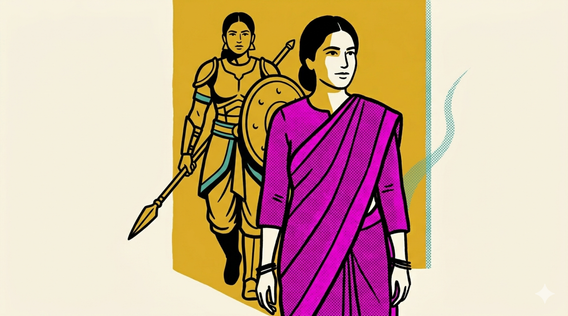
And then there is the part that surprises people most: the loss of a self. You were a wife. A husband. One half of a "we" that other people invited as a unit, addressed as a unit, pictured as a unit. When that we is gone, you are not only mourning a person. You are trying to work out who you are in a sentence that has only ever had two names in it.
Why Can't the People Around You Fix This Kind of Loneliness?
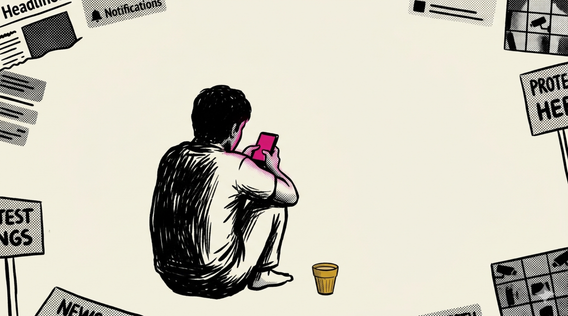
Because the loneliness after losing a spouse is emotional loneliness, not social loneliness, and the two do not respond to the same things. The sociologist Robert Weiss drew this line back in 1973. Social loneliness comes from having too few people around you. Emotional loneliness comes from the absence of one specific person you were attached to. A flat full of relatives answers the first kind completely. It cannot touch the second.
This is why "you have us" lands like a small stone. The people who love you are offering social connection to what is, underneath, an attachment wound. They are not wrong to offer it, and you are not wrong to feel unreached by it. Nandita had more people physically near her in those seven months than she had had in a decade. The one person she was actually missing was still not in the room.
Once you understand this, a lot of the guilt loosens. You are not ungrateful. You are not failing to appreciate your children. You are simply lonely in a place that company, however warm, was never built to reach.
What Happens When an Indian Family Tries to Absorb Your Grief?
An Indian family rarely leaves a grieving person alone, and that instinct, generous as it is, often becomes its own kind of weight. Someone moves in. Someone takes over the kitchen. Someone handles the bank and the paperwork and the locker, so efficiently that the bereaved person never learns to do any of it themselves. The intention is tenderness. The effect, sometimes, is a slow disappearing.
And there are the unspoken rules nobody writes down. The widow's place at the table that shifts. The wedding invitations that thin out, because you were invited as a pair and a single woman complicates the seating. The festivals, which become an ambush, because every festival you ever had was something the two of you did. If you want to understand why festivals can make loneliness heavier rather than lighter, this is a large part of it.
The remarriage conversation arrives differently depending on who you are. A widow is often quietly expected never to want it. A widower is often pushed toward it inside the year, as though a man cannot be trusted to feed himself or sit with his own sadness. The men I see after losing a wife are usually praised for "managing so well," which almost always means they have not cried anywhere anyone can see. Many of them had exactly one person in their entire life they ever truly talked to. She was the one who died. So the praise for their composure is, in a way, a description of how alone they actually are.
What If You Don't Actually Want to Move On?
Here is the part the coping articles skip. Sometimes you do not want to feel better, because feeling better feels like leaving them behind. The missing is the last thing the two of you still share. If the loneliness lifted completely, you find yourself wondering, what would be left of the thirty one years?
I do not rush my clients out of this. It is not denial, and it is not something to correct. It is love that has been left holding something with both hands and has nowhere to put it down. There are different kinds of loneliness, and it helps to know which kind you are actually carrying before anyone tells you how to fix it. The loneliness of widowhood is the most intimate kind there is, and the world's advice tends to be aimed at the least intimate kind.
So we sit in it for a while, longer than is comfortable, longer than the relatives would like. Because pretending the want to feel better is already there, when it is not, only adds a second loneliness on top of the first: the loneliness of performing recovery for an audience that needs you to be okay.
So What Does Carrying This Actually Look Like?
It looks less like getting over the loss and more like changing your relationship to it. Psychologists Dennis Klass, Phyllis Silverman and Steven Nickman called this continuing bonds: the finding that healthy grief does not sever your connection to the person who died, it reshapes it into something you can carry through the rest of your life. You do not graduate out of the relationship. You learn to hold it in a different form.
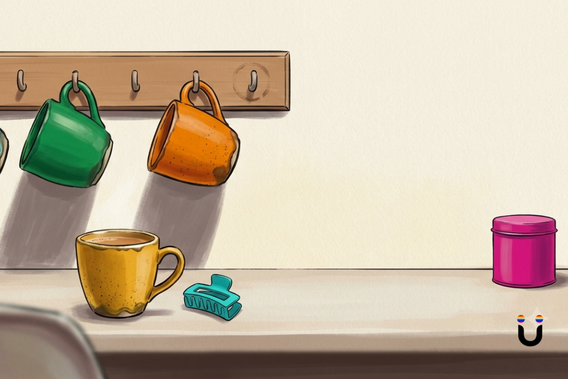
India, it turns out, already knows how to do this. The garlanded photograph in the hallway. The plate set aside at the shraddh. The habit of talking to them in the kitchen, out loud, while you cook the thing they liked. We never fully signed up to the imported idea of closure, the clean ending where you pack the love away and start again. That refusal, which can look like being stuck, is often a strength. Nandita started making chai for two and drinking both cups. Then, one ordinary Tuesday, she made one and was alright. Then she made two again the next day. She stopped tracking it as progress, which was, I think, the actual progress.
And if you are the daughter, the son, the friend, the most useful thing you can do is also the hardest. Do not fill the silence. Do not hurry them toward a new hobby or a holiday or a pet. Ask about him. Say his name out loud, which most people are too frightened to do. Let your grieving parent tell you the 7 o'clock story for the fortieth time without correcting a single detail. Your job was never to end the loneliness. It is to keep them company inside it, which is a thing only the living can do for each other.
Some evenings now, when the lift stops on her floor and it is only the neighbour, Nandita still listens for the keys. She has stopped apologising for it. That, far more than feeling better, is what healing turned out to look like for her: not the absence of the listening, but the end of the shame about it.
If the missing has started to flatten everything else, if the days have lost their edges or eating and sleeping have stopped feeling worth the effort, that is worth saying out loud to someone trained to hear it. You can talk to a TTC therapist about grief and loss. And if speech feels like too much right now, writing sometimes reaches what talking cannot. A journal can be a place to keep saying the things you would have said at 7 o'clock.
Frequently Asked Questions
How long does loneliness last after losing a spouse?
There is no fixed timeline, and the loneliness often deepens after the first few months rather than easing, because that is when the visitors leave and the structured rituals of mourning end. For many people it begins to soften across the second and third year, not the first. It tends to change shape over time rather than disappear, which is normal and not a sign that you are grieving wrong.
Why do I feel lonely even when my family is around after losing my partner?
Because the loneliness after losing a spouse is emotional loneliness, the absence of one specific attachment figure, while having relatives nearby addresses social loneliness instead. The sociologist Robert Weiss described this difference in 1973. A house full of people you love is real comfort, but it is answering a different need from the one the loss actually created, which is why "you are not alone" can feel hollow even when it is true.
How can I support a parent or friend who has lost their spouse?
Stay past the first month, which is when most people drift away and the loneliness sharpens. Do not try to distract them or hurry them toward moving on. Say the person's name, ask about them, and let your grieving parent or friend repeat the same memories without correcting or redirecting. Company inside the loss matters far more than advice about how to leave it.
When does grief after losing a spouse become something more serious?
Grief becomes a clinical concern when, many months on, it stays as raw and consuming as the first weeks and keeps you from functioning, eating, or imagining any future at all. Clinicians call this prolonged grief disorder, which is now recognised in current diagnostic manuals. It is treatable, and a therapist can help tell ordinary grief apart from grief that has become stuck.