The all hands ended at 11. By 12:30 the badges had stopped working and a third of the floor had gone. Meera stayed. She has a job, a salary, a team that is now four people doing the work of seven, and a feeling she cannot name because everyone keeps telling her she was lucky. (Meera is a composite. Half of urban India has met her this year.)
Layoffs damage the people who remain. In a national probability sample of 2,297 US workers, exposure to downsizing was adversely associated with nine of twelve measured work conditions and with all sixteen employee outcomes, including an inability to detach from work, fatigue, depression and anxiety.
Nobody sends the survivors an email about that.
What Does the Research Actually Measure?
The whole working environment, which is what makes this study unusual.
Michael Frone and Ann-Renee Blais published it in the International Journal of Environmental Research and Public Health in January 2020, using a national probability sample of 2,297 American workers that included both downsizing survivors and workers who had not been exposed. That comparison group matters, because most survivor research only studies survivors and therefore cannot say what the layoffs added.
They tracked twelve work conditions across four dimensions. Work role: demands, role conflict, role ambiguity, autonomy. Relationships: supervisor aggression, coworker aggression, friendship formation, dysfunctional leadership. Rewards: distributive justice and promotion opportunities. Security: job insecurity and employment insecurity.
Downsizing was adversely associated with nine of those twelve, and with all sixteen outcomes they measured.
What Happens to the People Who Stay?
Five things, and the first one is the one nobody expects.
They cannot switch off. The study's own category is inability to detach from work, measured as negative rumination about work and an inability to unwind after it. The people who kept their jobs go home and keep working in their heads.
They are depleted. Physical, mental and emotional work fatigue, all three.
Mood moves in both directions. More depression, anxiety and anger. Less happiness, confidence and vigour. Those are separate findings rather than the same one stated twice.
Health declines. Physical and mental health both.
They start leaving. Lower job satisfaction, lower organisational commitment, higher turnover intentions. Which is the part that should interest a CFO, because a restructure that produces resignations in the remaining team has not saved what the spreadsheet said it would.
The company counted the cost of the people who left. It did not count the four months of ruined sleep among the people who stayed, because there is no line for that in the model.
The honest limitation belongs here rather than in small print. This was a cross sectional US study, so it captures a moment and cannot prove that downsizing caused these outcomes. The authors say so themselves.
Why Does It Get Worse Rather Than Better?
Because the conditions that damage people are the ones a restructure creates on purpose.
Look again at what changed: higher work demands, more role conflict, more role ambiguity, worse leadership, less fairness in how rewards are distributed, fewer promotion prospects, job insecurity. Every one of those is a psychosocial hazard in the World Health Organization's own guidelines on mental health at work.
The WHO evidence links job insecurity to higher risk of depressive symptoms and to risk of suicidal ideation. It links role ambiguity and role conflict to depression outcomes, low organisational justice to symptoms below diagnostic threshold, and high workload to symptoms of mental health conditions.
So a layoff is not one bad day followed by recovery. It is the simultaneous installation of six or seven known hazards, held in place for as long as the reduced team carries the same volume of work.
What Does This Look Like in India?
Like a silence with specific Indian features.
The survivor cannot complain, because complaining while others are jobless is unseemly, and because the WhatsApp group of people who were let go is still on their phone. The gratitude is real and it functions as a gag.
Then the practical weight. Notice periods that make moving slow. A home loan taken at a salary that assumed continuity. Parents who did not entirely understand the job in the first place and will understand its loss even less. And for many, the position of being the person the extended family points to, which makes any wobble a family matter rather than a private one.
For the person who did lose the job, the shame arrives before the practicalities do. In our experience the hardest conversation is rarely with a recruiter. It is the one at home, and often it is with a parent who will be kind and will also be visibly frightened, which is worse.
None of that is weakness. It is what happens when work is load bearing for a family's sense of itself, which in most Indian households it is.
What Should an Employer Actually Do?
Treat the remaining team as affected, because the evidence says they are.
Reduce the work, not only the people. If seven people's output is now expected from four, you have not restructured. You have raised workload, which is the hazard most strongly linked to symptoms. Decide out loud what the team will stop doing.
Rewrite the roles within two weeks. Role ambiguity and role conflict both went up in the study and both are linked to depression outcomes. People do not know what they are responsible for now. Tell them, in writing.
Say whether more is coming. Job insecurity is the hazard with the most serious associations, and it is sustained by silence. If there will be another round, people can plan. If there will not be, say so and mean it.
Do not run a resilience workshop. The team is not lacking coping skills. They are carrying a workload and an uncertainty you created, and a session on breathing will read as an insult.
Extend support to people who have left. If your programme covers employees, ask your provider whether it can cover exiting staff for a defined period. It is the cheapest decency available and the survivors are watching how you treat the people who went. We include this in the programmes we run, so read that knowing what we sell.
What If You Are the One Carrying This?
Name which of the two things you are carrying, because they need different help.
If you were let go, the immediate work is practical and financial, and the emotional part will arrive later than you expect, often around week three when the applications are out and the days are long. Tell one person the real version rather than the composed version. Keep a shape to the day.
If you stayed, what you are feeling is not guilt exactly, and calling it survivor guilt sometimes makes it harder to look at. There is grief for people you liked. There is anger you have nowhere to put. And there is the plain exhaustion of doing more work with less certainty, which is not an emotion at all. It is a workload.
Either way, if this has taken your sleep, your appetite, or your interest in people you love, that is worth taking to someone qualified rather than waiting for the next quarter to fix it. We have also written about how exhaustion builds and what recovery needs.
Meera will be fine, probably, in the way people are fine. She will also be tired in a specific way for about eight months, and nobody at her company will connect that to a Tuesday in the spring when a third of the floor went home at half past twelve. The restructure will appear in one quarter's numbers. What it did will appear in nobody's.
What Else Do People Ask About Layoffs and Mental Health?
Do layoffs affect the employees who are not laid off?
Yes. A study of 2,297 US workers found that exposure to downsizing was adversely associated with nine of twelve measured work conditions and with all sixteen employee outcomes, including inability to detach from work, physical and mental fatigue, depression, anxiety, anger, poorer health, and higher turnover intentions. The study was cross sectional, so it shows association rather than proving cause.
What is layoff survivor syndrome?
It describes the cluster of reactions among employees who keep their jobs after a redundancy round, including grief, anger, guilt and reduced commitment to the employer. The research suggests much of what is experienced is driven by measurable changes in working conditions, particularly increased workload, role ambiguity and job insecurity, rather than by emotion alone.
Why is job insecurity so damaging?
It is one of the psychosocial hazards WHO identifies in its 2022 guidelines on mental health at work, where the evidence links it to higher risk of depressive symptoms and to risk of suicidal ideation. Uncertainty about whether more redundancies are coming sustains that exposure, which is why employers being explicit about future plans matters more than reassurance.
What should employers do after a layoff round?
Reduce the workload rather than only the headcount, rewrite roles in writing within a fortnight so people know what they are now responsible for, state clearly whether further rounds are expected, and extend support access to departing staff for a defined period. Resilience training for the remaining team addresses the wrong problem.
When should someone get help after losing a job?
When it stops being confined to the practical. Persistent sleep or appetite changes, withdrawal from people you normally enjoy, or a sense of hopelessness that does not lift are reasons to speak to a mental health professional rather than waiting until the job search resolves. This applies equally to people who kept their jobs.
This piece is for understanding, not diagnosis. If you feel close to harming yourself, please reach out now. iCall: 9152987821 (Mon to Sat, 8am to 10pm). Tele-MANAS: 14416 (24 hours).
A note on the cover image
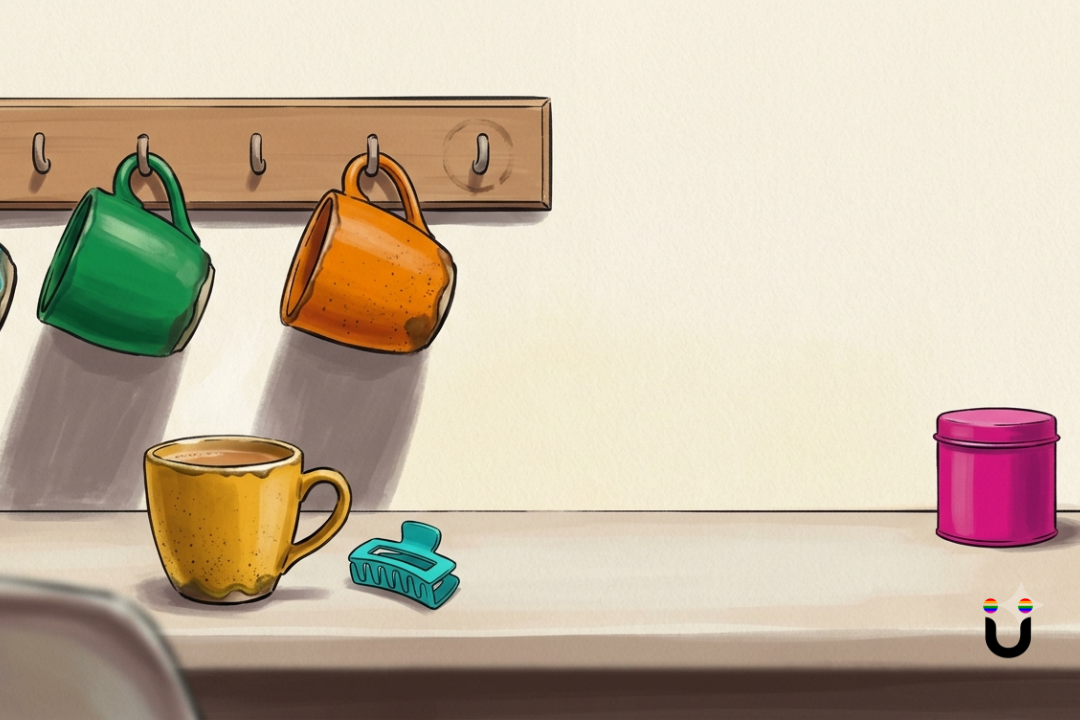
The image at the top of this piece was generated by AI, to a brief written by us. It is not a photograph and does not depict a real person or place.
Sources
Frone, M. R., & Blais, A. R. (2020). Organizational Downsizing, Work Conditions, and Employee Outcomes: Identifying Targets for Workplace Intervention among Survivors. International Journal of Environmental Research and Public Health, 17(3), 719. Open access. National probability sample of 2,297 US workers; cross sectional. Full text. The PubMed Central copy was blocked by a bot check at the time of writing, so we read the publisher's open access version.
World Health Organization (2022). WHO guidelines on mental health at work. Recommendation 1 and its evidence summary on psychosocial risk factors, covering job insecurity, role ambiguity, role conflict, organisational justice and workload. NCBI Bookshelf, read in full.
Both studies were conducted outside India. The Indian material in this piece is clinical and cultural observation rather than a research finding, and we have not presented it as one.