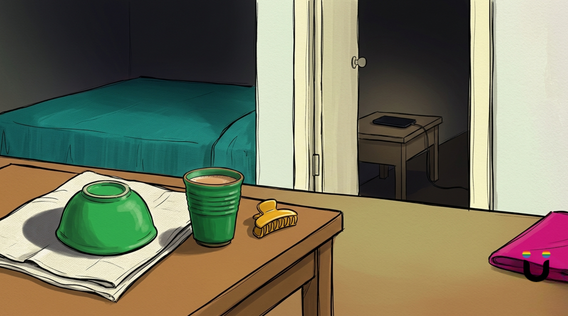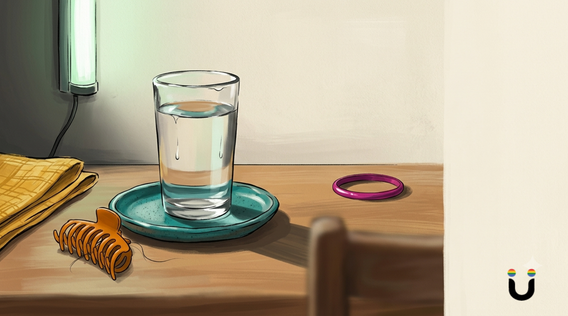
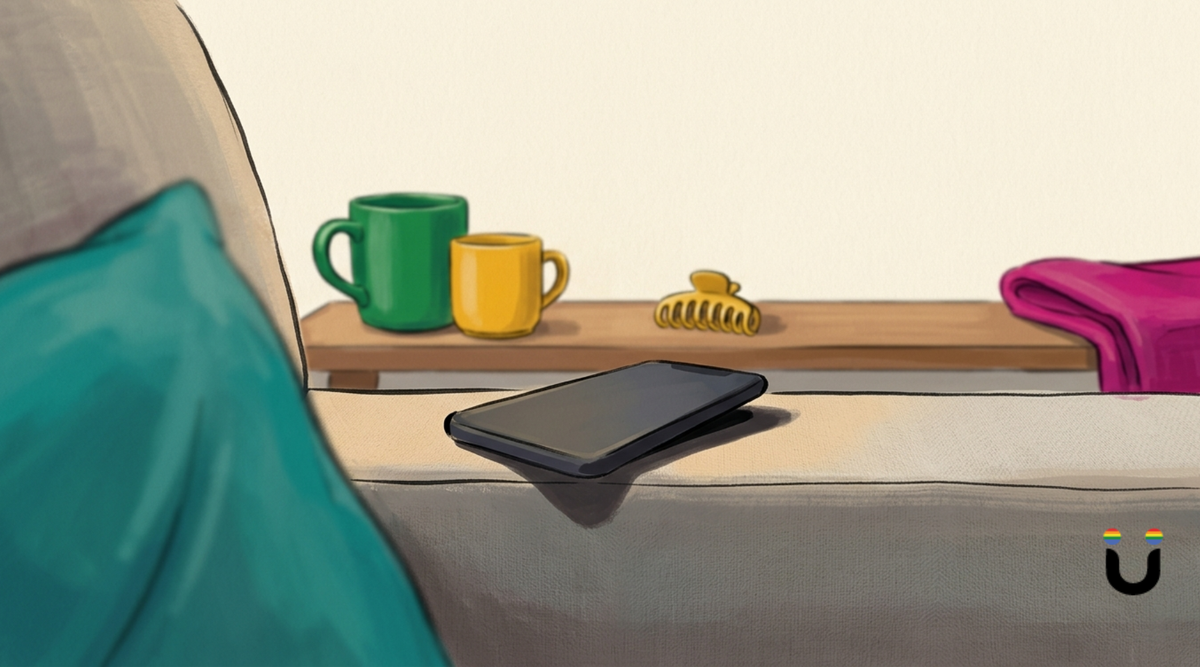
Eight months before the payment notification, Riya and Nikhil had exactly one fight about cheating. Nobody had cheated yet. Nikhil had replied to an ex's story at 1am with a laughing emoji, Riya saw it over his shoulder, and the argument that followed lasted forty minutes and settled nothing, because underneath it sat a question neither of them could say out loud: what counts as cheating, for us? They never answered it. Most couples never do.
Cheating is any intimacy or secrecy that breaks the agreements of your relationship. The problem is that most couples never make those agreements explicit, so each partner runs on a private definition. Physical contact, emotional closeness, secret messages and hidden flirtation can all count, and the most reliable warning sign across all of them is concealment.
In our therapy rooms, the fight about the 1am emoji arrives weekly. Different couples, different apps, same fight. It is rarely about the emoji. It is about the fact that the rules were never agreed, and that asking to agree on them feels, somehow, like an accusation.
Where Does the Word Cheating Even Come From?
The word is older than the feeling we use it for, and its history is strange. "Cheat" comes from "escheat," a medieval property term: when a landholder died without an heir, the land fell back to the lord. The royal officers who managed escheats developed such a reputation for helping themselves that, per the Online Etymology Dictionary, the word slid over the centuries from "confiscate" to "deprive unfairly" to "deceive." And the phrase "cheat on someone," meaning to be sexually unfaithful, is recorded only from 1934. The word we reach for in our worst relational moments is, at its root, about property changing hands. Something that was supposed to fall to you fell to someone else.
Which explains something about why the conversation is so hard. We inherited a word built on ownership and applied it to a question about intimacy. When Riya asks "was that cheating?", the word itself is asking "what is mine?" That is a heavier question, and it is the real one.
What Is Micro-Cheating, and Is It Actually Cheating?
Micro-cheating describes small behaviours that keep a flirtation alive without officially crossing a line: the secret follow, the private joke, saving someone's number under a different name, downplaying your relationship when a particular person asks. The term was popularised in 2018 by Australian psychologist Melanie Schilling, who described it as a pattern of small actions suggesting a person is emotionally or physically focused on someone outside their relationship.
Is it cheating? The honest clinical answer is that the category matters less than the concealment. A colleague you joke with is a colleague. A colleague whose chat you would minimise if your partner walked in has become a secret, and secrets are the raw material affairs are made of. The test is uncomfortable because it is so portable: not "did I touch anyone" but "is there a screen I tilt away."
The line is rarely where the body is. The line is where the hiding starts.
Why Do We Test Our Partners Instead of Asking Them?
Here is the strange place the internet has taken this question. Rather than asking a partner what fidelity means to them, a growing number of people now test it. "Loyalty testing" began as a TikTok genre and has become an industry: friends, strangers, and even paid services slide into a partner's DMs to see whether the bait gets taken, and the results are sometimes filmed for an audience. The appetite for it makes a sad kind of sense. Asking "what are your rules?" feels vulnerable. Running a sting feels like control.
But a test is not a conversation, and it changes the relationship even when it is passed. The partner who tests has already decided that words cannot be trusted, and the partner who discovers they were tested learns that they are under surveillance, which is its own breach of the agreements nobody made. There is also a quieter engine underneath: the DM economy runs on validation, and the need for attention is one of the defining needs of our time. Most micro-cheating begins as a reach for that, and most loyalty testing begins as a reach for certainty. Both are asking a stranger for something that was available at home, if either person had known how to ask.
If Nothing Physical Happened, Where Is the Line?
The research on affairs is clear on one point that surprises people. In his writing on affair recovery, Dr John Gottman notes that the majority of affairs are not caused by lust. They grow out of relationships where needs were quietly going unmet and partners had stopped turning toward each other, so that intimacy began leaking sideways, into a colleague, a friend, an inbox. The affair is usually the last step of a long walk, and the walk is made of moments that each looked too small to name.
That reframes the "where is the line" question. If affairs begin with diverted intimacy and secrecy, the useful boundary is not a list of forbidden acts. It is an agreement about openness. Some couples are comfortable with flirtation and exes at the dinner table. Others want a wall around all of it. Neither is wrong. What breaks couples is not the rule they chose. What breaks couples is discovering, after the fact, that they had chosen different rules.
How Do Two People Actually Agree on the Rules?
Slowly, and at a neutral hour. Not at 1am over a laughing emoji. In our practice we suggest couples treat this as maintenance rather than interrogation, the way you would service a car before the engine light, and start with four questions:
First: what does flirting mean to you, and is any of it okay? Second: are exes a separate category, and what does contact with them look like? Third: what makes a message secret, deleting it, or just never mentioning it? Fourth: if someone outside the relationship started to matter, how would you want me to find out? The answers will differ, and the differences are the point. Every mismatch you find in this conversation is one you will not discover the other way.
And if you are reading this because the line was already crossed, the conversation changes shape but does not become impossible. We have written separately about how couples actually rebuild trust after cheating, and about when that work is not safe to attempt alone and needs a therapist in the room.
Riya and Nikhil dropped their forty-minute fight without an answer, because continuing it felt like accusing each other of a crime that had not happened. Eight months later it happened. Nobody can say whether the conversation would have prevented it. What can be said is that they ended up having it anyway, in the worst possible month, with the worst possible evidence on the table. The rules get written either way. The only choice a couple has is whether to write them before, together, or after, in the wreckage. Old word, same meaning: something falls to someone. Decide, together, what is yours.
Frequently Asked Questions
Is flirting cheating?
Flirting is cheating in some relationships and harmless in others, because cheating is defined by the agreements of the specific couple. The clinical warning sign is concealment: flirtation you would comfortably repeat in front of your partner sits differently from flirtation you hide or delete.
What is micro-cheating?
Micro-cheating is a pattern of small behaviours, secret follows, private jokes, hidden chats, downplaying your relationship, that keep a flirtation alive without officially crossing a physical line. The term was popularised by psychologist Melanie Schilling in 2018. Its significance lies in the secrecy, since concealed connections are how most affairs begin.
Is texting someone secretly cheating?
Secret texting is a breach of trust in most relationships, even without physical contact, because the secrecy itself diverts intimacy away from the partner. Whether your relationship calls it cheating depends on your agreements, which is why couples benefit from defining those agreements explicitly rather than assuming them.
Riya and Nikhil are fictional composites drawn from clinical patterns, not real clients. Cover image is AI generated. Sources: Douglas Harper, "cheat", Online Etymology Dictionary; Melanie Schilling's description of micro-cheating as reported by Fox News (2018); reporting on loyalty testing services by Yahoo News; The Gottman Institute, Reviving Trust After an Affair, on affairs and unmet needs.