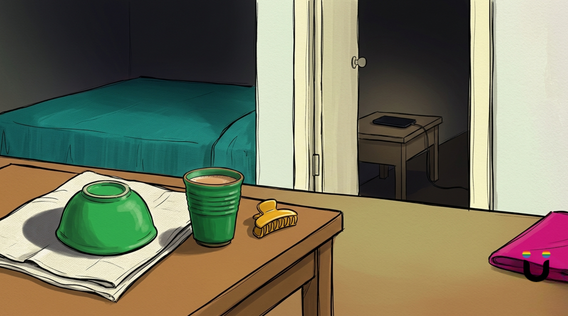
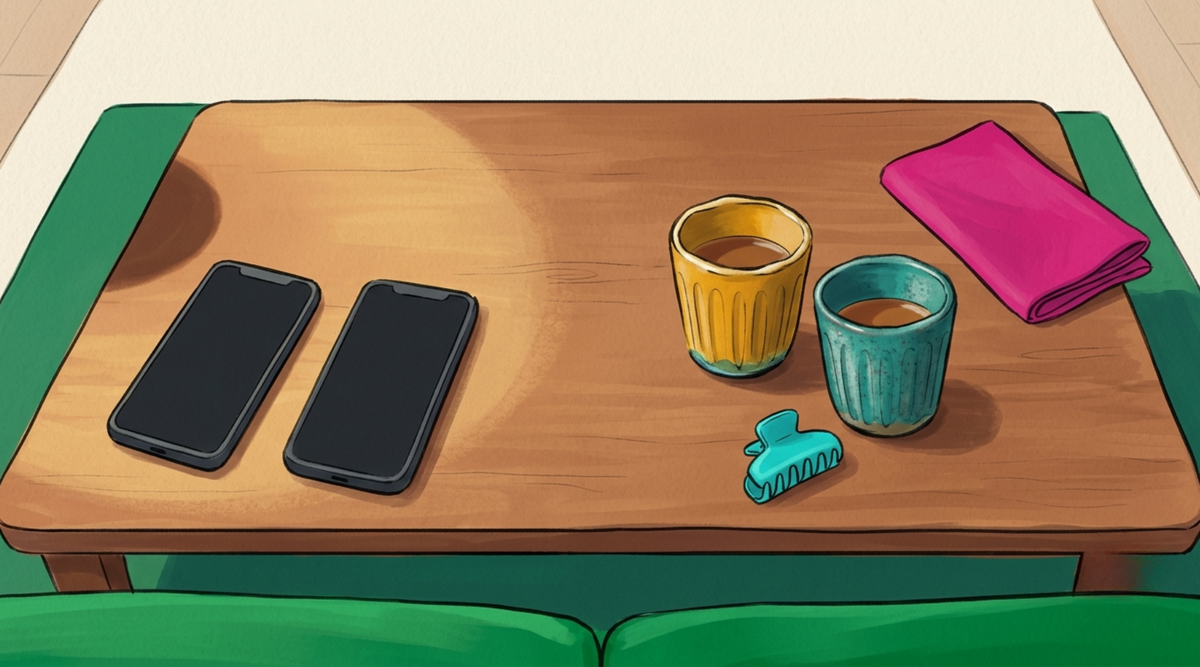
Riya found out on a Sunday afternoon, from a payment notification on Nikhil's phone. Four years together, one shared flat in Andheri, two families who still believe they are flatmates. By Monday she had read everything. By Tuesday she was typing the question every Indian search bar sees at 2am: can we come back from this?
Yes, many couples rebuild trust after cheating. Psychologist Dr John Gottman's Trust Revival Method describes three phases: Atone, where the partner who cheated takes full responsibility; Attune, where the couple builds a new way of understanding each other; and Attach, where physical closeness is rebuilt. Recovery takes months to years, and both partners must choose it.
That is the short answer. The long answer is what this piece is for, and it is written for both people in the room: the one who was betrayed and the one who did the betraying. Both of them are reading things like this in separate tabs right now. They usually are.
Is It Even Possible to Rebuild Trust After Cheating?
It is possible, and it is neither rare nor guaranteed. The most widely used roadmap comes from Dr John Gottman, an American researcher who spent four decades studying couples in his lab at the University of Washington before turning that work into therapy. We should be honest about what the evidence says, because most articles on this topic are not. The broader Gottman Method has been tested in randomised trials for couples in general. The affair-specific protocol is different: on the institute's own research summary, a randomised clinical trial for couples healing after an affair was still described as planned, with Dr Paul Peluso. So what you are getting is a map drawn by a very experienced cartographer, still in the process of being formally tested. That is worth knowing before you stake a relationship on it. It is also more than any other approach to affair recovery currently offers.
Two preconditions sit underneath everything that follows. The affair has to be fully over, including the goodbye text that feels harmless. And both partners have to actually want the repair. A couple where one person is serving a sentence and the other is running a parole board is doing something, but it is not this.
What Is the Gottman Trust Revival Method?
The Trust Revival Method is a three phase approach to affair recovery developed by Dr John Gottman and described in his 2012 book What Makes Love Last?, written with Nan Silver. The phases are Atone, Attune and Attach. Atonement deals with responsibility and transparency. Attunement builds a new relationship in place of the one that broke. Attachment rebuilds physical intimacy. The method sets no timeline, which is one of the more humane things about it.
The order matters. Couples who skip atonement and rush to "moving on" tend to relive the discovery on a loop, because the wound was closed before it was cleaned.
What Does Atonement Actually Demand?
Atonement asks the partner who cheated to take full responsibility, without defensiveness, excuses, or any version of "you pushed me to this." In Gottman's framing, making amends cannot happen while the person who cheated is explaining their reasons in a way that shifts even a fraction of the blame. The reasons conversation does eventually happen, and it matters. It just cannot be the opening move.
Then comes the part nobody likes: transparency. Gottman's approach asks the partner who cheated to offer open access for a while, which can mean messages, location, plans. If you did the cheating, this will feel like surveillance. It is meant to. The deal is a temporary trade of privacy for security, and it works only when it is offered rather than extracted. In our context this phase often plays out in whispers, because the interrogation is happening in a 1BHK with parents in the next room, or over calls taken on the building staircase. The fight about the biggest thing in your life has to be conducted at low volume. That is its own kind of exhausting.
Atonement makes a demand of the hurt partner too, and this is the part that feels unfair. At some point, if the work is real, they have to be open to forgiving. Gottman is clear that the person who was betrayed will be triggered often and will bring the affair up often, and that this is normal. But a relationship where the affair becomes a permanent trump card, produced in every disagreement about dishes or in-laws, has not left atonement. It has moved in there.
What Does Attunement Look Like When You Are Not Married?
Attunement is where the couple stops repairing the old relationship and starts building a new one. Gottman defines it as the desire and the ability to understand and respect your partner's inner world. In practice it is unglamorous: a daily check-in, "I feel" sentences instead of "you always" sentences, open questions instead of closed ones.
Trust gets rebuilt in hundreds of small moments, where one of you reaches out and the other one turns toward it. The grand apology is just the doorway.
Gottman's lab put numbers on those small moments. In his newlywed research, couples who were still married six years later had turned toward each other's small bids for attention 86 percent of the time. Couples who divorced had done so 33 percent of the time. The bid is tiny: a "look at this," a sigh, a hand on a shoulder. After an affair, every turned-toward bid is a deposit into an account that betrayal emptied. This is also where the ordinary mechanics of building trust come back into play, because post-affair trust is built with the same material as any other trust, just under harder conditions.
Here is where the Indian couple in their first five years runs into a problem the American model never anticipated. Gottman's approach assumes the repair happens inside a community: family and friends who know, who hold you accountable, who witness the recommitment. Riya and Nikhil's families do not know there is a relationship to repair. Many unmarried couples are rebuilding in a sealed room. No aunt to disappoint, which sounds like freedom until you realise it also means no one to hold you to your word, and no one to sit with on the worst nights. If your relationship already lives outside the script your family wrote, the repair has to generate its own gravity. Some couples borrow a container: one trusted friend each, told deliberately, as witnesses. It is a workaround. It helps more than it should.
When Does Rebuilding Trust Fail?
It fails in predictable ways. It fails when contact with the affair partner continues in any form, including the professional one that "can't be avoided." It fails when a deadline is imposed, spoken or silent, by which the hurt partner must be over it. It fails when the affair calcifies into a weapon. And in this country, it fails in a specific way worth naming: when a couple stays because the machinery around them has already started moving. The roka is done, the hall deposit is paid, the families have met, and ending it would require an explanation nobody wants to give. Staying to avoid log kya kahenge is not repair. It is postponement with a guest list.
One more honest line: this roadmap is for betrayal. It is not for relationships where there is violence or control, where "transparency" becomes another instrument of it. That is a different situation, and it needs a therapist in the room rather than a framework from a blog.
Do You Ever Get the Old Relationship Back?
No. That relationship ended on the Sunday afternoon of the payment notification, and grieving it is part of the work. What can exist afterwards is a different relationship with the same person, closer to a good enough relationship built on purpose than to the effortless one you remember, which memory has been editing anyway. Therapist Esther Perel, who wrote The State of Affairs in 2017, has said in interviews that an affair can break a relationship or remake it, and that after the post-traumatic stress there can be post-traumatic growth. The couples who make it do not forget. They become able, eventually, to tell the story of the affair as one chapter, with authorship shared, in a longer book.
Riya and Nikhil are somewhere in the middle of atonement as this is written, which is to say: somewhere between the verbal lashings and the first quiet dinner. Whether their second relationship holds is not something a framework can promise. It gets decided the slow way, in small moments, turned toward or away from, for a long time. That is the honest ending, and it is the only one on offer.
Frequently Asked Questions
How long does it take to rebuild trust after cheating?
There is no fixed timeline, and Gottman's Trust Revival Method deliberately sets none. Clinicians commonly describe months to a few years of consistent effort, depending on how long the affair ran and how the discovery happened. Imposing a deadline on the hurt partner reliably works against the repair.
Does the partner who cheated have to share their phone?
Gottman's atonement phase asks the partner who cheated to offer transparent reassurance, which can include access to messages, location and plans. It is a temporary trade of privacy for security, offered rather than demanded, and it tapers as trust returns. It is not meant to become permanent surveillance.
Can a relationship survive an emotional affair?
Yes, and recovery follows the same three phases, because the breach in an emotional affair is the secrecy and the diverted intimacy as much as any physical act. Many people report emotional affairs as harder to process, since what was shared elsewhere was the inner world itself.
Should we tell our families about the affair?
Gottman's model encourages couples to tell people close to them about the recommitment, so the repair has witnesses and support. For many Indian couples, especially unmarried or queer couples, that is unsafe or impossible. A workable substitute is choosing one trusted person each, deliberately, to hold you accountable.
Riya and Nikhil are fictional composites drawn from clinical patterns, not real clients. Cover image is AI generated. Sources: John Gottman and Nan Silver, What Makes Love Last? (2012); The Gottman Institute, Reviving Trust After an Affair; John Gottman, The Empirical Basis for Gottman Method Couples Therapy, which lists the affair-recovery randomised trial as planned and reports the turning-toward findings; Esther Perel, interview with NPR's Fresh Air (2017).