
There is a certain kind of mental clutter that accumulates without announcement. You are not in crisis. You are not falling apart. But something is running in the background — a loop you cannot switch off, a conversation you keep replaying, a feeling you cannot quite name. You wake up with it. You take it into meetings. You carry it to dinner and set it down at the table next to you.
Most people manage this by waiting it out. And eventually, mostly, it settles. But there is another option — one that has three decades of clinical research behind it, costs nothing, and requires fifteen minutes: writing it down.
Not a to-do list. Not a gratitude log. Writing about the actual thing — the complicated, uncomfortable, half-formed thing you have been avoiding naming.
What Does Expressive Writing Actually Mean?
Expressive writing is a specific, researched psychological technique developed by James Pennebaker, a psychologist at the University of Texas at Austin. The core method is simple: participants write about their deepest thoughts and feelings about a difficult experience for 15 to 20 minutes across three to five consecutive days, without worrying about grammar, structure, or what it sounds like. The goal is not to produce something legible. The goal is articulation — moving an experience from inside the body into language.
This is different from diary writing, which documents daily events. And it is different from journaling in the popular-wellness sense, where you are mostly recording things you are grateful for, or setting intentions, or tracking your mood. Expressive writing is targeted. It goes toward the thing that is sitting heaviest.
In Pennebaker's original 1986 study — which sparked decades of subsequent research — participants who wrote expressively showed measurable improvements in physical and psychological health compared to those who wrote about neutral topics. What followed was one of the most replicated bodies of work in psychology.
Why Does Writing Reduce Mental Load?
Pennebaker's theory, which he called the Inhibition Model, argues that when difficult experiences remain unarticulated, the effort of not thinking about them — the active suppression — places a chronic physiological burden on the body. Stress hormones stay elevated. The nervous system stays partially activated. Attention gets divided between the present and the thing you are not examining.
When you write, that changes. Language gives structure to experience. What was a diffuse, looping emotional state becomes something with a beginning, a middle, a cause and an effect. The brain's working memory — which has limited capacity — gets freed up when emotional material is externalized rather than rehearsed. Fewer intrusive thoughts. More available attention.
A University of North Carolina study found that individuals who wrote about difficult experiences had significantly fewer intrusive thoughts afterward than those who did not. The same pattern does not hold for writing about positive experiences. This is not because positive writing is useless — it is because avoidance and articulation lead to different cognitive outcomes. Writing about what is good does not resolve what is unresolved.
What Does the Research Actually Show?
The clinical evidence for expressive writing is extensive, if not uniform. A 2022 meta-analysis of randomised controlled trials published in BMJ Open found that journaling interventions produced a statistically significant reduction in symptoms on mental health measures compared to control groups — with the greatest benefit seen for anxiety (9% reduction) and PTSD (6% reduction). A 2013 study found that participants who wrote about their experiences before a medical procedure showed faster wound healing than those who did not. Physiologically faster. The wound literally closed sooner.
I want to be precise about what this means and what it does not mean. Expressive writing is not therapy. It is not a substitute for treatment if you are in acute distress. What the research is telling us is something more specific: that unexamined emotional experience has a measurable cost to the body and the mind, and that language — the act of converting experience into narrative — reduces that cost.
It also matters who is doing the writing and how. Research consistently shows that the benefits are greater when people write with genuine emotional depth and engagement rather than surface description. Writing "I felt anxious at the meeting" is not the same as writing about what the anxiety was protecting you from, or what the meeting meant, or what you did not say and why. Depth of engagement is the mechanism. Not volume. Not consistency.
Why Is This Harder for Indians to Do?
Writing as a mental health practice carries a particular resistance in Indian families — and it is worth naming directly rather than burying in a footnote. We are a culture in which emotional life is largely managed collectively, out loud, through conversation, or managed privately, in silence. The idea of sitting alone with your feelings and writing them out — not sharing them with anyone, not seeking counsel, not resolving them through action — can feel strange at best and indulgent at worst.
There is also the matter of what gets written. In households where family loyalty is the primary emotional organising principle, writing honestly about complicated feelings toward parents, partners, or siblings can feel like a betrayal. Even privately. Even in a notebook no one will ever read. I have had clients who could not bring themselves to write the actual thing because seeing it on paper made it too real, too much like a verdict.
That resistance — the specific Indian version of it — is worth understanding as data. What feels most dangerous to write is usually exactly what most needs to be written. The feeling that naming something will make it permanent is the inhibition Pennebaker was talking about. The suppression has a cost. The writing — even uncomfortable writing — reduces it.
What About Gratitude Journals?
Gratitude journaling has real evidence behind it. Research shows that deliberately redirecting attention to what is good can shift mood, interrupt cycles of negative rumination, and build a more balanced cognitive baseline over time. I am not dismissing it.
But there is a specific way gratitude journaling gets misused — and it is worth naming, because it is common. When gratitude writing becomes a way to skip past what is difficult, to overwrite discomfort with a list of things to feel good about, it stops working. The research is clear that writing about positive experiences does not produce the same cognitive benefits as writing about negative ones. You cannot gratitude-journal your way out of something you have not looked at.
Both have a place. They are not interchangeable.
What Should You Actually Write?
Pennebaker's instruction is deceptively simple: write about your deepest thoughts and feelings about something that has been weighing on you. Do not worry about it making sense. Do not write for an audience. Write for 15 to 20 minutes. Do this across three or four sessions.
If you find yourself writing around the thing rather than about it — circling it, describing its edges without touching the centre — that is useful information. Notice what you are protecting yourself from. You do not have to go there immediately. But the resistance is not nothing.
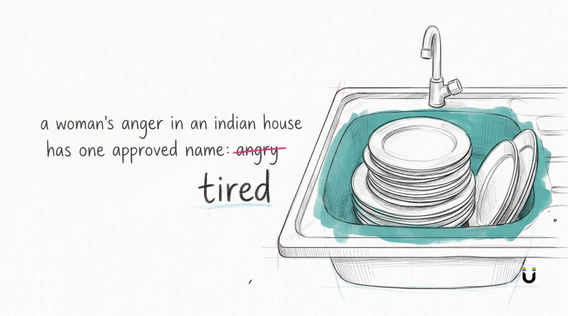
Some people find prompts useful as entry points, not as substitutes for depth. What am I carrying that I haven't told anyone? What am I angry about that I've decided doesn't count? What would I feel if I stopped pretending I was fine? These are not therapy exercises. They are just ways in.
Frida Kahlo wrote in her diary throughout her life — not as documentation, not as performance, but because she needed somewhere to think that was entirely her own. The pages were covered in paint, in sketches, in fragments. They were not tidy. They were honest. That is what made them worth keeping.
If putting words to difficult feelings is something you are trying to build into your life — or if you want to start journaling alongside working with a therapist — TTC's Emotional Intelligence Journal was designed for exactly this. Structured enough to support a practice, open enough to hold what actually needs to be said.
See the Emotional Intelligence JournalFrequently Asked Questions
What is the difference between expressive writing and regular journaling?
Regular journaling typically documents daily events or tracks mood and habits. Expressive writing, as developed by psychologist James Pennebaker, is specifically about writing in depth about difficult emotional experiences — without worrying about grammar or structure. The goal is not recording but processing. Research shows this distinction matters: writing about negative emotional experiences produces cognitive and physiological benefits that general journaling does not consistently replicate.
How long do I need to write for expressive writing to work?
Pennebaker's original research used 15 to 20 minutes per session across three to five consecutive days. This is the protocol most consistently supported by clinical evidence. The key variable is not the duration but the depth of engagement — writing that genuinely explores thoughts and feelings produces better outcomes than surface-level description, regardless of length.
Can expressive writing make things worse?
For most people, expressive writing about difficult experiences produces short-term discomfort followed by a measurable reduction in distress. However, for people dealing with severe or acute trauma, unstructured emotional writing without professional support can sometimes intensify distress rather than reduce it. If you are currently in therapy, it is worth discussing expressive writing with your therapist. If something feels destabilising to write about, that is a signal — not an instruction to push through alone.
Does gratitude journaling count as expressive writing?
No. Gratitude journaling and expressive writing are distinct practices with different mechanisms and different evidence bases. Gratitude journaling redirects attention toward positive experiences and can improve mood and wellbeing. Expressive writing processes difficult emotional experiences and reduces cognitive load and intrusive thoughts. Both have value. The research does not support using one to substitute for the other.