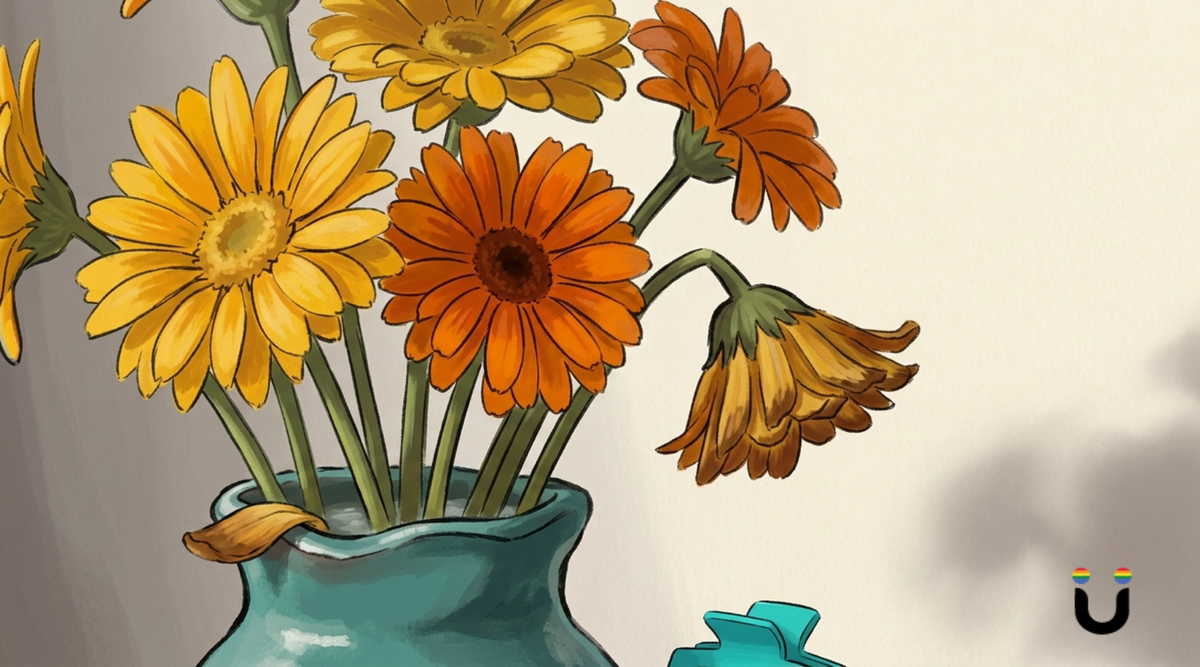
The question almost never arrives as a question. It arrives as a small, tired thought at the end of an argument you cannot remember starting, somewhere around the third time you have apologised for something you are fairly sure you did not do. The thought is rarely "is this toxic." It is "is it me," which, if you sit with it, is already an answer of sorts.
You are likely in a toxic relationship if its steady pattern leaves you anxious rather than safe, if you have started editing yourself to avoid your partner's reactions, and if you keep coming away feeling worse about who you are. What defines it is that consistency and the damage over time, not the occasional fight, which every relationship has.
If you have typed "am I in a toxic relationship" into a search bar, there is something worth saying before the checklist, because every article you are about to find leads with the checklist and that is the wrong place to start. The fact that you are asking means some part of you already knows something is off, and has known for a while, and has been talking itself out of it. So this is not a neutral quiz. You are here because it already hurts.
What is a toxic relationship, actually?
A toxic relationship is one where the ordinary pattern consistently leaves you smaller, more anxious, and less able to recognise yourself. Not for one bad week, but as the steady weather of the thing. Every couple fights. Every couple has ugly days. What makes a relationship toxic is not the fighting. It is the direction it keeps pulling you, down and inward, away from the people who love you.
The word gets overused, so here is what it is not. It is not toxic because your partner is sometimes selfish, or forgets things, or annoys you, or because you argue. That is just two people being human. Toxic is the consistency and the damage over time. It is the difference between a relationship that goes through hard things and a relationship that is, itself, the hard thing.
What are the signs I am in a toxic relationship?
The clearest signs are that you feel anxious rather than safe, you have started editing yourself to avoid their reaction, and you keep leaving interactions feeling worse about who you are. Here are the ones that come up most often, and why each matters:
- You walk on eggshells. You have become an expert in their moods, forecasting the weather of the house before you open the front door. Living braced is not the same as living safe.
- You are always the one apologising. Somehow every conflict resolves into your fault. You came in with a hurt and left having comforted them about your hurt.
- You do not trust your own memory anymore. You are told that things did not happen the way you remember, often enough that you have started keeping a private tally just to feel sane. This one has a name, gaslighting, and it is corrosive precisely because it attacks the instrument you would use to detect it.
- You have gotten smaller. The friends have thinned out. The hobby fell away. The version of you that laughed easily has been gone a while. The people around you have noticed even if you have not.
- The good moments work like an apology. After the bad stretch comes the sudden warmth, the gift, the person you fell for, and it pulls you right back. This push and pull is not proof it can work. It is often the mechanism that keeps you there.
- You feel disrespected, in public or in private. The belittling joke at dinner, the contempt that leaks out sideways, the sense of being managed rather than loved.
You do not need to tick every box. A relationship can be wrong without a single loud scene. Trust the tiredness. The body keeps a more honest record than the mind, which is busy building excuses.
Why is it so hard to leave a toxic relationship?
It is hard to leave because you are attached to a real person you still love, because the fear of being alone is real, and because the relationship has slowly convinced you that you could not do better. If you keep asking why you are still here when you know it is bad, please hear this. Staying is not stupidity, and it is not weakness. It is human.
You are not attached to the bad days. You are attached to the good ones, to the memory of who this person was at the start, and to the hope that that person is the real one and the rest is a phase. Attachment does not switch off because someone hurts you. Often it does the opposite. The intermittent kindness, warm then cold then warm again, is one of the stickiest bonding patterns there is, which is a cruel piece of engineering when you are on the receiving end of it. If the pull toward someone who keeps not quite choosing you feels familiar from before this relationship, that is worth understanding on its own, and we have written about why you may be drawn to people who do not choose you and what anxious attachment looks like in Indian relationships.
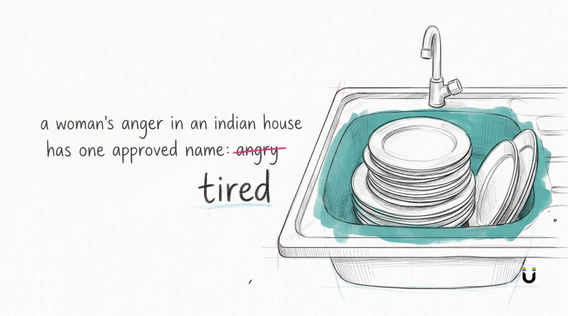
In India there is a whole second layer that the Western articles never mention. There is family. There is the marriage everyone attended. There is the arithmetic of what leaving would cost, socially, financially, with the relatives, with the question that follows a woman especially: log kya kahenge. Leaving here is often not experienced as leaving a person. It is experienced as breaking something much larger, and that weight is real, and no listicle that says "just walk away" has earned the right to be glib about it.
Toxic or abusive: is there a difference, and how do I tell?
Yes, and it matters enormously. A toxic relationship damages you over time. An abusive one puts your safety at risk, and that changes what you should do next. Not every toxic relationship is abusive. Every abusive relationship is toxic, and the line matters because it changes the advice.
If there is physical violence, if you are afraid for your safety, if you are being controlled, isolated, threatened, or financially trapped, this is not a "work on the relationship" situation, and it is not something to problem solve from a blog. Please treat your safety as the first priority, ahead of the relationship. Leaving an abusive relationship is often the most dangerous time, which is why it is safer planned with real support than improvised alone.
In immediate danger, call 112 (national emergency number).
Women Helpline 181, run by the Ministry of Women and Child Development, is a 24x7 line for women facing violence, and can connect you to police, hospitals, and One Stop Centres.
Tele-MANAS 14416, the government's national mental health helpline, is free, 24x7, and covers abuse and domestic violence.
iCALL 9152987821, a psychosocial helpline run by TISS, offers trained counsellors who can help you think through next steps (Monday to Saturday).
What should I actually do if I think my relationship is toxic?
Start by telling one person you trust the truth, and by talking to a psychologist who can help you see the pattern clearly, because the isolation is what keeps it going. There are no five brisk steps to freedom here, because your situation is specific and you deserve better than a template. A few things are almost always true.
Break the secrecy first. Toxic relationships survive on isolation, on the story staying inside your own head where it can be endlessly re-argued. Say it out loud to someone safe. A friend, a sibling, a therapist. The moment another person hears it, the spell weakens a little.
Stop trying to answer the question alone. A good therapist is not there to tell you to leave, or to stay. They are there to help you stop gaslighting yourself, to hold up a clear mirror when yours has been fogged, and to help you rebuild enough of your own judgment that you can choose from solid ground instead of from panic. If you have spent months going in circles in your own mind, that circling is itself the sign that you need a second, trained perspective in the room.
Be patient with yourself about the timeline. People rarely leave the first time they realise. They leave the fifth time, or the tenth, when something finally clicks into place. If you are not ready today, that is not a failure. Knowing is the first move, and you are already doing it, right now, by reading this instead of talking yourself out of the question one more time.
The thought that brought you here, the small tired one at the end of the argument, was not disloyalty. It was the most loyal part of you, the part that still remembers who you were before, still refusing to forget her. Whatever you decide, and in whatever slow and complicated way you get there, that part is worth listening to. It has been trying to reach you for a while.
Frequently Asked Questions
How do I know if I'm in a toxic relationship?
You are likely in a toxic relationship if the steady pattern leaves you anxious rather than safe, if you are always the one apologising, if you have started editing yourself to avoid your partner's reactions, and if you consistently feel worse about who you are after being together. It is defined by consistency and damage over time, not by the occasional conflict that every relationship has.
Why is it so hard to leave a toxic relationship?
Because you are attached to a real person you still love and to the good moments, because the fear of being alone is genuine, and because the relationship may have slowly eroded your confidence that you deserve better. The push and pull of intermittent warmth is a powerful psychological bond. In India, family expectations, social pressure and financial entanglement add real further weight. Staying is human, not weak.
What is the difference between a toxic and an abusive relationship?
A toxic relationship damages your wellbeing over time. An abusive relationship puts your safety at risk through physical violence, control, isolation, threats or financial entrapment. Every abusive relationship is toxic, but not every toxic relationship is abusive. If you are afraid for your safety, treat that as the priority and seek support. In India you can call emergency services on 112, the Women Helpline on 181, Tele-MANAS on 14416, or iCALL on 9152987821.
Can a toxic relationship become healthy again?
Sometimes, if both people genuinely want to change, take responsibility, and are willing to do the work, often with couples therapy. It requires both partners to engage honestly. If only one person is trying while the other denies there is a problem, change is unlikely. Where there is abuse, safety comes before any attempt to repair the relationship.
Draft placeholder. Blog content to be added.