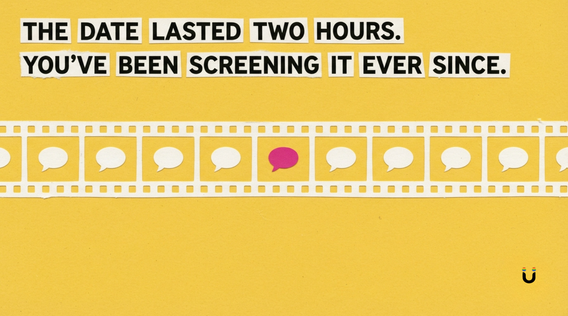
Did they actually say that? Or did you imagine it in the middle of the night? Could you have misread the tone? Is it normal to ask yourself three questions before you've even put your phone down?
You scroll up. The message is right there, in blue, earmarked with a timestamp. They tell you you're twisting it. You're being a little dramatic, they add. By the eleventh time this month, you stop asking them and start asking yourself. So, what is gaslighting?
Gaslighting is a pattern of psychological manipulation where one person makes another doubt their own memory, perception, or sanity. Merriam-Webster named it Word of the Year for 2022, after lookups jumped 1,740 percent. It runs over weeks or sometimes, even years, and that duration is what sets it apart from a single lie or one heated argument.
Where the word gaslight comes from
It comes from Gas Light, a 1938 play that later became a couple of films. A man dims the gas lamps in the house. Then he insists to his wife that the lights haven't changed at all. He wants her to believe she's losing her mind.
Merriam-Webster dates the psychological sense of the word to 1961. The room changes, someone you trust swears it didn't, and slowly you take their word over your own eyes. We've swapped gas lamps for read receipts since. The move hasn't aged a single day.
What are gaslighting examples in an Indian home?
Mostly, gaslighting sounds like family.
"Tumne hi toh bola tha." "Itni si baat pe?" "Ask anyone." And anyone turns out to be his mother.
There's the sasural version. Your things have moved, and you're told you misplaced them. Your husband was in the room and ended up not noticing anything. By Friday, you're searching the house for something you never lost.
Then, the parent version has its own script. "We never hit you. We only shouted because we cared. It was never that bad." The grown child walks away carrying a feeling they've been denied the permission to keep.
And there's the one that works on anyone, at any age. "You're too sensitive." The comment that stung never gets discussed.
How is gaslighting different from an ordinary argument?
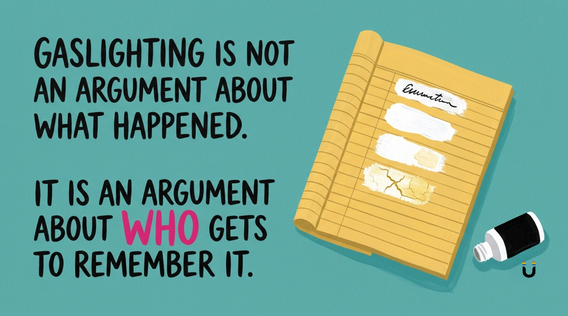
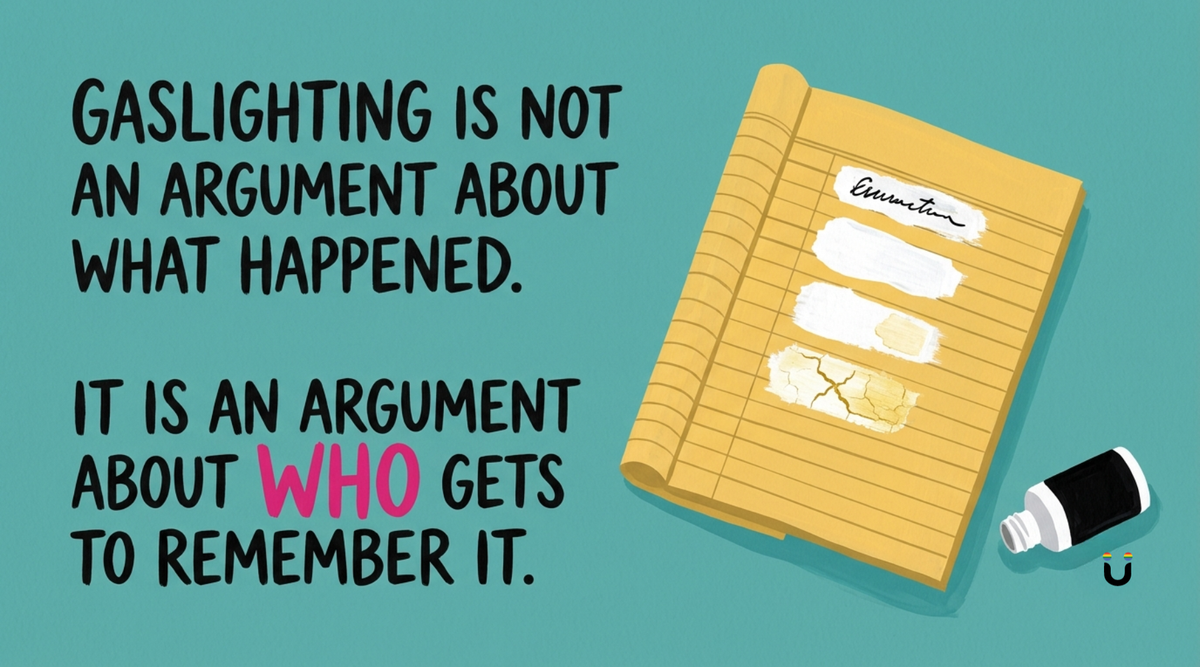
In an ordinary argument, two people disagree, and they both walk away agreeing that the argument happened. Gaslighting is the version where one person keeps rewriting the event itself, again and again, until the other stops trusting their own account of it.
Volume has nothing to do with it. The quiet, reasonable ones are often the most effective. What to watch is the pattern, the power, and the direction it runs in.
A single lie is a lie. A bad memory is a bad memory. Two people remembering the same dinner two different ways is, as far as anyone can tell, most dinners. The question worth asking is whether it keeps happening, always in one direction, always to the person with less power in the room.
And sometimes, you're the one who got it wrong. Memory is a messy filing system, and everyone's drawer is a disaster. The word has a second life as a weapon, too. "You're gaslighting me" can shut a conversation down as cleanly as "you're too sensitive" ever did. Ask whether there's a pattern before you reach for the label. The signs of gaslighting live in the repetition, not in a single bad night.
Can gaslighting happen at work?
Yes, and it wears a blazer.
It sounds like "that's not what we agreed," said about a meeting where you took the notes. It sounds like "I never got that email," while the email sits in your sent folder. It sounds like your idea on a slide with someone else's name at the bottom.
Hierarchy makes it harder to name. In a lot of Indian offices you don't argue with a senior, you only…adjust. And somewhere in the adjustment you start double-checking your own sentences before you send them, rereading a message four times for a crime it didn't commit. If that feels familiar, we wrote about why honest feedback dies in Indian workplaces, and the same silence is usually where this takes root.
What helps when you can't trust your own memory?
Write it down the same day. Write down the date, time, who said what, where. Don’t do this for a courtroom. Do it for yourself. A note on your phone is a witness nobody can talk out of its account.
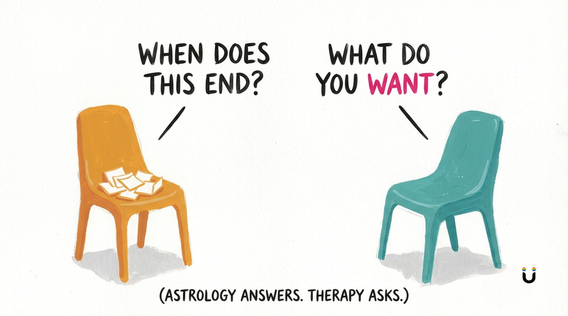
Tell one person outside the situation. Not the relative who'll say "but he's so nice." Someone who can hear the whole thing without rushing to defend anyone in it. A therapist is built for exactly this. If you'd rather read first, start with our piece on why gaslighting lives in the pattern, or our honest guide to whether you are in a toxic relationship.
Stop arguing about the facts. The facts are the field where they win, every time. Describe the effect instead. "When that happens, I stop trusting what I remember." You might not get agreement. What you'll get is a much clearer view of who in your life can actually hear that sentence.
If you're frightened of someone at home, the order flips. Safety comes first, notes second. Tell a person you trust, and bring in a professional to help you plan.
Some people go through an entire marriage without once hearing "you were right, and I did say it." You may never get that sentence out of them. You can keep the note anyway.
We've swapped gas lamps for read receipts. The move is the same.
Frequently asked questions
Is gaslighting a mental illness?
No. It's a pattern of behaviour, not to be confused with a diagnosis. The person doing it may or may not have a mental health condition, and the person on the receiving end often ends up anxious, confused, or unsure of their own memory as a result.
Can someone gaslight without meaning to?
Yes. Some people deny things on reflex, to dodge conflict or shame. Intent changes how you might respond to them. It doesn't change what being denied over and over does to your trust in your own memory.
How do I know if I'm being gaslit or just forgetful?
Look for the pattern. Does it happen mostly with one person, mostly about things that make them look bad, and does it leave you doubting yourself more than the facts warrant? Notes written the same day help you check your own account against theirs.
Sources
Merriam-Webster, Word of the Year 2022 (gaslighting, 1,740 percent increase in lookups)
Merriam-Webster, definition and origin of gaslighting (1938 play, first use of the psychological sense 1961)