A client recently told me she's wanted a romantic relationship but hasn't found anyone yet, so she built her own way of having one.
She daydreams it.
In these scenes, she's the protagonist, and the cast is vivid and shifting: sometimes people from her real life, sometimes invented, sometimes characters lifted straight off a TV show, and at the center, a lover who treats her beautifully.
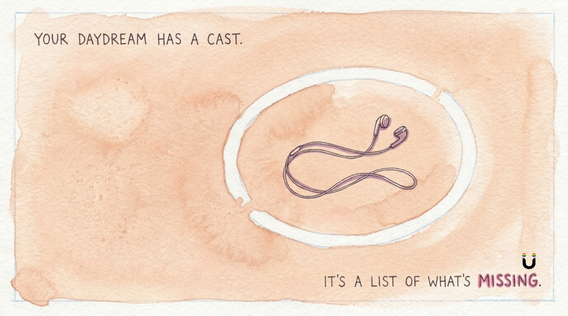
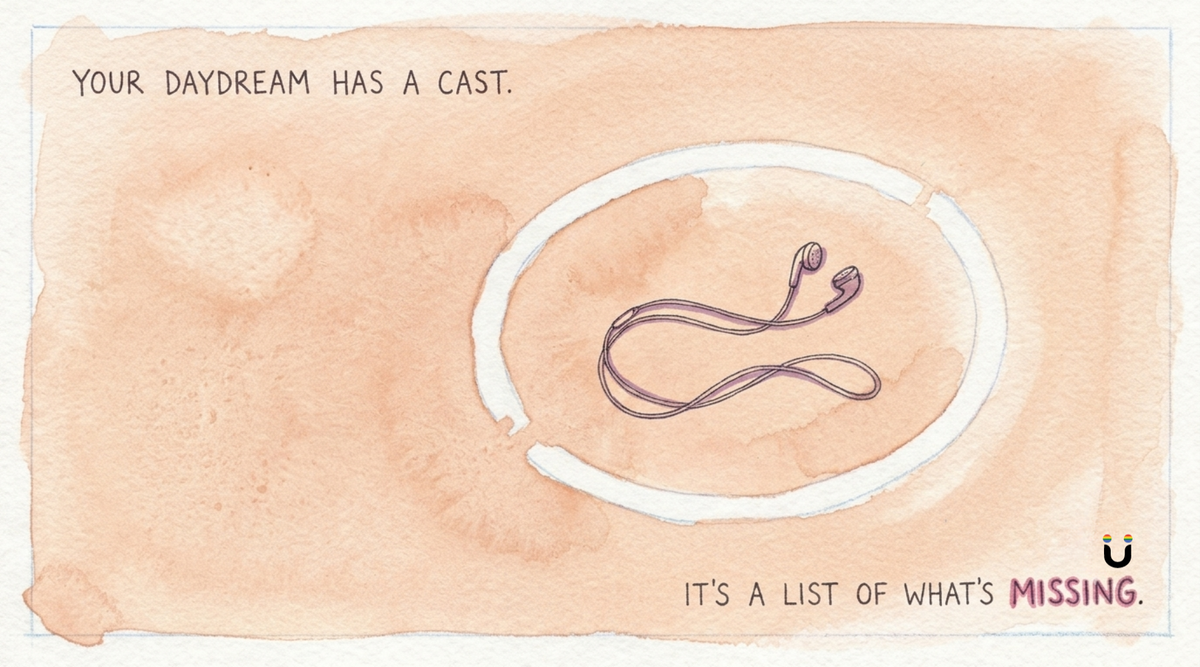
It started in school, when she felt lonely, and grew into an escape from a mundane life. The trigger is always the same: she’s alone in her room, earphones in, romantic music playing, pacing the floor. She loses hours in there. She sets time aside for it. It eats into her routine. I could feel the shame coming off her as she described it.
If any of that sounds oddly specific, chances are you've been running a whole world in your head for a long time too. A vibrant cast of characters. Convoluted storylines that have been going for months, maybe years. Places that feel more familiar than your own street. And you've probably never told a living soul, because how do you explain that there's an entire second life happening behind your eyes, and some days it feels more real than the one you're in. The clinical name for it is maladaptive daydreaming: an extensive, involuntary mental habit where vivid fantasy takes over a person's thoughts, and eventually their life.
So Where Does This World Come From?
Every world someone builds in their head started as a genuinely good idea. Picture it like this. At some point, real life wasn't giving you enough of something—attention, excitement, safety, maybe just company—and your mind, being resourceful, went and built you a place where you could have it. A friend who never gets bored of you. A braver, funnier version of you who's good at the hard conversations. The main character, basically.
There's nothing wrong with that. From a purely creative standpoint, it's kind of brilliant. The only tragedy is that it worked too well. The brain doesn't easily give up a coping trick that brought it relief, so it keeps reaching for that same world long after the original reason for building it has faded or changed completely. What began as somewhere to visit slowly becomes somewhere you live.
The trigger for a visit can be almost anything. A song. An edit. A certain quality of light. Sometimes just being left alone with nothing else pulling at you is enough to swing the door open. And once your mind gets used to having somewhere better to be, the visits stop feeling optional. You start needing them, the way you need to finish the chapter before you turn off the light. Skip it, and something in you stays restless until you get your scene in.
Who Ends Up Building One of These?
In my experience, it's rarely a random habit. It's usually the imaginative kid who was lonely, or the one in a house that was too loud or too quiet in all the wrong ways, or simply the kid whose mind moved faster than anything around them could keep up with. They worked out early that their own head was a far better place to be than wherever they actually were, and that discovery never really left.
Adults with anxiety, depression, OCD, ADHD, or a history of trauma report it especially often, though plenty of people with none of that have a whole world in there too. The common thread is a mind that learned, somewhere along the way, that fantasy was a more reliable deal than fact.
What Living Half in a Fictional World Costs
From the outside, it looks harmless. Nobody's hurt. Nothing's on fire. You're just sitting there, apparently staring at nothing.
But hours vanish that you don't get back. Deadlines slip because a storyline needed finishing first. Sleep gets pushed later and later, because the version of you in there has unfinished business tonight. And under all of it, you're stepping around your real life, the conversations you should be having, the work sitting on your desk, because the version in your head is simply easier to be in. There's shame that rides along with this, the fear that if anyone found out you spend hours acting out imaginary scenes to your own face in the mirror, they'd decide something was deeply wrong with you. So it stays a secret. And secrecy is what lets it keep growing unchecked.
It also runs in a loop that might feel (uncomfortably) familiar. Real life gets a little hard or a little boring, you slip into your world, you get your relief, you feel guilty about the time that just disappeared, and the guilt makes real life even less appealing than it was five minutes ago, so back in you go. It doesn't run all that differently from any other compulsive habit. Your own story just keeps paying out enough relief to make you write the next scene.
The Cast Tells You Everything
What someone builds in their head says a lot about what's missing outside of it, and that's the part of this work I find most fascinating. Nobody's fictional world hands them a boring version of their life. It hands them the version where they're finally seen, finally chosen, finally good at the exact thing they feel worst about. Think of my client's lover, the one who treats her beautifully. That character is no accident. He's a precise description of what she wants and hasn't had. A love interest who never tires of you. A career that's genuinely interesting, maybe even heroic.
I think about The Secret Life of Walter Mitty a lot because of this. Walter is a quiet, overlooked man who zones out mid-conversation into elaborate versions of himself where he's brave, decisive, noticed, usually right after real life has made him feel small. The first time I watched it, I laughed at the daydreams. The second time, I mostly felt sad for him, because the fantasies are so exactly shaped to what he's missing. What stays with me is that the daydreams never get treated or scolded away. They fade because he finally starts doing things in his real life and is surprised to find it can give him some of what the fantasy was covering for. If you've ever felt a little too seen by Walter, it's worth a watch, and not only for the scenery.
You Can't Just Close the Door on a Whole World
Telling someone to simply stop daydreaming is a bit like telling someone to stop scratching an itch. The urge itself was never the real problem. Underneath it sits something else, usually loneliness, pain, or years of a need that went unmet.
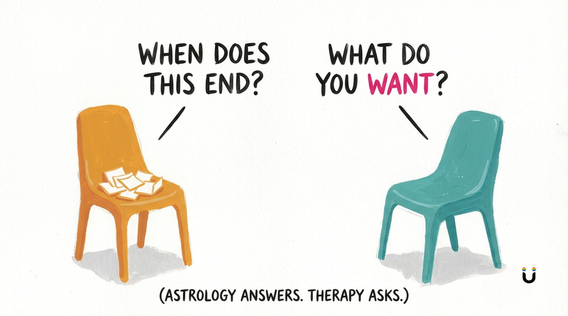
Which is why therapy tends to be the way through this, rather than white-knuckle willpower. Nobody's there to shame you out of your own imagination. The question worth sitting with is this: what is this imaginary world giving you that your real life currently isn't? Once that's on the table, you're no longer fighting a habit in the dark. You're addressing the gap it's been quietly patching all along.
Here's what that usually looks like:
- Name what the world is giving you. Connection? Achievement? A sense of being interesting? Control? Whatever shows up most in your scenes is the clue to what's missing.
- Use CBT-based approaches. These target the compulsive loop directly: the relief, the guilt, the pull to go back in.
- Treat what's running underneath. Anxiety, depression, ADHD, trauma. The daydreaming often eases once the thing it's covering for gets real attention.
- Practice grounding in the moment. Simple techniques, naming five things you can see, putting your feet flat on the floor, help interrupt the pull before a scene takes over.
- Track your triggers. Almost every daydreamer has a specific playlist, a specific pacing route, or a specific time of night that reliably opens the door. Noticing the pattern is half the work of closing it.
None of this means the imagination that built your world is a problem. If anything, it's proof you have a seriously rich inner life. You don't need to shut that off. You need to stop it from being the only place you ever feel fully alive, so you can live the one life you've got, instead of visiting it between scenes.
You're far from the only person carrying an entire universe around behind your eyes. You just found a place that felt safer to live in than reality did, for a while. Therapy won't take that place from you. It helps you work out what's missing, whether that's something to build or something to finally face, so you can get through the day without needing hours of escape to do it.