Image Source: AI Generated
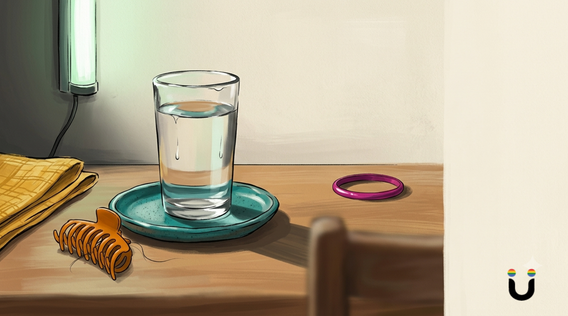
I know the exact hour it arrives. It is somewhere around four in the afternoon on a Sunday, and nothing has actually happened. The day has been fine. And still, a small weight settles in behind your ribs, and the rest of the evening starts to feel like a countdown you did not agree to.
The Sunday scaries are the wave of dread and low mood that build on a Sunday evening as the weekend ends and the work week comes back into view. They are a form of anticipatory anxiety, which is worry about something that has not happened yet. The feeling is real, physically real, even though Monday is not here.
If that is you, you are in very ordinary company. Most people who feel it are asking the same two questions underneath. Is something wrong with me, and why does a normal Sunday feel like this. The answer to the first one is no. What follows is what is actually going on, and why it can land heavier here in India than the internet's cheerful listicles admit.
What are the Sunday scaries, and why do they happen?
The Sunday scaries happen because your brain treats the coming work week as a threat and starts reacting to it in advance. This is anticipatory anxiety. Your body releases the same stress chemicals it would use for a genuine emergency, so you get the racing thoughts and the tight stomach, for a Monday that is still hours away.
There is a second layer, and it is oddly comforting once you see it. Over months and years, Sunday stops being only a day. It becomes a cue. If work has felt stressful often enough, your mind links Sunday evening with that stress the way it might link a smell to an old memory. So the dread can turn up even on the Sundays when nothing bad is waiting for you. The trigger is the day itself. The workload has very little to do with it.
This is why you can like your job and still feel it. The feeling is not a verdict on your career. It is a conditioned response doing exactly what it learned to do.
Why does Sunday night anxiety hit harder in India?
Sunday night anxiety can feel heavier in India because the line between work and rest is thinner here. A lot of us work six days a week, so Sunday is not the second half of a weekend. It is the whole weekend, the only clear day off, which makes its ending sharper than one lost day among two.
Then there is the phone. Work in urban India rarely switches off. The manager's WhatsApp lands at 9pm on a Sunday and you feel you should reply, because saying you were resting can feel like admitting you are not serious. Under all of it runs a specific Indian pressure, the constant arithmetic of log kya kahenge, of how your effort looks to everyone watching. When your worth gets measured by how visibly hard you work, Sunday evening becomes the hour you start performing readiness all over again.
It also mostly goes unnamed. The National Mental Health Survey, run by NIMHANS across 2015 and 2016, found that roughly 85 percent of Indians living with a common mental disorder never receive any treatment for it. Most people carrying Sunday anxiety have never once called it anxiety. They call it being responsible. If the dread is really about the place you return to on Monday, it is worth asking honestly whether your work culture is draining you.
Is it the work, or the loneliness of the week ahead?
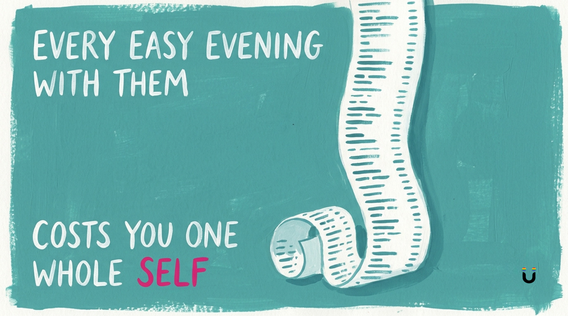
Sometimes Sunday dread is less about the work itself and more about what the coming week costs you, including a loneliness that arrives before the week does. It is a sense that the next five days will belong to everyone except you.
It has a time. It tends to come in that soft, dimming stretch of a Sunday, late afternoon sliding into evening, when the light changes and the day starts to close. You are not dreading one specific meeting. You are dreading the shape of the whole week. The early alarms. The commute. And a version of yourself who answers to everyone for five days and gets very little of herself back. If you work from home, it can be worse, because the week ahead and the walls around you are the same walls, and there is no office door to shut on Monday.
Here is the part the tip lists skip. Sometimes the dread is accurate. It is not always anxiety inventing a problem where none exists. Sometimes your Sunday self is telling you something true about your Monday, that the load is genuinely too much, or that you have slowly stopped wanting the life the week keeps asking you to live.
No amount of tea and a tidy Sunday routine will fix a Monday that is actually unlivable.
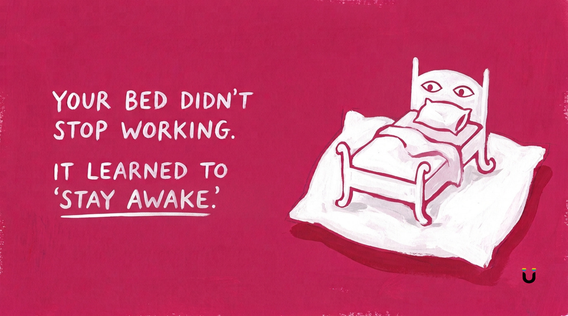
When rest keeps failing to land, the problem is usually not your Sunday. It is the load. That is closer to what burnout actually is than to a passing bad mood, and it asks for a different answer.
When do the Sunday scaries mean something more serious?
Ordinary Sunday scaries lift once Monday actually starts and you are in the middle of the day. It is worth paying closer attention when the dread does not lift, when it bleeds across the whole week, or when it stops being about work at all.
A few patterns are worth noticing. If the feeling spreads to Saturday, or to most days. If it comes with panic, where your heart races and you cannot breathe or think straight. If your low mood stays flat through the week and does not respond to the weekend at all. Those can point to an anxiety disorder or to depression, and they are not things you are meant to manage alone by trying harder on Sunday nights.
Support helps here, and it is allowed to be ordinary. Talking to a therapist is often just the room where you finally stop calling this normal and start looking at what it actually is.
What actually helps with Sunday night anxiety?
You probably cannot delete Sunday night anxiety, but you can make it smaller and less in charge of your evening. What helps is rarely a single trick. It is a handful of small shifts that lower the volume rather than switch it off.
A few of them genuinely move it. Naming the feeling helps, out loud or on paper, because a feeling you can name loses some of its size. Writing down the exact worry, the real one sitting under the vague dread, tends to shrink it, and a plain journal is enough structure for that. It also helps to close your open tasks on Friday rather than leaving them hanging across the weekend, so your mind is not holding a list of things it cannot act on until Monday anyway. And the most useful move is also the least comfortable one. Be honest about which kind of Sunday you are having. The kind where you need rest, or the kind where you need a real change. Those are different problems and they do not share an answer.
The Sunday feeling may never fully leave. Most weeks, you will notice it arrive around that same dimming hour, and you will know it for what it is. That knowing does not make it vanish. But it does change who is running the evening. Some Sundays, that turns out to be enough. Other Sundays, it is the nudge to change something bigger. Both are worth listening to.
Frequently asked questions
Why do I get the Sunday scaries every week?
Because your brain has learned to treat Sunday as a cue for the coming work week. This is anticipatory anxiety, which is worry about something that has not happened yet. If work has felt stressful often enough, your mind links Sunday evening with that stress automatically, so the dread returns even on calm weeks.
Are the Sunday scaries a sign of an anxiety disorder?
Usually not. Ordinary Sunday scaries lift once Monday begins. It is worth speaking to a professional if the dread spreads across the whole week, comes with panic, or sits alongside a low mood that does not respond to rest. Those patterns can point to an anxiety disorder or depression rather than simple work stress.
Is it normal to dread Monday even if I like my job?
Yes. The dread is often a conditioned response to the day itself, not a verdict on your work. Your nervous system reacts to the shift from your own time back to structured time. You can enjoy your job and still feel your body brace on a Sunday evening.
How do I stop Sunday night anxiety?
You may not stop it completely, but you can reduce it. Name the specific worry instead of sitting in vague dread, close open tasks on Friday, and build a Sunday evening worth being present for. If no routine makes Monday feel manageable, the issue may be your workload or your situation, not your Sunday.
Source: National Mental Health Survey of India, 2015-16, National Institute of Mental Health and Neuro Sciences (NIMHANS), Bengaluru. Summary report.