You woke at 5:52am, eight minutes before the alarm. You checked the email you sent last night at 11:14pm. You checked it again. By 7:30 you'd reorganised the week twice and eaten nothing.
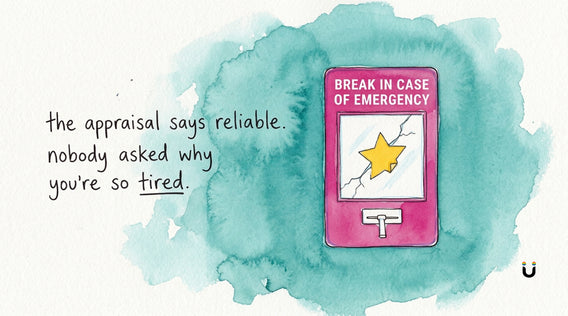
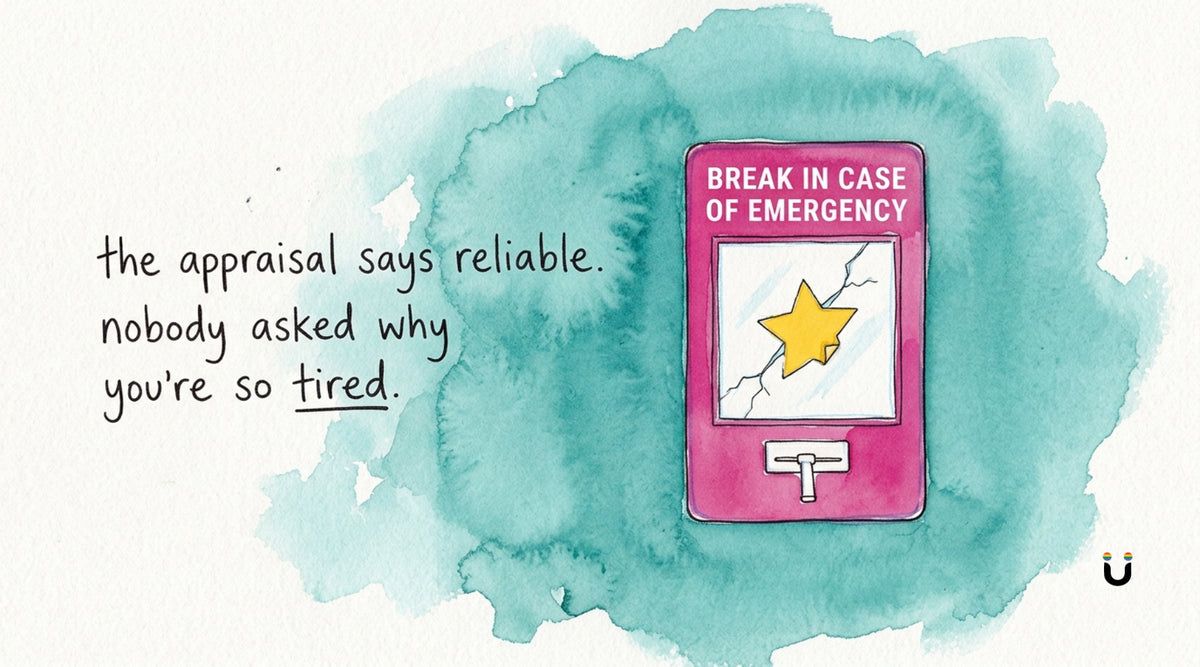
Everyone calls you reliable. But not a single person has thought to ask why you're always this tired.
High functioning anxiety is an informal term for the kind of anxiety that hides behind achievement, and once you know the signs of high functioning anxiety you start seeing them everywhere. A person looks organised, driven and calm on the surface, while underneath it runs constant worry, overpreparing, and a low hum of fear about failing. The high functioning anxiety symptoms rarely announce themselves, because the results look so good from the outside. It isn't an official diagnosis. The anxiety underneath it can still meet clinical criteria all the same.
What does high functioning anxiety look like?
From the outside, it looks like the dream employee. Early to everything. Over-prepared for everything. Says yes to the extra project, remembers everyone's birthday, replies inside four minutes.
From the inside, it looks like a smoke alarm that never quite switches off. You rehearse conversations in advance. You draft three versions of a two-line message. You can't rest until the list is finished, and the list is never finished.
A few other signs. A body that stays tense all day. A jaw you catch clenching in meetings. Trouble sleeping even after a good day. A need to be useful, and a sharp drop into dread the moment you have nothing to do. Rest starts to feel like a risk rather than a reward.
If you recognise the rehearsing, we wrote about why you rehearse conversations before they happen.
Is high functioning anxiety a real diagnosis?
No, not as a formal label. It doesn't appear as a separate diagnosis in any of the major manuals. It's a description of a pattern, rather than a disorder in itself.
That distinction matters, because the term gets used two ways. As a doorway, it helps people see that anxiety doesn't always arrive as panic. As an excuse, it lets people keep calling their own suffering "just being driven" for twenty years running.
What matters is whether your anxiety causes you distress or gets in your way. If it does, a clinician might call it generalised anxiety, or something else entirely. "High functioning" only tells you that nobody has noticed yet.
Why is anxiety praised in India?
Because it wears the costume of virtue. Worry gets called responsibility. Overpreparing gets called sincerity. A child who panics before exams is called serious, and she takes home a prize for it. The grown-up version is the colleague who never once takes leave.
A lot of us were raised in homes where being anxious about marks, money and what people might think was treated as a form of care. A parent worried, so the child learned to worry right alongside them. We wrote about the weight of that script in the half of "log kya kahenge" nobody talks about.
Now add a brutal job market and a family WhatsApp group full of cousins' promotions. Anxiety stops feeling like an illness, and more like just keeping up.
How is it any different from ordinary stress or perfectionism?
Stress usually has a cause and, eventually, an ending. A deadline lands, you work, it passes. Anxiety has already found the next deadline before the first one is even done.
Perfectionism and anxiety travel together often, though they aren't the same engine. Perfectionism wants the work flawless. Anxiety is braced for something terrible happening if it isn't. One is a standard you're chasing. The other is a threat you're fleeing.
One quick test. Picture finishing everything on your list. Do you feel relief wash in, or do you feel a fresh list already assembling itself? Relief points toward stress. A new list points toward anxiety. It's a rough guide, not a diagnosis.
If you can’t tell whether your mind is worrying or looping, rumination versus worry may help you sort the two.
What helps when you are always "fine"?
Name it first. Saying "this is anxiety, not diligence" changes what you do next, because it lets you stop treating dread as one more item to action.
Build small stops into the day. Take lunch somewhere other than your desk. Leave one task undone on purpose and watch what happens. Almost every time, the answer is nothing. That experiment is worth more than any article on the subject.
Learn how your body sounds its alarm, and practise bringing it back down. Our guide to how to manage anxiety covers the basics. And if the pattern has run for years, a therapist can work on the belief sitting underneath it: that your worth depends on what you manage to finish.
We're not convinced that success and anxiety can be cleanly separated. For a lot of people, the two grew up together in the same house. You may well find that slowing down costs you something real. Nobody can promise the trade will feel good straight away.
Frequently asked questions
What are the signs of high functioning anxiety?
Signs include overpreparing, perfectionism, difficulty relaxing, constant worry hidden behind productivity, trouble sleeping, muscle tension, a need to be useful, and fear of failing or disappointing others. You may look calm and capable to everyone around you.
Is high functioning anxiety a mental illness?
It isn't an official diagnosis, but the anxiety underneath it can be real and treatable. If worry causes you distress or interferes with sleep, relationships or health, it's worth speaking to a psychologist or psychiatrist.
Can you have anxiety and still be successful?
Yes. Plenty of people with anxiety achieve a great deal, and some of that achievement is driven by the anxiety itself. The cost usually shows up as exhaustion, poor rest, and real difficulty enjoying what you've already done.