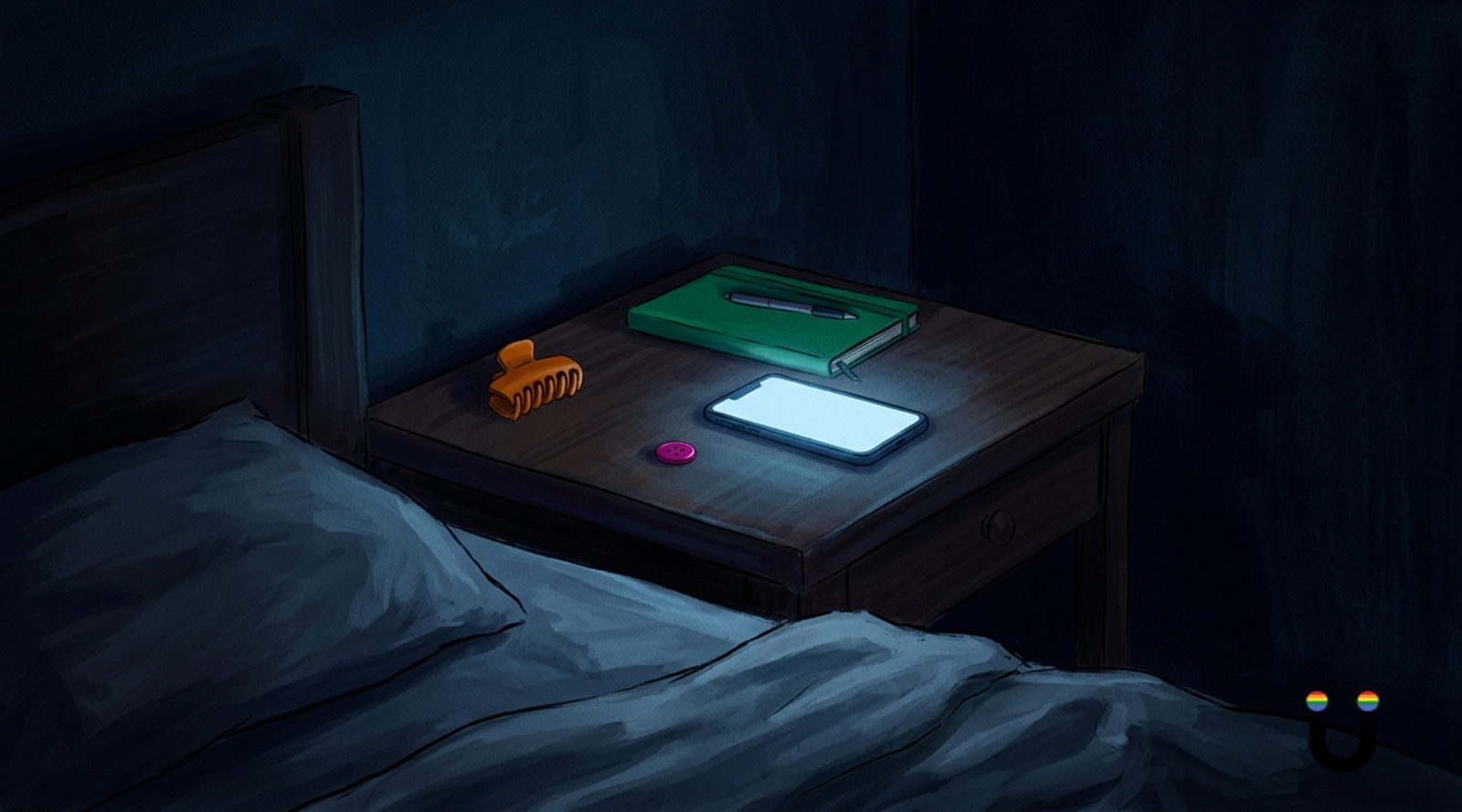
There is an hour I know too well, and if you have anxiety, you know the one. It shows up after the light is off and before your body has agreed to sleep, and your brain, which did nothing useful all day, picks this exact moment to open forty tabs at once. The email you should have worded differently. The thing your boss said. The thing your boss did not say. Whether you locked the door. Whether you are, in some deep and unfixable way, behind everyone your age. I have spent a lot of nights in that hour. I once reorganised an entire cupboard at 3am because folding clothes felt more survivable than lying still. It did not fix anything. The cupboard looked incredible.
To manage anxiety in the moment, work through your body rather than your thoughts. Lengthen your exhale, in for four and out for six. Ground yourself by naming what you can see and hear. Move the adrenaline through with a walk. In the long term, sleep, movement, and often therapy lower the baseline more than willpower ever manages to.
If you searched "how do I manage my anxiety," you have already met the lists. Breathe in for four. Five things you can see. Cut the caffeine. They are not wrong, and I will hand you some of them, because at 2am you need something to do with your hands and your lungs. But I want to start where the lists do not, because the way they frame the whole thing makes it a little worse.
Why does fighting my anxiety make it worse?
Fighting anxiety tends to make it louder. Anxiety is your own nervous system doing its job with the volume stuck high, and treating it as an enemy just adds a second problem on top of the first. Now you are anxious about being anxious, which is an exhausting flat to live in, because the feeling itself has become one more thing that is wrong with you.
Here is the reframe that helped me more than any breathing trick. Anxiety is not a malfunction. It is your body's alarm system, the oldest and most loyal part of you, trying to keep you safe. The trouble is that it is overprotective. It sounds the full siren for a late reply or an awkward meeting as though a tiger had walked in. You do not have to hate it for that. You have to teach it, slowly, that most of what it flags is not a tiger. You get much further working with an overprotective system than you do fighting it.
Anxiety is not a malfunction. It is your body's alarm system, the oldest and most loyal part of you, doing its job too loudly.
How do I calm my anxiety in the moment?
In the moment, the quickest route runs through your body rather than your thoughts. You cannot argue your way out of an alarm, but you can physically tell your nervous system it is safe. When anxiety spikes, your mind is the thing doing the spinning, so it is the last place to intervene. Your body is the lever. A few things that genuinely help, because they signal to a nervous system stuck on high alert that the emergency is off:
- Lengthen the exhale. Not big breaths. Long ones out. In for four, out for six. A longer exhale is the one signal you can send on purpose that nudges your body out of alarm mode. It is the most reliable tool you have.
- Come back into the room. Name five things you can see, four you can hear, three you can touch. It sounds too basic to work. It works because anxiety lives in an imagined future, and this drags you back to the present, where, right now, in this actual room, you are okay.
- Move the adrenaline through. Anxiety is energy with nowhere to go. Walk it off, shake out your hands, run cold water over your wrists. This gives the stress chemicals somewhere to go instead of pooling.
- Put the tabs on paper. At 2am, get the loop out of your head and onto a page by the bed. The brain keeps replaying worries partly because it is scared you will forget them. Written down, they stop pounding on the door.
These are for the spike. They handle the moment. They are not a cure, and anyone selling them to you as one is not being straight with you.
Why am I so anxious, and does living in India make it worse?
Often, a lot of anxiety here is a fairly rational response to a culture built on comparison and on deadlines that were never yours. In an Indian context, where you were ranked from the first report card onward, this matters more than the generic advice admits. Marks, then colleges, then salaries, then the marriage, then the next thing, each arriving with a deadline set by everyone except you, and a running commentary from relatives who mean well and land like weather.
Then there is the comparison that never switches off, sharpened now by a phone full of everyone else's edited life. There is the closeness too, the family that loves you and also holds firm opinions on your every move, so even your private choices come with an audience. If Sunday evenings in particular arrive with a specific dread, that has its own Indian shape. And if you feel a low steady hum of never enough, never fast enough, never quite what they wanted, that is a nervous system reading a genuinely relentless environment accurately. The problem was never that you are weak. Naming the source does not dissolve it, but it does move the problem out of "something is wrong with me" and into "I am carrying something real," which is a far better place to work from.
What actually helps anxiety in the long term?
In the long term, the things that lower your baseline are unglamorous and real. Sleep. Movement. Less doomscrolling. Honest connection. And for a lot of people, therapy that gets at the pattern underneath. The tools for the spike handle the spike, but if you want the water level itself to drop, it is the boring foundations that do it. Sleep moves the needle on tomorrow's anxiety more than anything else, and it is not optional. Movement burns off stress in a way nothing else quite manages. The phone, past a point, is pouring petrol on the fire, and you already know it, and I know you already know it.
And then there is the pattern. Techniques manage anxiety. They rarely resolve it, because they work on the symptom while the belief underneath stays put, the old story about not being safe, or not being enough, or having to earn your place by never once dropping the ball. That deeper part is what therapy is for. A good psychologist helps you find the root of the alarm and slowly talk your nervous system down, instead of just handing you more breathing exercises, so you are not white knuckling the techniques for the rest of your life. If your particular version of this is less a feeling and more a brain that will not stop narrating, it helps to understand why you overthink and what actually quiets it.
When should I see someone about my anxiety?
See someone when anxiety starts interfering with your sleep, your work, your relationships, or your ordinary choices, or when the tools help less and less. Anxiety is not a fixed quota of suffering you have to earn your way out of alone. If you are avoiding things you used to do, if most nights have become the 2am hour, or if you are simply tired of doing this by yourself, that is reason enough. You do not have to be in crisis to deserve support. Most people who come to therapy are not falling apart, they are just done managing it on their own. If that is you, a psychologist who works with anxiety can help you get at what is underneath it.
The 2am brain, for all its cruelty, is a frightened, loyal thing that has stood guard so long it forgot how to sit down. You cannot defeat it, so you reassure it instead, slowly, with your breath and your boring good habits and, when it is more than you can settle alone, with help. And maybe it does not go silent. Maybe it never fully does. But maybe, just maybe, it settles a little, the night it starts to believe you when you tell it you are already safe.
Frequently Asked Questions
How do I manage my anxiety?
Manage anxiety in the moment by working through your body rather than your thoughts: lengthen your exhale (in for four, out for six), use grounding such as naming five things you can see, four you can hear and three you can touch, and move the adrenaline through with a walk or cold water. In the long term, prioritise sleep, movement and less screen time, and consider therapy, since techniques manage the symptom while therapy works on the cause underneath.
Why does trying to stop my anxiety make it worse?
Because anxiety is your nervous system's alarm doing its job, not an intruder to evict. Treating it as an enemy adds anxiety about being anxious, a second layer of distress. It works better to see it as an overprotective system you can teach, slowly, that most of what it flags is not a real danger, rather than something to fight.
What is the fastest way to calm anxiety in the moment?
The fastest reliable tool is a longer exhale: breathe in for four counts and out for six. A slow out breath is the clearest signal you can consciously send your nervous system to shift it from alarm toward calm. Pair it with grounding, naming things you can see, hear and touch, to pull your attention out of an imagined future and back to the present.
When should I see a psychologist about anxiety?
See a psychologist when anxiety interferes with your sleep, work, relationships or daily decisions, when you are avoiding things you used to do, or when the coping tools help less and less. You do not need to be in crisis to deserve support. Therapy helps get at the root belief driving the anxiety so you are not managing the symptom alone forever.