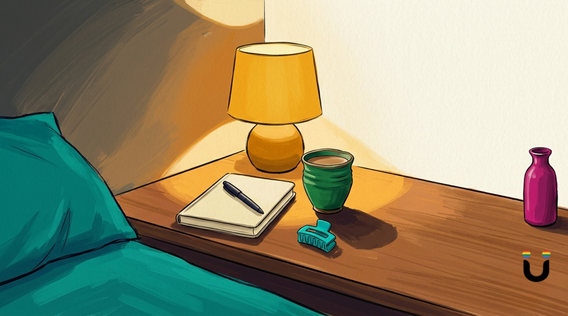
It is 11:40 on a Tuesday night and Sanjana has been holding her phone for nine minutes without opening anything. She is not working. She is not not working. There is a message in the team group from 10:15 that she has read and not answered, and answering it now would look strange, and leaving it until morning means carrying it through the night. She puts the phone face down. She picks it up again. (Sanjana is a composite. You will still recognise her.)
Switching off has a name in psychology: psychological detachment, meaning refraining from work thoughts and work tasks during nonwork time. Research consistently finds that job stressors, workload most of all, predict low detachment. So the difficulty is largely produced by how the work is designed, rather than by a personal shortage of discipline.
Which is worth saying slowly, because most people arrive at this feeling convinced it is a character flaw.
What Is Actually Happening When You Cannot Switch Off?
Consider the phrase itself. To switch off is an electrical metaphor. It assumes a switch, and it assumes a hand on the switch, and it puts that hand on the end of your own arm. The language has already decided whose fault it is before you have said anything.
What the research describes is less obedient than a switch. Sabine Sonnentag and Charlotte Fritz have spent two decades on this, and in their 2015 review in the Journal of Organizational Behavior they set out what the evidence shows across diary studies, longitudinal studies and cross sectional ones. Job stressors, and workload in particular, predict low detachment. Low detachment then predicts strain, exhaustion and lower wellbeing.
There is a cruelty folded into that sequence, and they name it themselves. The people who most need to detach are the people least able to. A hard week produces the negative activation that makes the mind keep running, at exactly the point when an unbroken evening would help most.
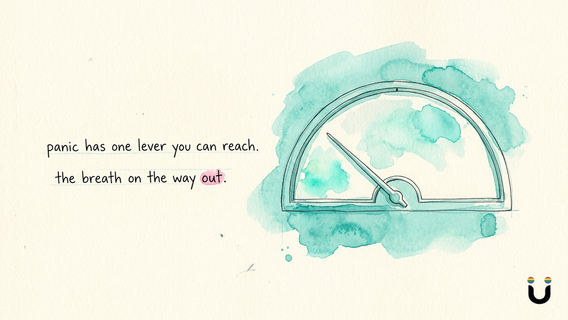
So the honest answer to why you cannot stop thinking about work is often that your week was too much, and your nervous system is still processing the overflow at 11:40pm. Not romantic. Accurate.
Is This Really a Discipline Problem?
Partly, and less than you think. In a study published in the Journal of Occupational Health Psychology in 2011, YoungAh Park, Charlotte Fritz and Steve Jex looked at what predicts detachment. Two things did. One was segmentation preference, meaning how much a person wants a wall between work and home. The other was the perceived segmentation norm: what the person believes their work group expects. Communication technology use at home partly explained both.
Read that second finding again. Your ability to stop thinking about work is shaped by what you think your colleagues expect of you at night. That is a group property. It is not something you can decide your way out of alone, and the study was conducted in the United States, so the Indian version is likely to be sharper rather than softer.
Nobody sends a message at 11pm and thinks they have done something. The person who receives it does not think that either. And yet the whole team learns what the hours are anyway.
This is why the advice to simply put the phone in another room fails so often. The phone is not the demand. The phone is where the demand arrives.
What Makes This Harder in India?
There is no legal floor under rest here. Indian labour law regulates working hours and overtime, and says nothing about the hours in which you are expected to remain reachable. On 5 December 2025, MP Supriya Sule introduced the Right to Disconnect Bill, 2025 in the Lok Sabha, which would let an employee decline to answer after hours without it costing them. It is a private member's bill and remains pending. Earlier versions in 2018 and 2021 both lapsed.
Then there is the phone itself, which in most Indian homes is not a work device that came home. It is the household object. The same screen holds the team group, the building society group, the cousin sending forwards, your mother asking whether you have eaten. Segmenting work from home is harder when the boundary you are being asked to draw runs through the middle of the one thing everybody in the house uses.
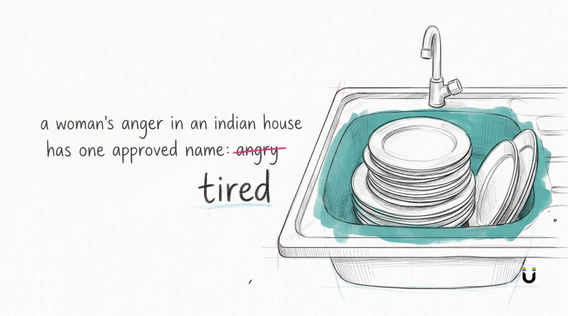
And there is the older inheritance underneath it. Many of us grew up in homes where availability was how care was demonstrated. You picked up. You did not say no to an elder. Being reachable was not a policy, it was a virtue. That instinct does not switch off at 6pm because a wellness email said it should, and it is worth being gentle with yourself about that rather than treating it as weakness.
What Can You Actually Do About Your Own Evening?
Less than the internet promises, and more than nothing. These are places to begin, not a protocol.
Give the day an ending. Sonnentag and Fritz suggest something simple: before leaving work, write tomorrow's list. The mind holds unfinished tasks partly because it is afraid of losing them. Writing them down tells it they are safe. Then use the commute, or the ten minutes after, as the seam between the two halves of the day.
Find out what the norm actually is. Most people are guessing. Ask your manager directly what the expectation is on messages after hours. A surprising number of teams discover that everybody has been performing availability for everybody else, and nobody wanted it.
Pick something absorbing rather than something restful. The evidence favours activities that take up your attention over activities that leave it free. Scrolling leaves the mind free to keep working. This is also why staying up late to reclaim your evening so rarely delivers the evening back.
Notice what you are calling rest. Lying down while your mind runs a meeting is not recovery, whatever it looks like from outside. We have written elsewhere about the guilt that comes with actually doing nothing, which is a related and separate problem.
Keep one small tendable thing. A plant, a pot of dahi you set at night, a walk you take at the same hour. Something that asks a little of your hands and nothing of your judgement. It will not cure anything. It is a place to put yourself while the rest is unresolved.
What If the Thing Keeping You Awake Is Not Yours to Fix?
Sometimes it is not. If your workload requires eleven hours, no evening ritual is going to make eleven hours fit into eight. The largest study of workplace wellbeing offerings, Fleming (2024), compared 46,336 workers and found people who used the apps and the resilience training were no better off than people who did not. We have written about what that evidence does and does not show in more detail.
This is the part that gets left out of most articles like this one, because it is not actionable and articles prefer to be actionable. Some of what is keeping you switched on belongs to your employer, and it will stay there until somebody with authority over the schedule decides otherwise.
Knowing that does not fix the night. It does change what you are allowed to stop blaming yourself for, which is not nothing. And if the not switching off has stopped being an evening problem and started being a life one, if it is eating your sleep and your appetite and the people you like, that is a reasonable thing to bring to a therapist rather than to another app.
Sanjana will put the phone down eventually. She will also pick it up again next Tuesday, because the group is still there and the week was still too long. Recovery from a working life is not a thing you achieve once. It loops. Some weeks you get the evening back and some weeks the evening belongs to somebody else, and telling the difference is most of the skill.
What Else Do People Ask About Switching Off From Work?
Why can't I stop thinking about work at night?
Most often because the working day was demanding enough to leave your nervous system activated. Sonnentag and Fritz's 2015 review found that job stressors, particularly workload, predict low psychological detachment, and that the people who most need to detach tend to be the least able to. It is a consequence of load rather than a failure of willpower.
What is psychological detachment from work?
Psychological detachment means refraining from work related tasks and work related thoughts during nonwork time. It is not the same as being physically away from the office. You can leave the building and remain fully detached from nothing. Research links low detachment to exhaustion, poorer sleep and lower wellbeing.
Does putting my phone away actually help?
It helps, and it is not sufficient. Park, Fritz and Jex (2011) found that communication technology use at home partly explains lower detachment, but the stronger predictors were a person's preference for separating work and home and their belief about what their work group expects after hours. Removing the phone does not remove the expectation.
Does India have a right to disconnect law?
No. Indian labour law covers working hours and overtime but not the hours in which an employee is expected to stay contactable. The Right to Disconnect Bill, 2025 was introduced in the Lok Sabha by MP Supriya Sule on 5 December 2025 as a private member's bill and remains pending. Earlier versions in 2018 and 2021 lapsed.
When does not switching off become something to get help for?
When it stops being confined to the evening. Persistent sleep disruption, appetite changes, dread on Sunday nights, withdrawal from people you normally enjoy, or work thoughts that intrude during time you had protected are all reasonable grounds to speak to a mental health professional rather than trying another routine.
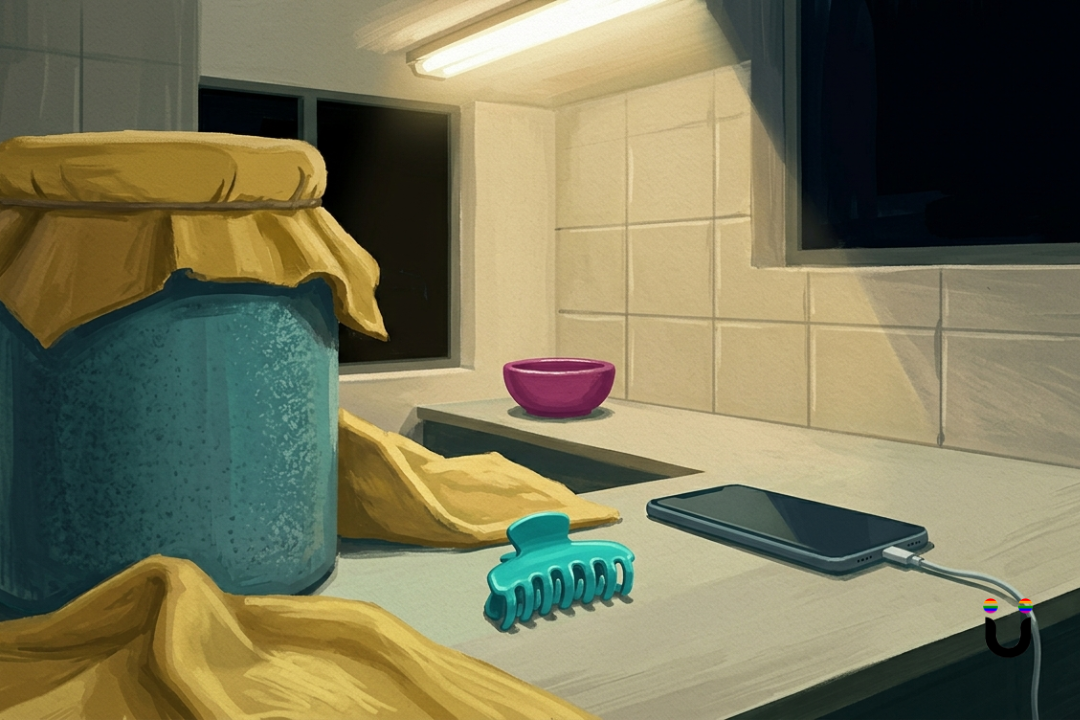
A note on the cover image
The image at the top of this piece was generated by AI, to a brief written by us. It is not a photograph and does not depict a real person or place.
Sources
Sonnentag, S., & Fritz, C. (2015). Recovery from job stress: The stressor-detachment model as an integrative framework. Journal of Organizational Behavior, 36, S72-S103. Full text
Park, Y. A., Fritz, C., & Jex, S. M. (2011). Relationships between work-home segmentation and psychological detachment from work: The role of communication technology use at home. Journal of Occupational Health Psychology, 16(4), 457-467. US sample. PubMed
Fleming, W. J. (2024). Employee well-being outcomes from individual-level mental health interventions: Cross-sectional evidence from the United Kingdom. Industrial Relations Journal, 55, 162-182. UK sample. Wellbeing Research Centre, University of Oxford
The Right to Disconnect Bill, 2025. Private member's bill introduced in the Lok Sabha, 5 December 2025; status pending. Status verified against the Sansad record by FACTLY