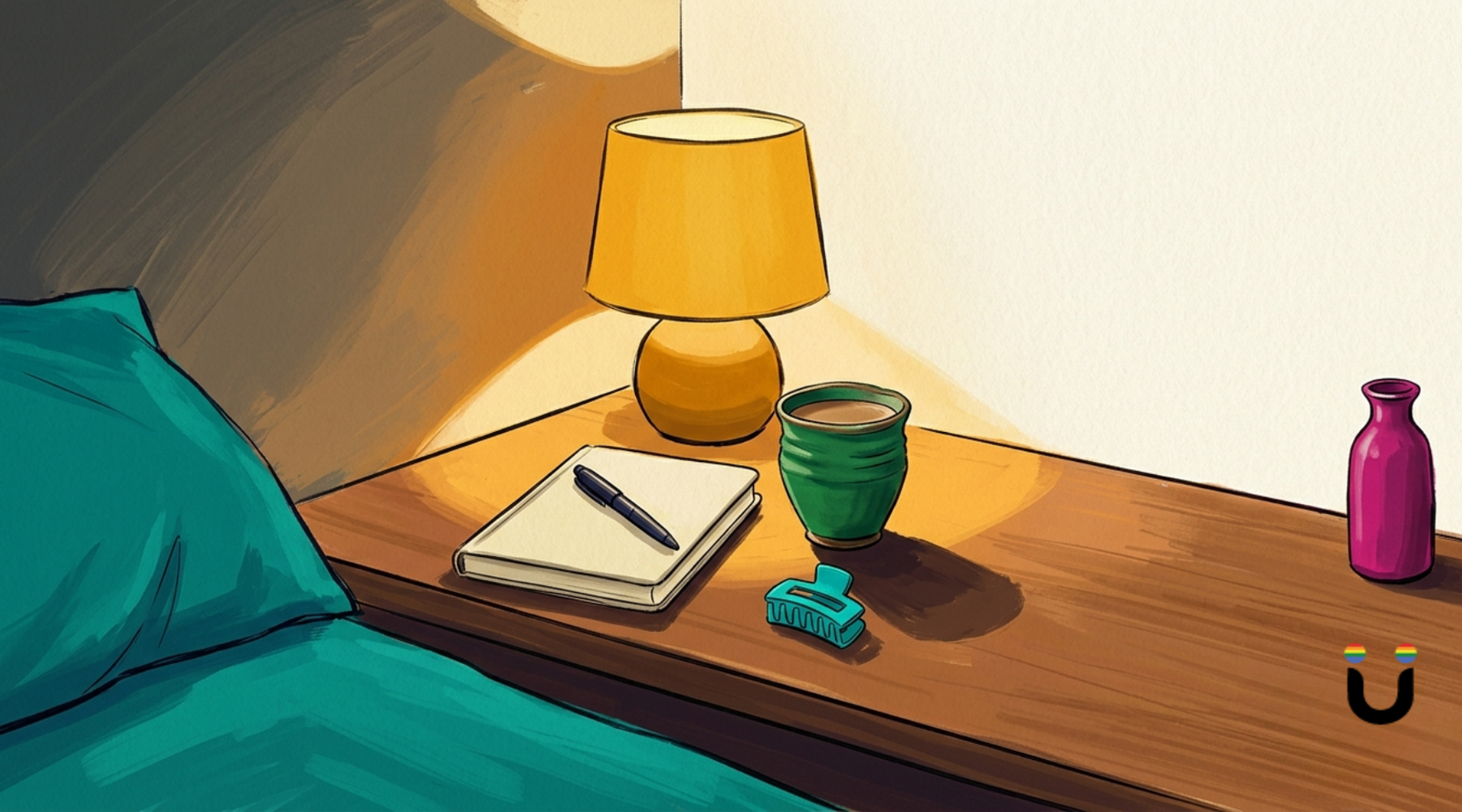
The word worry used to mean “to strangle.” That’s why overthinking at night feels so physical.
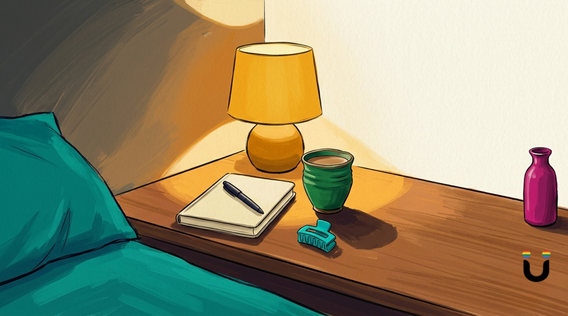
The word worry comes from an Old English verb, wyrgan, which meant to strangle. A dog worried a sheep by seizing it at the throat and shaking it. The meaning softened over the centuries into something you do with your mind, but anyone who has lain awake at 1.40am with the fan clicking and tomorrow's meeting playing on a loop knows the old sense is still in there somewhere. Something has you by the throat. It's just very quiet about it.
Overthinking at night happens because the day's distractions fall away, and the mind, which never got round to processing what it felt, finally has the room to try. Tiredness lowers your ability to steer a thought. Darkness removes the small cues that tell you you're safe. Lying still hands the loop a stage with no competition on it. It's a timing problem, and a timing problem can be worked with.
In our practice, night is where most people's overthinking first turns into a complaint. Nobody books a session because they thought too much on a Tuesday afternoon. They book because they haven't slept properly in three weeks, and the not-sleeping has begun to frighten them. So it's worth understanding why the mind picks this particular hour, and why the hour is such poor evidence, whatever it feels like at 2am, that something in you is broken.
Why does overthinking get worse at night?
Because night takes away the three things that keep a loop in check all day: other people, other tasks, and light.
The psychologist Allison Harvey, whose 2002 cognitive model of insomnia in Behaviour Research and Therapy is still the framework most sleep clinicians reach for, described how the person lying awake is doing two things at once. First they think about whatever the day left unresolved. Then they start thinking about the fact that they aren't sleeping, and what tomorrow is going to cost them for it. The second loop is the one that keeps people up. Worry about worry.
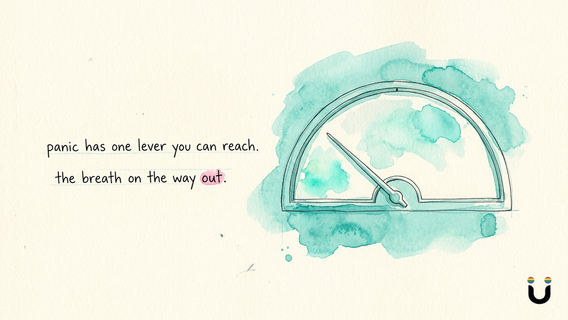
There's a biological piece here that most of us badly underestimate. Regulating a thought, deciding it isn't useful and setting it down, takes effort from the front of the brain. That effort is precisely what you have least of at midnight. So the thought you brushed off easily at 11am, when you had coffee and a colleague and a deadline pulling at you, comes back at 1am with identical content and none of your resources to meet it. The thought didn't grow. You shrank.
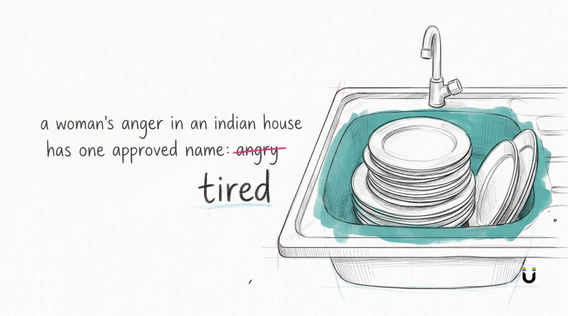
And then there's the Indian piece. In a lot of our homes, night is the first genuinely private hour of the day. The parents have gone to bed. The house help has left. The phone has finally gone still, because everyone else is asleep too. For a woman especially, one who may have spent the entire day tending to what other people needed, the hour when nobody needs anything is the hour her own mind gets its turn. And it's no accident that the turn it takes is straight toward everything she pushed down in order to get through the day.
What is actually happening in your mind at 2am?
Unfinished feeling is getting a hearing. This is the thesis of our longer piece on why people overthink, and night is where it is most visible. The meeting you keep replaying is really about the second you felt small in it, and didn't have time to feel small, because the next call was already starting. The message you draft and delete and draft again is about a fear of being too much that you've carried since school. The mind is doing its filing at 2am. The only trouble is that the filing is loud, and you're tired, and all you wanted was to sleep.
There's a specific loneliness to being awake in a house where everyone else is asleep, holding something you have no language for. A lot of the women who come to us describe it almost word for word. They could tell someone, in theory. In practice the only people awake to tell are the ones already inside their head, and those people are not kind.
The thought didn't get bigger at 1am. You got smaller.
Is it bad to lie in bed and think?
For your sleep, yes, and the reason is one of the more useful things sleep research has turned up. Your bed is a cue. Spend enough nights in it awake, tense and thinking, and the bed itself begins to signal alertness, the way a desk signals work. This is why sleep clinicians, working in the behavioural tradition Harvey's model was built on, tell you to get up after about twenty minutes of lying awake, do something dull in low light, and come back only once you're sleepy. It feels completely wrong. It works.
For your mind, the answer is more tangled, and this is where we'd rather be honest than tidy. Some of what happens at 2am is real thinking. The decision you've been dodging for a month sometimes gets made at exactly that hour, precisely because the noise has finally stopped. We won't tell you that night thoughts are all distortions. Some of them are the truest thoughts you'll have all day. The problem is where you're having them: in bed, in the dark, with no way to write them down and no one to say them to, so they circle instead of landing anywhere.
What helps with overthinking at night?
Writing it down before bed, specifically.
A 2018 study led by Michael Scullin University, published in the Journal of Experimental Psychology: General, put 57 healthy young adults in a sleep laboratory and had half of them spend five minutes before bed writing a detailed list of everything they had to do over the coming days. The other half wrote about tasks they'd already finished. Measured with electrodes rather than by self-report, the people who wrote the list of unfinished tasks fell asleep faster, and the more specific their list, the faster they dropped off. The sample was small and American, so we hold the finding lightly. But the mechanism it points at, getting the unfinished thing out of your head and onto paper where it can wait until morning, is the same one we watch work in the room week after week.
This is the logic behind Night Pages, our 21-night guided writing series: a few minutes of structured writing before the light goes off, so the loop has somewhere to go other than the ceiling. Less a diary than a place to set the thing down.
Two other starting points, both therapist-approved and both boringly practical. The first is a worry window earlier in the evening. Fifteen minutes, on the balcony or at the dining table, where you deliberately sit and think about everything you're afraid of. It sounds like inviting the problem indoors. What it really does is give the mind an appointment, so that when the thought turns up at 1am you can tell it, with a straight face, that you already handled this at 8. The second is a grounding practice for the nights the loop has already started, something that uses the hands and the senses, because the loop lives in words and the body doesn't speak them. Dots To Ground You was designed for exactly this, and our post on three gentle grounding techniques walks through the ones that need no equipment at all.
If you're staying up late on purpose, scrolling because the night is the only stretch of time that feels like yours, that's a different pattern with its own logic, and we wrote about it in our piece on revenge bedtime procrastination.
When should you worry about the worrying?
When it's been most nights for more than a month. When you've started dreading the bed itself. Or when the thoughts at night have begun to include the idea that things would be easier if you weren't here. That last one is a signal to talk to someone this week, a psychologist, a doctor, a helpline, whoever you can reach fastest. The therapy page has our practitioners; the helplines across India are listed on the site too.
For everyone else: the loop at night is what an unfinished day sounds like once the house goes quiet. Some nights the writing will work and you'll sleep. Some nights it won't, and you'll lie there anyway, and the fan will click, and the morning will come regardless. Both of those nights are survivable. We know, because we've had both.
What else do people ask about overthinking at night?
Why do I overthink at night but not during the day?
During the day, work and people and light all compete with the loop, and your brain has more capacity to steer a thought. At night all three drop away, and tiredness cuts the effort you can spend putting a thought down. The thought is the same one. Your resources aren't.
Is overthinking at night a sign of anxiety?
It can be. The occasional night of racing thoughts is ordinary. Most nights for more than a month, with dread about bedtime and a body that stays tense, is a common way an anxiety disorder shows up in India. Our post on the difference between overthinking and anxiety covers how to tell.
Does writing before bed actually help you sleep?
In a 2018 laboratory study by Scullin and colleagues, adults who spent five minutes writing a specific list of unfinished tasks before bed fell asleep faster than those who wrote about completed ones. The study was small and American. The mechanism, moving unfinished thought out of the head, is well supported clinically.
Should I get out of bed if I can't stop thinking?
Yes, after about twenty minutes. Lying awake and tense in bed teaches your body to link the bed with alertness. Get up, keep the lights low, do something dull, and come back when you feel sleepy. It's a standard component of cognitive behavioural therapy for insomnia.
Sources
- Harvey AG. A cognitive model of insomnia. Behaviour Research and Therapy, 2002, 40(8), 869 to 893. PubMed record
- Scullin MK, Krueger ML, Ballard HK, Pruett N, Bliwise DL. The effects of bedtime writing on difficulty falling asleep: a polysomnographic study comparing to do lists and completed activity lists. Journal of Experimental Psychology: General, 2018, 147(1), 139 to 146. Sample: 57 healthy adults aged 18 to 30, United States. Full text (PMC)
Still carrying the thoughts into bed?
If your mind only seems to get louder once the lights go off, it may not need more discipline. It may need somewhere to put the unfinished day.
Night Pages is our guided writing series with 21 nights of structured prompts designed to help racing thoughts land somewhere other than the ceiling.