
It has been three weeks. The Slack is archived, the last salaries went out, and Karan has answered the same message eleven times: so what's next, boss. He has no answer. He also cannot explain to anyone why he keeps opening the analytics dashboard for a product nobody uses any more. (Karan is a composite, and there have been a great many of him in Indian startups these last two years.)
Losing a business can produce genuine grief. Dean Shepherd's model describes two coping approaches: a loss orientation that confronts the loss directly, and a restoration orientation that deliberately distracts from it. He argues that oscillating between the two speeds recovery more than either alone.
Which means the two pieces of advice you are being given, both loudly, are each half right.
Is Grief Really the Right Word?
It is the word the research uses, and using it changes what you expect of yourself.
Dean Shepherd published Learning from Business Failure in the Academy of Management Review in 2003, applying the psychological literature on grief to what happens when a business dies. His argument is that the loss produces a negative emotional response that actively interferes with your ability to learn from the events surrounding it. Recovery, in his terms, is reached when thoughts about the loss stop producing that response.
Notice what that framing does. It stops treating your state as a performance problem. The reason you cannot yet write the clear-eyed post mortem everyone is asking for is not that you lack rigour. It is that grief is occupying the part of you that does analysis, and it will keep doing so for a while.
The paper is theoretical rather than empirical, so treat it as a well argued model rather than a measured finding. It has been built on by two decades of work since.
Why Does All the Advice Contradict Itself?
Because both camps are describing a real coping strategy and each has mistaken theirs for the whole answer.
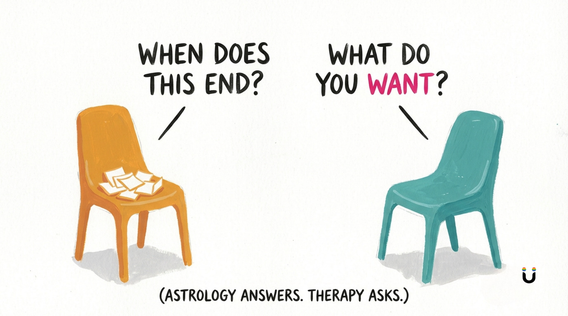
Shepherd sets out two orientations, described in detail here. A loss orientation means turning toward the loss: confronting what happened, sitting with the emotions, working through the sequence until it makes sense. A restoration orientation means turning away: deliberate distraction, occupying yourself elsewhere, letting the memories fade rather than examining them.
The founder ecosystem has strong opinions in both directions. Write the honest shutdown post, do the full autopsy, feel it properly. Or: stop marinating, ship something, the best therapy is a new problem.
Shepherd's conclusion is that neither on its own is optimal. Oscillating between them speeds recovery more than committing to either. Some days you look at it directly. Other days you deliberately do not, and that avoidance is doing legitimate work rather than being denial.
You are allowed to spend Tuesday reading your own investor updates from eighteen months ago and Wednesday refusing to think about it at all. That is not inconsistency. On this model it is the mechanism.
What Makes This Different From Losing a Job?
Three things, and they compound.
The thing that ended was partly you. Most founders describe an overlap between self and company that no employee has. When the company dies, some proportion of your answer to who am I dies with it, and you are expected to produce a new answer at dinner parties within a fortnight.
Other people were carrying your decisions. Employees who moved cities, investors who backed you, sometimes friends and family who put money in. Research on founder failure keeps surfacing this social dimension: the loss is bound up with a sense of responsibility toward people who trusted you, and that is qualitatively different from a redundancy.
It was public. Employees announce a shutdown to their network as news. A founder announces it as an obituary for something they were the face of. The condolence messages are also, unavoidably, a performance review.
We have written about what the Indian startup grind does to people while the company is still alive. This is the version that arrives after.
What Does This Look Like in an Indian Family?
Like a conversation that has been coming for two years.
Somebody in your family agreed to something when you started. A parent who stopped mentioning the stable job. A spouse who took the salaried role so the household had a floor. An extended family for whom your company became a fact stated at weddings, slightly inaccurately, with pride.
The shutdown is not only your loss. It lands on people who had already spent social capital on your behalf, and the shame that follows is often less about money than about having asked them to be proud of something that stopped existing. That specific shame is not talked about much, partly because it sounds ungrateful to say your family's belief in you became a weight.
It is also worth saying plainly that in Indian professional culture the failed founder is still read as a person who did not make it rather than a person who tried something hard. That reading is unfair, it is widespread, and pretending otherwise does not help you plan for the next six months of conversations.
What Actually Helps in the First Few Months?
Less than the internet promises, and specific enough to be worth listing.
Let both modes run. Stop treating the days you avoid it as backsliding. On Shepherd's model the alternation is the process, not a failure of discipline.
Delay the post mortem. The analysis you write while grieving will be either self punishing or defensive, and neither is the truth. It will be a better document in four months, and nobody is waiting for it as urgently as you think.
Separate the numbers from the verdict. Do the practical things on a schedule: closure filings, dues, references for your team. Those are tasks. They are not evidence about your worth, even though completing them will feel like signing a confession.
Find the people who were in it. Other founders who have shut something down recognise the specifics without preamble. Choose the ones who are not currently raising, because a room where everyone is performing recovery is not a room where you can be honest.
Keep one thing that is not the next company. A body that gets moved, a person you see weekly, something that made you a person before this. The instinct to immediately start again is strong and it is sometimes restoration orientation working well. It is sometimes also a way of not being still.
When Is It More Than Grief?
When it stops moving at all, and this is the section to read properly rather than skim.
Grief tends to come in waves and to shift over weeks. Watch instead for the things that stay flat: sleep that has not been right for more than a month, an appetite that has not returned, withdrawal from people you actually like, drinking more in the evenings to stop the thinking, or a sense of being a burden to the people around you. A founder who feels they have let down employees, investors and family at once can arrive at that last thought quickly, and it is a signal to get help rather than a fact about you.
If you are anywhere near feeling that you would rather not be here, please talk to someone tonight. The numbers are at the bottom of this page and they are answered by people who will not need the context explained. Speaking to a therapist is also a reasonable thing to do well before that point, and most founders wait far longer than they need to. We have written about what exhaustion does and what recovery actually needs, and about what happens to your thinking during a crisis.
Karan will stop opening the dashboard eventually. Not because he decides to, and not on a day he notices. He will simply realise one afternoon in the autumn that he has not checked it in a fortnight, and that the number he used to look at has stopped being a fact about him. That is what Shepherd means by recovery, and it arrives late and without ceremony.
What Else Do People Ask About Founder Failure?
Is it normal to grieve a failed startup?
Yes, and the research uses that word deliberately. Dean Shepherd's 2003 paper in the Academy of Management Review applies the psychology of grief to business failure, arguing that the loss produces a negative emotional response that interferes with the ability to learn from what happened. Recovery is reached when thoughts about the loss no longer produce that response.
Should I analyse what went wrong or move on?
Both, alternately. Shepherd describes a loss orientation, confronting the loss and working through it, and a restoration orientation, deliberately distracting from it, and concludes that oscillating between the two speeds recovery more than either alone. Days when you avoid thinking about the failure are part of the process rather than avoidance.
Why does a startup failure hurt more than losing a job?
Because the identity overlap is greater, because other people were carrying your decisions, and because the ending was public. Employees, investors and sometimes family trusted the venture, and research on founder failure repeatedly surfaces a sense of responsibility toward them that is qualitatively different from redundancy.
How long does it take to recover from a business failure?
There is no fixed period, and Shepherd's model defines recovery by a change in emotional response rather than by elapsed time. What is more useful than a timeline is direction: grief that shifts in waves over weeks is expected, while a state that stays flat for more than a month, particularly around sleep, appetite and withdrawal from people, is worth taking to a professional.
When should a founder get professional help after a shutdown?
Earlier than most do. Persistent sleep disruption, appetite that has not returned, withdrawal from people you enjoy, drinking more to stop the thinking, or a sense of being a burden to others are all sufficient reasons. If you feel you would rather not be here, speak to someone the same day.
If you are struggling right now, please reach out. iCall: 9152987821 (Mon to Sat, 8am to 10pm). Tele-MANAS: 14416 (24 hours). Both are free and confidential.
A note on the cover image
The image at the top of this piece was generated by AI, to a brief written by us. It is not a photograph and does not depict a real person or place.
Sources
Shepherd, D. A. (2003). Learning from Business Failure: Propositions of Grief Recovery for the Self-Employed. Academy of Management Review, 28(2), 318-328. A theoretical paper rather than an empirical study. The original is paywalled at the publisher and at JSTOR; we have read the abstract at Semantic Scholar and relied for the detail of the loss, restoration and oscillation orientations on the summary in the accessible paper below. We have not read Shepherd's paper in full.
Entrepreneurial learning from failure: an interpretative phenomenological analysis, which summarises Shepherd's grief recovery model and reports founders' accounts of responsibility toward employees, investors and family. Full text
The Indian material in this piece is clinical and cultural observation rather than a research finding, and is not presented as one.