
Somewhere in a Mumbai office this quarter, an HR lead will present a slide with a participation number on it. Four hundred employees enrolled in the meditation app. Sixty-two attended the resilience webinar. The slide will be received well, because a participation number looks like an answer. The question it is answering is whether people signed up, which nobody was asking.
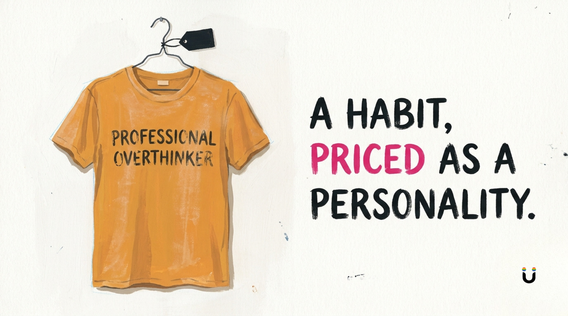
Corporate wellness programmes in India are mostly interventions aimed at the individual worker: apps, resilience training, counselling helplines. The largest study of these compared 46,336 UK workers and found participants no better off than people who did not take part. No equivalent Indian study exists. The stronger evidence points at working conditions.
We should say plainly that we sell workplace mental health services. Read the rest with that in mind.
What Does the Biggest Study on Workplace Wellness Actually Find?
Nothing, which is the finding. William Fleming, at the University of Oxford's Wellbeing Research Centre, published the analysis in the Industrial Relations Journal in January 2024. He compared people who took part in common wellbeing offerings against people in the same organisations who did not: resilience training, mindfulness, wellbeing apps. The sample was 46,336 workers across 233 organisations. Across the wellbeing measures used, participants appeared no better off.
The paper is careful in a way the headlines were not. It is a snapshot taken at one point in time, not a sequence, so it cannot demonstrate that a mindfulness app caused nothing to happen. It only shows that the people who used one were not doing better than the people who did not. It is British data. It is one paper by one author.
We have looked for an Indian replication. There is not one. Every Indian vendor quoting Fleming, ourselves included, is borrowing a British result and hoping it travels.
Where Do the ROI Numbers in Every Vendor Deck Come From?
From the people who authorised the spend. This is worth sitting with, because the number in question is everywhere. In its 2026 Return on Wellbeing report, published in May 2026, Wellhub surveyed more than 1,500 HR and benefits leaders across ten countries. It found that 61% of organisations measure the return on their wellbeing programmes, and that among those, 95% report a positive return.
Read the object rather than the headline. That is a survey of buyers, asked to grade their own purchase. Six in ten measure anything at all, and of those six, almost all conclude they were right. The finding is real information about how HR leaders feel. It is not information about whether anyone slept better.
A participation rate tells you people enrolled. A satisfaction score tells you the buyer is pleased. Neither of these is a health outcome, and the wellness market has spent a decade allowing them to stand in for one.
Why Is Switching Off a Structural Problem Rather Than a Personal One?
Because the ability to stop thinking about work has known causes, and most of them sit outside the worker. Sabine Sonnentag and Charlotte Fritz named the state psychological detachment: refraining from job related activities and thoughts during nonwork time. Reviewing the evidence in the Journal of Organizational Behavior in 2015, they found that job stressors, workload above all, predict low detachment, and that a lack of detachment predicts high strain and poor wellbeing, including burnout.
Notice where the app arrives in that chain. It arrives at the end, after the workload has already done its work, and asks the person to breathe.
Their own practical recommendations are not about the employee at all. They write that supervisors should model detachment behaviours themselves, and should be trained to stop assigning tasks that are not essential during nonwork time, including the softer version: why don't you have a think about that proposal tonight and come back to me in the morning. On policy they are blunter still. Limiting working hours matters, and it is not enough on its own.
This is the part the founder sending the 11pm message tends to skip. She is not sleeping either. She has built the pattern that keeps her own nervous system switched on, and then bought her team a subscription to fix it. The pattern of exhaustion inside Indian startups is rarely a shortage of coping skills at the bottom.
What Does India Specifically Lack Here?
A legal floor under rest. Indian labour law regulates working hours and overtime. It has no concept of connection time, meaning the hours in which an employee remains reachable. Someone answering a WhatsApp message at 11pm is not working in any sense the statute recognises. Her body did not receive that memo.
On 5 December 2025, MP Supriya Sule introduced the Right to Disconnect Bill, 2025 in the Lok Sabha, proposing that an employee may decline to answer work communication outside their hours without facing consequences for it. She introduced earlier versions in 2018 and in 2021. Both lapsed. It is a private member's bill, and since 1952 only fourteen of those have become law in India. The last one to pass did so in 1968.
The reason the idea keeps returning is not abstract. In 2024, Anna Sebastian Perayil, a 26 year old chartered accountant, died four months into her first job in Pune, and her mother's account of the workload became a national conversation. The conversation lasted a few weeks. Then it turned, as it reliably does, to whether young Indians are simply less resilient than their parents were. Resilience being, of course, the thing the vendors sell training in.
Why Does Everyone Keep Buying the Thing the Evidence Does Not Support?
Because the alternative is expensive and threatening to the person holding the budget. A resilience webinar costs a company a few tens of thousands of rupees, asks nothing of leadership, and produces an attendance figure for the board pack. Redesigning the meeting structure that pushes real work past 7pm requires the leadership team to accept that the meeting structure is theirs.
Fleming's own reading of his null result is that these offerings are failing to supply resources that match the demands people are actually under. Which points the question back at the demands. Workload, scheduling, who is allowed to send what at what hour. Every one of those is a conversation about how the company is run, held in front of the people running it. That conversation does not fit inside a wellness budget, and it was never meant to. This is the honest explanation for the shape of the market, and no amount of clinical language from vendors like us alters it.
None of which means individual support is worthless. Therapy helps people, reliably, and a person in distress at work deserves access to it. The error is treating access to therapy as a workload policy. One is care for a person. The other is a decision about how many hours of unrecovered attention a company extracts before it counts as a cost.
What Would Honest Evidence Actually Look Like?
A number before, a number after, and a vendor willing to publish the ones that did not move.
Measure recovery rather than engagement. Engagement is surveyed once a year and tells you how people feel about the employer. Recovery tells you whether the nervous system gets to stand down, which is closer to whether someone is still in the job in eighteen months. Use instruments that have been validated. Report only in aggregate, with a minimum group size, so no team of four can be identified in the numbers. State the limit out loud: measured change in this group over this period, which is not proof that a programme caused it.
Almost nobody in this market will publish a null result, because a null result reads as a failed product. Which is exactly why a null result is now the only credible thing left to publish. We have started collecting these numbers on our own work and we do not have them yet, so we cannot claim to have moved anything either. What we have done is make it possible to be caught.
So the question worth asking any vendor, ours included, is what they have published that made them look bad. The culture inside most Indian workplaces is not going to be changed by a company that cannot survive its own data. Most of them will not understand the question.
What Else Do People Ask About Corporate Wellness Programmes?
Do corporate wellness programmes actually work?
The largest study of the question is Fleming (2024), published in the Industrial Relations Journal. Comparing 46,336 UK workers across 233 organisations, it found participants in wellbeing interventions aimed at the individual worker, including resilience training, mindfulness and wellbeing apps, appeared no better off than people who did not take part. The study is a snapshot rather than a sequence, so it cannot establish cause, and it has not been replicated in India.
What is the ROI of employee wellness programs in India?
No independent Indian study has established it. The figures quoted in most vendor material come from surveys of HR buyers reporting on purchases they authorised. Wellhub's 2026 Return on Wellbeing report, based on more than 1,500 HR and benefits leaders across ten countries, found 61% of organisations measure ROI and 95% of those report a positive return. Buyer satisfaction is a different thing from a measured health outcome.
What is psychological detachment from work?
Psychological detachment is refraining from work related activities and thoughts during nonwork time. Sonnentag and Fritz's 2015 review in the Journal of Organizational Behavior found that job stressors, particularly workload, predict low detachment, and that low detachment predicts strain, exhaustion and poorer wellbeing. Because workload drives it, detachment is largely determined by how work is organised.
Does India have a right to disconnect law?
No. Indian labour law regulates working hours and overtime but does not address the hours in which an employee remains contactable. The Right to Disconnect Bill, 2025 was introduced in the Lok Sabha by MP Supriya Sule on 5 December 2025 as a private member's bill, and remains pending. Earlier versions introduced in 2018 and 2021 both lapsed. Since 1952, only fourteen private member's bills have become law in India.
A note on the cover image
The image at the top of this piece was generated by AI, to a brief written by us. It is not a photograph and it does not depict a real place or person. We mention it because a piece arguing that vendors should disclose the inconvenient thing should disclose its own.
Sources
Fleming, W. J. (2024). Employee well-being outcomes from individual-level mental health interventions: Cross-sectional evidence from the United Kingdom. Industrial Relations Journal, 55, 162-182. Wellbeing Research Centre, University of Oxford
Sonnentag, S., & Fritz, C. (2015). Recovery from job stress: The stressor-detachment model as an integrative framework. Journal of Organizational Behavior, 36, S72-S103. Full text
Wellhub (2026). 2026 Return on Wellbeing Report, survey of more than 1,500 HR and benefits leaders across ten countries. Wellhub newsroom, 27 May 2026
The Right to Disconnect Bill, 2025. Private member's bill introduced in the Lok Sabha, 5 December 2025; status pending. Status verified against the Sansad record by FACTLY
Background on the Bill and on the death of Anna Sebastian Perayil, 2024. ThePrint