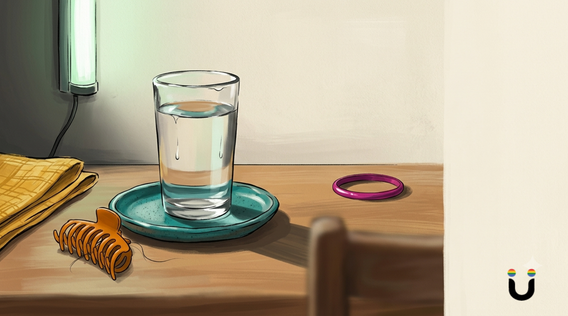
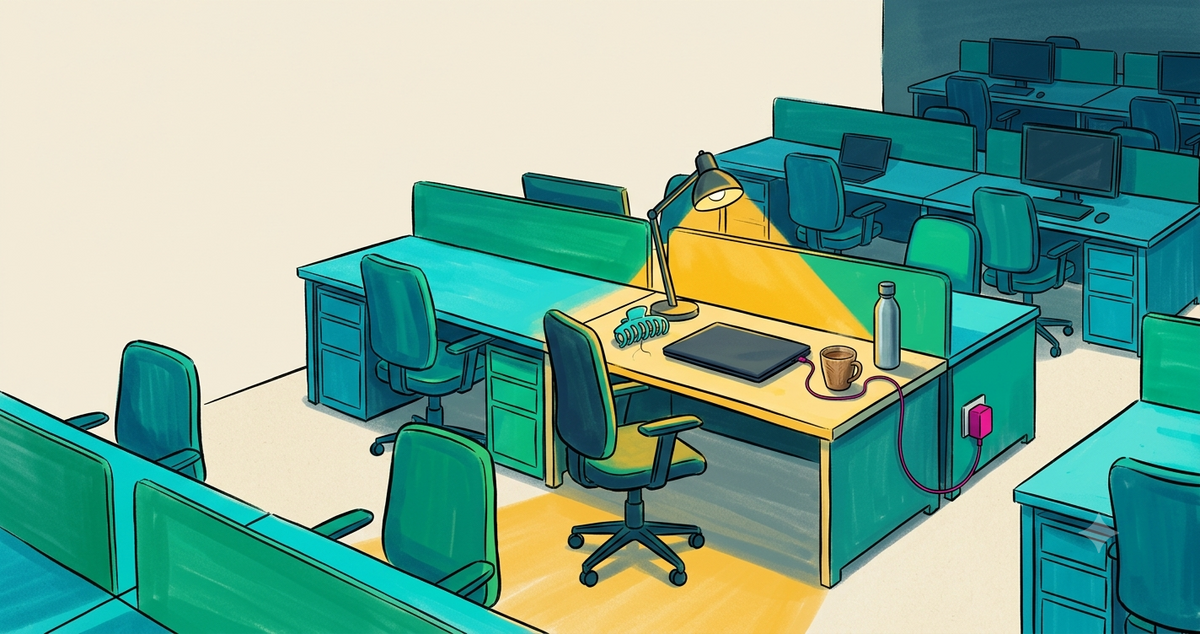
Image Source: AI Generated
Ira (name changed; shared with consent) had a breakdown at her desk on a Tuesday and told everyone it was a stomach bug. She is twenty nine, a senior engineer at a product company in Bengaluru, the person her team pings when something breaks at eleven at night. By six most evenings she is emptied out in a way that has nothing to do with how much she actually did that day. When I ask her about it, she has the explanation ready. "I'm just type A," she says, and moves on, as if that closes the subject.
High performers burn out first because capability hides the cost. The more weight you can carry, the more you get handed. The better you are at absorbing pressure, the longer nobody notices you are running low. Burnout tends to arrive first in the person who looks most fine, which is exactly why it gets caught so late.
Why do the highest performers burn out first?
Because being good at your job turns you into the system that holds everything together. High performers get more work precisely because they deliver, and they rarely push back, because delivering is where their sense of worth lives. The World Health Organization, which in 2019 classified burnout in the ICD-11, describes it as a syndrome resulting from chronic workplace stress that has not been managed, marked by three signs: energy depletion, growing cynicism about the work, and a creeping sense that nothing you do is enough. Read that last one again. The person most likely to feel their output is never enough is not the coaster. It is the one whose bar was highest to begin with.
For Ira, the tell was not the workload. It was that she had folded her whole self into being reliable. When your identity and your usefulness become the same thing, resting starts to feel like disappearing. We wrote about this fusion in The Danger of Being Just One Thing, on what happens when you let yourself be only your job.
What does high functioning burnout actually look like?
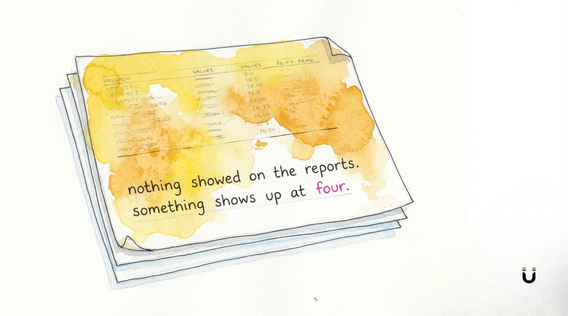
It looks like coping. That is the whole difficulty. High functioning burnout does not stop you from working. It hollows out the inside while the outside keeps hitting deadlines. The deliverables go out on time. The exhaustion, the numbness about projects you used to care about, the flare of irritation at a neutral message, the six pm depletion that does not match the day, all of it stays private. The body usually raises the alarm before the mind agrees to hear it. Ira called hers a stomach bug. Plenty of people call theirs a bad week, a slump, a phase. The signal gets renamed into something less inconvenient, and the renaming buys a few more months of running on empty.
The body usually raises the alarm long before the mind agrees to hear it.
Why is burnout so easy to hide in Indian tech?
Because the culture rewards the disguise. When prominent Indian business leaders publicly champion working seventy or even ninety hours a week, overwork stops reading as a warning and starts reading as virtue. In an industry with no real off switch, where a message at eleven at night is normal and answering it is loyalty, the person who is drowning and the person who is thriving can look identical from the outside. Both are online. Both are delivering. The fear underneath is specific, and it is rarely said out loud: to admit you are struggling is to risk being seen as not a performer, and in tech, not a performer is the worst thing you can be. So you stay silent and you stay online. The Art of Doing Nothing sits inside this same knot, a culture where rest itself now sets off guilt.
Is being type A a personality, or a way of coping?
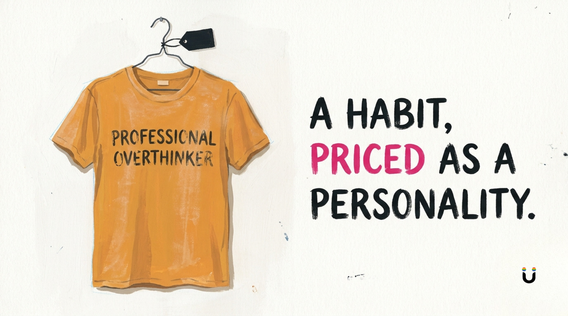
The label hides more than it reveals. "Type A" gets worn as a personality, something fixed, almost a boast. But look at what it actually describes in someone like Ira. An inability to stop. A nervous system that reads rest as danger. A sense of worth that has to be re-earned every single day. That is not a personality. It is a coping style, usually learned early, in homes and schools where being impressive was how you stayed safe or stayed loved. We call a person "high functioning" as a compliment. Function. As if the measure of a life were whether the machine still runs on time. Ira was high functioning right up until the Tuesday she wasn't, and everyone was surprised, because the machine had never once missed a deadline.
What makes this so hard to stop?
The honest answer is that the thing hollowing her out is the same thing everyone praises her for. You cannot easily surrender a coping style that is also your reputation, your promotions, and the reason people trust you. Stopping does not feel like relief. It feels like losing the self that earned all of it. And there is a harder layer beneath that. India's National Mental Health Survey, run by NIMHANS across 2015 and 2016 with more than thirty four thousand people, put the overall treatment gap for mental disorders at about eighty four percent. Fewer than one in six people who need mental health care in India actually receive it. The high performer is very often inside that gap by choice, because reaching for help reads, to her, as the same confession she has spent years avoiding: that she is not, in fact, handling it. This is where a holiday stops being the answer. That next break will not fix this if what is draining you is structural and you come back to the same load. Sometimes what needs to change is not you. It is the arrangement.
What actually helps when you are burning out?
Not a productivity hack. The starting points are slower than that, and none of them is a cure. One is to begin loosening the knot between your worth and your output, which sounds abstract until you catch the exact thought ("if I rest, I am falling behind") and hold it as a thought rather than a fact. Another is to read your body's signals as information. The six pm crash, the Sunday night dread, the stomach that keeps acting up: these are data, and treating them as weakness is how you learn to ignore them. A third is to ask, honestly, whether the problem is your limits or your load, because no amount of self care repairs a job that is structurally impossible, and reaching for support before you collapse is not failure. If talking to someone feels like too much, therapy can simply be the room where you stop calling the exhaustion normal. If even that feels like a leap, writing down what actually drained you this week is a place to begin noticing.
Ira is not "fixed." She still answers messages at eleven at night more often than she means to, still reaches for the words type A when what she means is tired. What has shifted is that she catches the cost while it is happening now, instead of after her body sends the invoice. That is not a triumphant ending. It is a smaller and truer one. The point was never to stop being capable. It is to stop mistaking the capability for the whole of you, and to learn to read the warning before the next Tuesday you cannot explain away.
Frequently asked questions
What is high functioning burnout?
High functioning burnout is chronic work stress in someone who keeps performing while depleting on the inside. Deadlines are still met, so nobody, including the person, registers the exhaustion, cynicism, and sense of never doing enough until something gives. It is easy to miss precisely because output stays intact.
Why do high achievers burn out more than others?
High achievers get handed more work because they deliver, and they rarely refuse, because their self worth is tied to being capable. A high tolerance for pressure lets them override the warning signs for longer, so the collapse tends to come later and harder than for people who set limits earlier.
Can a holiday fix burnout?
A holiday can offer relief, but it rarely fixes burnout if you return to the same load and the same always on culture. When the cause is structural, rest alone resets nothing. What changes things is adjusting the arrangement itself, and seeking support before you reach collapse.
World Health Organization on burn-out as an occupational phenomenon (ICD-11), 2019 — who.int
Gautham MS, Gururaj G, Varghese M, Benegal V, et al. (2020). The National Mental Health Survey of India (2016): prevalence, socio-demographic correlates and treatment gap of mental morbidity. International Journal of Social Psychiatry, 66(4), 361–372 (overall treatment gap 84.5%; NIMHANS, 34,802 respondents) — journals.sagepub.com
On India's celebrated overwork culture: reported public remarks by Infosys co-founder N R Narayana Murthy (70-hour week) and L&T chairman S N Subrahmanyan (90-hour week) — india.com