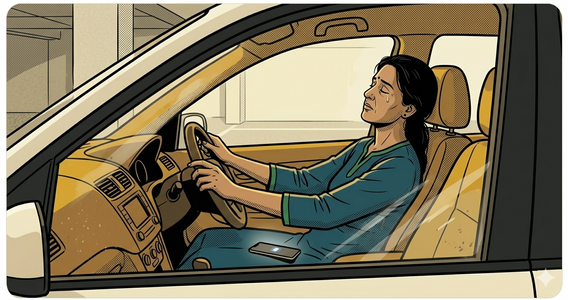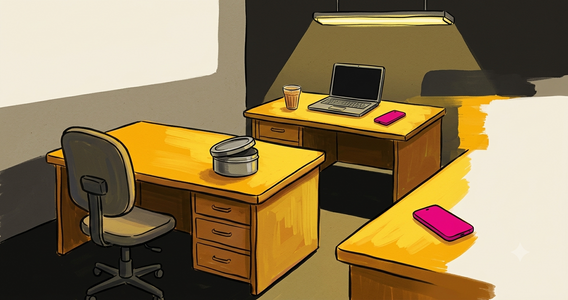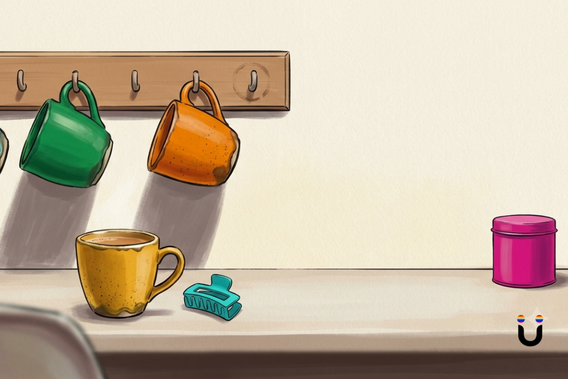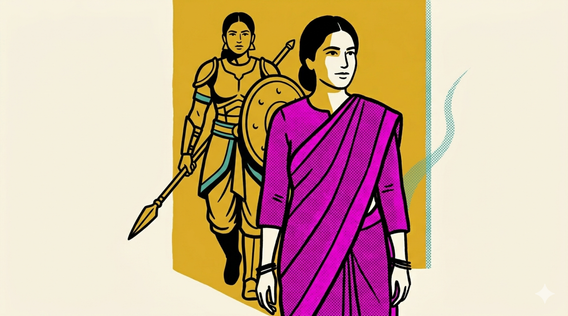
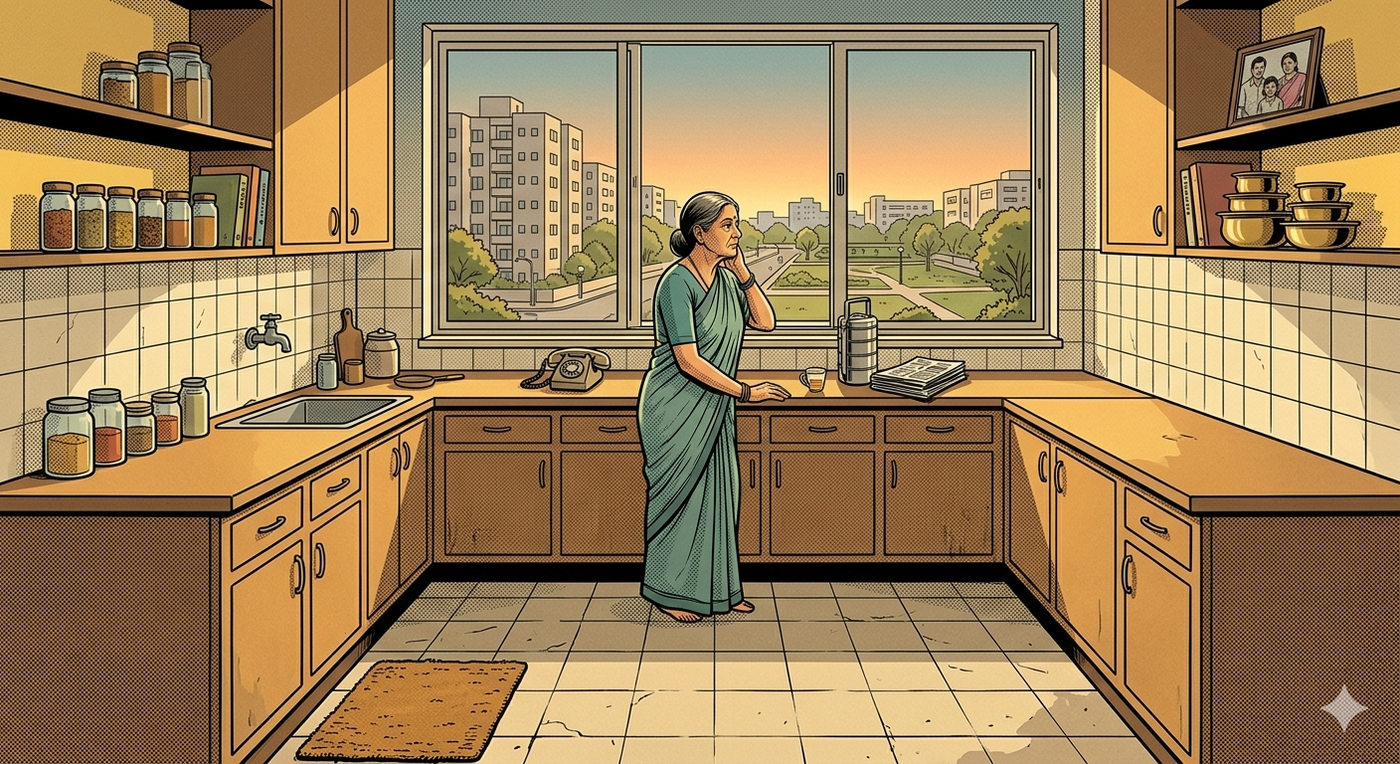
Sudha woke at six on the first Monday of her retirement, the way she had for thirty one years, and for the first time in her life there was nowhere to go. She lay in bed and listened to the building come awake. Somewhere a pressure cooker. Somewhere a school van. By half past seven she would once have been at the bank in Pune, unlocking the branch, the security guard wishing her good morning, the day already needing her. Loneliness after retirement does not announce itself on the first morning. It arrives slowly, in the shape of all the things that no longer ask anything of you.
She had wanted this. She would tell you so herself. So why did the wanting and the dread sit in the same chest? (Name changed; shared with consent.)
Retirement is the only loss we are expected to be grateful for.
Why does retirement feel like loss when everyone calls it a reward?
Retirement removes four things at once: a daily structure, a sense of purpose, regular company, and the feeling of being needed. Losing any single one of them would be hard. Losing all four in one morning is a shock the body registers long before the mind finds words for it.
The branch had given Sudha far more than a salary. It gave her a junior who knocked on her cabin every morning with a loan file he could not clear without her. It gave her a customer of twenty years who refused to be served by anyone else. It gave her the canteen, the audit week panic, the exact weight of her own keys. None of that was in her appointment letter, and all of it left on the same afternoon as the farewell cake. What psychologists call role loss is not the loss of a job. It is the loss of a role that had quietly organised your identity and your hours for decades.
The cruelty is in the timing. A bereavement gives you a body to mourn and a week of relatives in your living room. Retirement gives you a cake and a Monday.
What is the grief nobody gave you permission to feel?
The psychologist Kenneth Doka gave this a name in 1989: disenfranchised grief. It is grief for a loss that the people around you do not recognise as a loss, so it is never openly acknowledged, mourned, or supported. There is no ritual for it. No leave. No casserole sent to the door.
Doka's insight was that some losses come with what he called empathetic failure. Others look at what you are carrying and decide it does not qualify. When a colleague's parent dies, we know what to say. When a colleague retires, we say congratulations. The retiree receives applause where they needed condolence, and is left holding a grief that the room has agreed is actually good fortune.
Sudha felt this in her own home. Her daughter, who loves her, said, "Ma, now you can finally rest," and meant every word of it. Sudha smiled and said yes, finally. And something in her went silent, because there was no room in that lovely sentence for the thing she had lost. So the grief went underground, the way disenfranchised grief always does. It came out instead as a short temper with the maid, as three afternoons of television, as a sudden sharp interest in everyone else's business. We almost never read these as mourning. We read them as "Papa has become so difficult since he retired."
Why is this loss sharper in Indian homes?
In India, work and worth are stitched together more tightly than in most cultures, and the family is the operating system, not the backdrop. When the role ends, both the public identity and the household's sense of who you are can shift overnight.
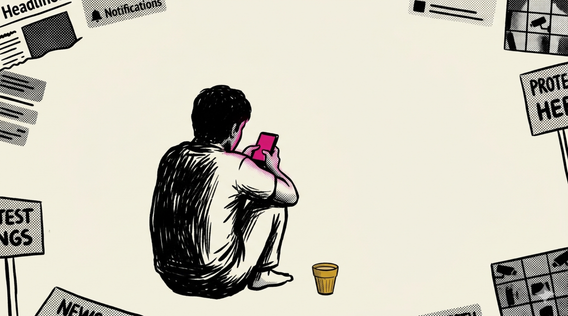
For a generation that introduced itself by designation, the question aap kya karte hain had a clean, immediate answer for forty years. Then one morning it did not. The Longitudinal Ageing Study in India found that 13.4 per cent of people over sixty reported frequent loneliness, and that was before you account for how many would never use the word. The joint family that once absorbed an ageing parent into its daily noise has thinned into a nuclear flat, often in another city, sometimes another country, the grandchildren visiting through a screen. The loss does not stay in the mind, either. It settles into the body, the way loneliness tends to live in the chest and the breath long before we have language for it.
There is also a particular Indian script waiting for the retiree: this is the earned chapter, the time for pooja and pilgrimage and grandchildren and rest. It is a generous script. It is also a closed one. It leaves no sanctioned space to sit at the kitchen table and say, "I am lonely, and I no longer know who I am." Men who retired from structured roles often feel the steepest fall, because so much of the self was poured into the role. And for many women, the loss arrives sideways: the day a husband retires, the home that was hers for forty years is suddenly occupied all day, and her own routine quietly bends around his.
But wasn't rest the whole point?
Yes. And that is exactly what makes it so hard to say out loud.
Sudha did want to stop. She wanted the end of the alarms and the audits and standing in her own branch's queue for a cup of tea. She got the rest she had asked for, and the rest was unbearable, and both of those were true at the same time. Nobody had prepared her for the possibility that they could be. The people who love her cannot see the loss, because the loss is wearing the face of good luck. So she stopped mentioning it. She told her daughter she was fine. She became, week by week, a person who was fine. This is loneliness that hides behind looking like you have it all sorted, the same way loneliness can hide behind competence in people far younger than her.
Here is the part this piece will not pretend away. Sometimes the acknowledgement never comes. Sometimes you grieve a thing alone because the world has already decided it was a gift, and no amount of explaining will move it. The loneliness of disenfranchised grief is not only that you lost something. It is that you have to defend the loss before anyone will let you mourn it.
So what does coming back to yourself look like?
It begins with calling it what it is. Not boredom, not ingratitude, not "adjusting". Grief. Naming a loss as grief is what gives you permission to mourn it, and mourning is the thing that slowly makes room for something new. Continuity theorist Robert Atchley described retirement as a sequence rather than an event: an early honeymoon, then a slump of disenchantment when the holiday feeling wears off, then a reorientation into a life that fits. The slump is not a failure. It is the middle of the sequence, and almost everyone passes through it.
A few things help the reorientation along, and none of them are about staying busy.
Build a structure you chose this time, rather than one imposed on you. The point of the bank's routine was never the routine. It was the relief of being held by a shape to the day. So make a smaller shape, on your own terms. A morning walk you do not skip. A class on a fixed weekday. A standing chai with the same friend every Tuesday, whether or not there is anything to discuss.
Take the need to be needed seriously, and choose where it goes. Wanting to be needed is not vanity. It is one of the deepest human needs there is, and retirement removes the place it used to live without removing the need itself. Mentoring a younger colleague, teaching, a cause, even becoming the person who runs the building society's affairs: this is not killing time. It is relocating a genuine need to a place you picked, which is a very different thing from being assigned one.
Let yourself be witnessed. The disenfranchised part of this grief is the loneliness of carrying it unseen. Tell one person the truth. Tell your daughter that "now you can rest" landed like a door closing, not opening. It will not undo the loss. But grief gets lighter the moment one other person agrees that it is grief, and not a character flaw. If the mornings have stayed flat for months, if the interest in everything has gone, this is worth taking to a therapist who works with grief and life transitions. Not to be fixed. To be met.
For forty years the question was "what do you do?" and Sudha always had the answer ready before the question had finished. The work now is to sit with a harder one. Not what do you do, but who are you on a Monday when nobody is waiting for you to unlock the door. It is a worse question. It is also, for the first time in three decades, entirely hers to answer.
If the days have lost their shape and you do not know where to begin, sometimes a single page helps more than a plan. A guided journal can be somewhere to set down the version of you the designation used to carry, and to notice who is still there underneath it.
And if the heaviness has not lifted in months, speaking to a psychologist is not an admission of weakness. It is what being met looks like when you cannot find it at home.
Frequently Asked Questions
Is it normal to feel lonely after retirement?
Yes, and it is far more common than the "golden years" idea suggests. Retirement removes daily structure, regular company, a sense of purpose and the feeling of being needed in one move, so a drop into loneliness is an expected response, not a sign that something is wrong with you. In India, the Longitudinal Ageing Study found 13.4 per cent of people over sixty report frequent loneliness, and the real figure is likely higher because many never name it.
Why do I feel like I have lost my identity after retirement?
Because for decades your work did not just fill your hours, it organised who you were. Your role told you what you were good at, who relied on you, and how to answer when someone asked what you do. When the role ends, that scaffolding goes with it. Psychologists call this role loss, and the grief that follows it is real, even though others may struggle to see it as a loss at all.
How long does loneliness after retirement last?
There is no fixed timeline, but the psychologist Robert Atchley described a common sequence: an early honeymoon period, then a slump of disenchantment once the holiday feeling fades, then a gradual reorientation into a life that fits. Many people move through the slump over several months as they rebuild routine and connection. If low mood, flatness or loss of interest persist beyond a few months, it is worth speaking to a professional.
How can I support a parent who feels lonely after retirement?
Stop telling them how lucky they are to finally rest, even though you mean it kindly, because it leaves them no room to admit they are struggling. Instead, name the loss directly and ask what the working day used to give them that they now miss. Help them rebuild a structure they actually choose, take their need to feel useful seriously, and treat persistent low mood as a reason to see a therapist rather than something to wait out.
Sources
Kenneth Doka on disenfranchised grief, the concept that some losses go unacknowledged and unmourned: an overview of Doka's 1989 framework
Longitudinal Ageing Study in India (2018) on loneliness among older adults, reported in ThePrint, on how India's seniors are confronting loneliness
HelpAge India on loneliness and emotional isolation in older adults: HelpAge India
A study on retirement and loneliness using European panel data, on how the loss can hit women differently when a partner has not yet retired: Scientific Reports, 2024