WFH Loneliness Is Different. Here's Why No One Warned You.
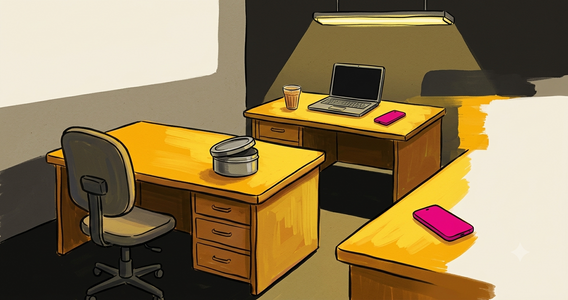
The chair is the witness to your entire day. You haven't had a single conversation today that wasn't a transaction. The most human exchange you had was a "lol" reaction in a Slack channel. And it's only Tuesday.
Riya is 28, a product manager in Mumbai, and she has not stood up from this chair in four hours. The chair is the same chair she sat in for her morning standup at 9. The chair is the same chair she will sit in for her evening Instagram scroll at 9. In between, the chair has hosted four calls, one Swiggy order, and a sandwich she ate while reading Slack. She is fine. She knows she is fine. She also knows, in some small bone-deep way, that something has been quietly draining out of her since she started working from home full-time, and she cannot quite name what it is.
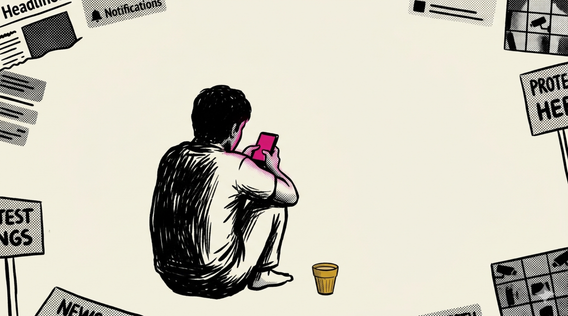
You ordered coffee. You said thanks to the delivery person. You attended four meetings where you said the work things you needed to say and turned your camera off. The most human exchange you had today was a "lol" reaction in a Slack channel. And it's only Tuesday.
In my therapy practice, I meet Riya constantly. Different cities, different jobs, same chair. They come in for what they think is burnout. We sit with it for a few sessions. It is rarely just burnout. Most of the time, what they are calling burnout is loneliness wearing a more socially acceptable name.
WFH Loneliness Is Not "Missing Colleagues"
That is the surface description, and it is a misleading one. If WFH loneliness were just missing colleagues, it would lift the moment you went to a friend's wedding or had lunch with your family. It does not. People come back from a weekend full of people and still feel hollow on Monday morning. Something else is happening.
Here is what I think is actually going on. WFH does not just remove your colleagues. It removes incidental human contact — the entire ambient hum of being in a physical room with other people, including ones you do not know and may not even like. The colleague passing your desk on the way to the printer. The lift conversation about the rain. The chai break with the office crowd, half of whom you would not text on a Saturday. The security guard you nod at every morning. The receptionist who knows your name. None of these are friendships. All of them are micro-doses of human contact your nervous system was using to stay regulated all day, without your having to think about it.
You used to be soaking in low-dose human presence from the moment you left the house to the moment you came back. Your body was registering it whether you noticed or not. Now you are sitting alone in a room, asking the room to do all the regulating that twenty unremarkable strangers used to do for you in passing. The room cannot. It is just a room.
Your Nervous System Is Doing More Work Than You Know
This is where the research gets interesting. John Bowlby's attachment theory, developed in the 1960s, proposed that humans are not built for autonomy in the way we have been told. We are built for proximity. The presence of trusted others, particularly in childhood but also throughout adult life, regulates the nervous system in measurable physiological ways.
More recent work has extended this. Beckes and Coan, in a 2011 paper introducing what they call social baseline theory, made a striking argument. The human brain, they suggest, did not evolve to operate alone. It evolved to operate alongside other human nervous systems, sharing the load of threat detection, decision-making, and emotional regulation. When we are physically alone, the brain has to do all of this by itself. It burns more energy maintaining the same state of regulation that proximity to other people would have given it for free.
WFH people often report being more tired even when they have worked less, and this is part of why. The body is standing alert in a way it was not designed to. Across an eight-hour day, this adds up. Across a year of eight-hour days, it becomes a low-grade exhaustion you cannot account for through your calendar.
Gallup's 2024 State of the Global Workplace report found that one in five workers globally experiences daily loneliness, with the figure rising to roughly 25% among fully remote workers. I am not citing this to scare anyone. I am citing it as relief. If you have been wondering why WFH is taking more out of you than the productivity gurus said it would, it is not just you. It is one in four of us.
Not All WFH Is the Same WFH
This is where I want to be careful, because we have collectively been pretending that WFH is a single experience and it is wildly not.
WFH in a 1BHK in Andheri with no balcony is fundamentally different from WFH in a three-bedroom in Defence Colony with a garden. WFH with a maid and a cook moving through the day is different from WFH alone with no one else in the flat. WFH in your parents' house at 28, with chai arriving at 4pm and your mother asking if you have eaten, is different from WFH alone in a city where you do not know anyone and your only daily face-to-face contact is the Zepto delivery person.
The class and gender dimensions of who can WFH well are enormous, and we do not talk about them. We sold WFH as flexibility, as work-life balance, as the future. For people with money and space and domestic help, it sometimes is. For people in small flats with poor wifi, fielding calls from the kitchen counter, it is something else.
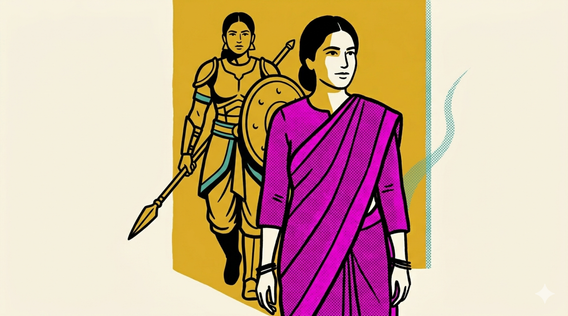
For Indian women in particular, the WFH bargain has often been a rough one. WFH has often meant more domestic labour piled on top of paid work, more isolation from the casual office friendships that were one of the few non-transactional spaces in their week, more time inside spaces where they are responsible for everyone's needs and have no break from being responsible. The feminist critique of WFH has been muted in India. We have sold it as freedom. For many women, it has been the opposite of freedom.
So What Do You Actually Do About It?
Your WFH loneliness is not in your head. It is in your nervous system. It is in your body. It is in the chair you have been sitting on for nine hours. And the answer is not "be more grateful for the flexibility." The answer is to build incidental human contact back into your week, on purpose, because nobody is going to do it for you.
The first thing I ask my WFH clients to do is make incidental contact non-negotiable. Three times a week, minimum. Not friends. Not networking. Just being-in-a-room-with-other-regulated-nervous-systems. A coffee shop. A library. A gym. A co-working day even if your job does not require it. Your body just needs to register I am safe in this room with these people I do not know. That is enough. The regulation will follow.
The second thing is to take the long route, on purpose, multiple times a week. The walk to the chemist instead of the Zepto order. The chai with the chaiwala downstairs instead of the Nespresso pod. The lift conversation with the neighbour you have been avoiding because she always wants to talk about her grandson. These are not friendship-building exercises. They are the micro-doses your body is starving for. You used to get them by accident. Now you have to choose them.
The third is harder, and it requires honesty. Do not romanticise the office, but do not villainise it either. WFH gave you flexibility. Flexibility is real and worth keeping. WFH also took something away. Both are true at the same time. Most people get the hybrid balance wrong by accident, defaulting to whichever pattern requires the least planning. You are allowed to design it on purpose. Two days in office. One co-working day. A standing chai with a colleague who actually lives nearby. A walking call instead of a video call. The shape is yours to set.
You are not lonely because you are weak. You are lonely because you are working in a setup that humans only invented in the last fifteen years, and we are all still figuring out what it costs us. Be kind to yourself about this. And then build the contact back in, deliberately, like the small ongoing repair it is.
If this sounds like you
Sometimes WFH loneliness is the surface of something older — an attachment wound, a long-standing pattern of self-isolation, a chapter of life where everyone moved on and you stayed put. Therapy at The Thought Co. is one place to sort out which is which. If speaking aloud feels like too much right now, our Sunday Journaling Series is a slower, gentler way in. Same questions. Quieter room.
Frequently Asked Questions
Is WFH loneliness a real thing or am I just being dramatic?
WFH loneliness is real and physiologically measurable. Gallup's 2024 State of the Global Workplace report found roughly 25% of fully remote workers experience daily loneliness, compared to 20% of workers overall. Social baseline theory (Beckes & Coan, 2011) explains why: the human brain evolved to share regulatory load with other nervous systems in proximity. When that ambient contact disappears, the body burns more energy doing the regulation alone. The exhaustion is not in your head — it is in your nervous system.
Why does working from home make me more tired even when I'm doing less work?
Because your nervous system is doing more invisible work. In an office, your body picks up regulating signals from the people around you all day long without you noticing — the lift conversations, the colleague at the next desk, the receptionist's hello. WFH removes all of that ambient regulation. Your nervous system has to maintain its own equilibrium without help, which is more metabolically expensive than it sounds. By 6pm you are tired in a way that does not match your calendar.
How do I fix WFH loneliness without going back to a full office?
The fix is not the office — it is incidental human contact, which the office happened to provide for free. Build it back in deliberately: three times a week, minimum, place yourself in a room with other regulated nervous systems you do not have to interact with. A coffee shop, a co-working space, a gym, a library. Take the long route to the chemist. Have chai with the chaiwala instead of the Nespresso pod. Your body does not need friends for this. It needs proximity to other humans.
Is WFH harder for women in India specifically?
Often, yes. WFH for many Indian women has meant more domestic labour added to paid work, less access to the casual office friendships that were one of the few non-transactional spaces in their week, and more hours inside homes where they remain responsible for everyone's needs without a break. The feminist critique of WFH has been muted in India because flexibility was sold as a universal good. For many women, the trade-off has been heavier than the conversation acknowledges.
Sources
John Bowlby on attachment and proximity regulation — Attachment and Loss, Vol. 1 (1969).
Beckes, L. & Coan, J.A. on social baseline theory — Social and Personality Psychology Compass (2011).
Gallup on global workplace loneliness — State of the Global Workplace (2024 report).