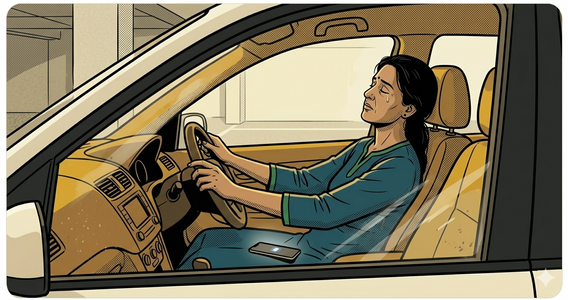
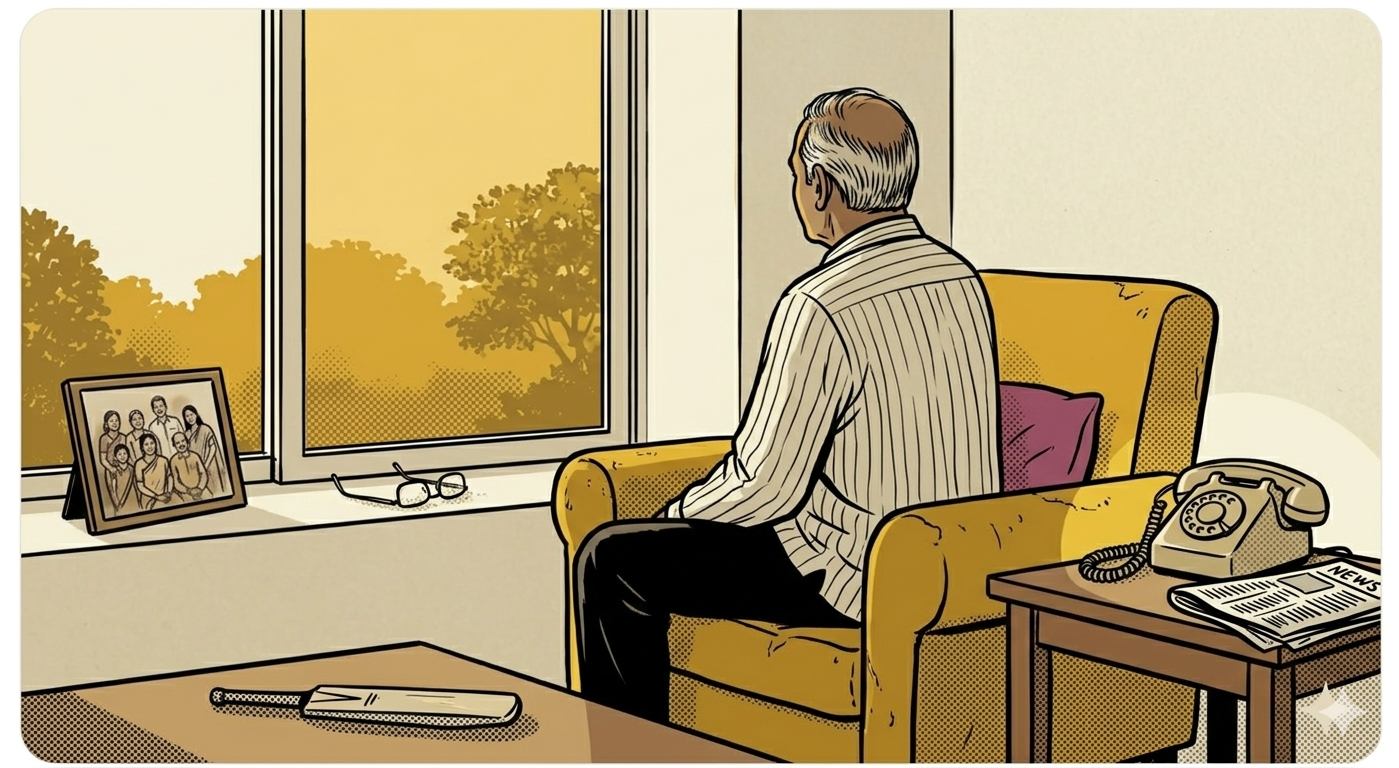
Rhea called her father in Pune every evening at seven. For 30 years he had answered the same way, an opinion ready and a complaint about the cricket loaded before she could speak. Then, sometime after he retired, the calls changed. He would pick up, say sab theek hai, beta, and pass the phone to her mother inside a minute. (Names changed; shared with consent.) When Rhea finally asked me whether this was depression or just her father getting older, I heard the real question underneath. She wanted to know how to tell the difference between a parent who is ageing and a parent who is going somewhere she cannot follow.
It is one of the most common questions I am asked about ageing parents, and one of the hardest to answer from the outside: is my parent depressed, or just ageing? The two can look almost identical from the doorway. Less energy. Less interest. More time in the chair by the window. And almost always, the same three words when you ask: I'm fine.
"Ageing changes the pace of a life. It does not usually take the pleasure out of it."
What actually changes when we age, and what doesn't?
Some slowing down is ordinary and expected. Processing gets slower. Energy is lower in the evening. Sleep gets lighter and naps creep in. The social circle narrows as friends fall ill or die, and the appetite for new things shrinks a little. None of this is illness. This is a body and a life getting older, and it deserves accommodation, not alarm.
The distinction worth holding is this. Ordinary ageing changes the pace at which your parent does the things they care about. It does not usually erase the caring. The retired father still wants to know the cricket score even if he watches fewer overs. The mother who cooks less still lights up when the grandchildren visit. The pleasure survives, even when the stamina does not.
Depression is the thing that comes for the pleasure. When a parent stops wanting the things that were theirs to want, the slowing down is no longer the story. Something has gone flat at the centre, and that flatness is not a feature of age. It is a signal.
Why does depression in older adults so rarely look like sadness?
Because in older adults, depression hides inside the body and inside the word "tired." It shows up as aches that no scan explains, as poor sleep, as a short temper, as a sudden loss of interest in food or company. The textbook image of a weeping, openly sad person is the version we expect and the version we are least likely to get from an Indian parent in their sixties or seventies.
The clinical term for the symptom that matters most here is anhedonia: the loss of pleasure or interest in things that used to give it. This is the single most useful thing an adult child can watch for, and it is why the most widely used screening tool for this age group, the Geriatric Depression Scale developed by Jerome Yesavage and colleagues in 1982, deliberately leaves out most physical symptoms. Yesavage's team understood that tiredness, broken sleep and appetite changes are so common in older bodies that they cannot tell you anything. So the scale asks instead about the things ageing does not normally touch: Have you dropped activities and interests? Do you feel your life is empty? Do you feel worthless the way you are now? Do you prefer to stay at home rather than going out and doing new things?
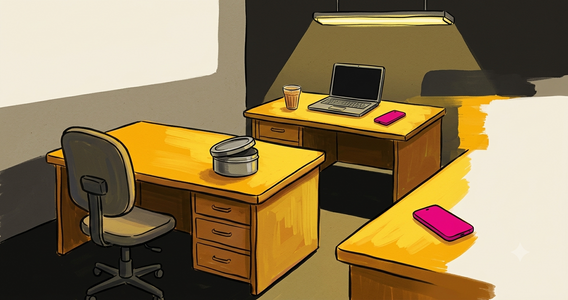
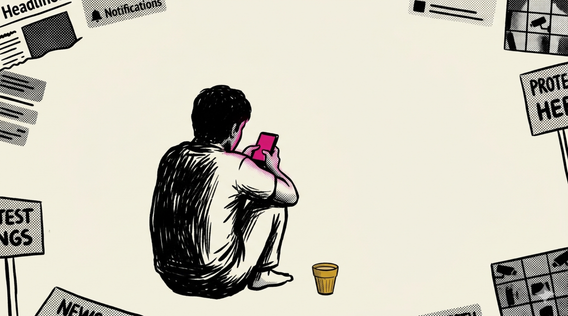
This is the lens to borrow. Not "is my parent slower," but "has my parent stopped wanting." Rhea's father had not just become withdrawn on the phone. He had stopped reading the paper he had read for four decades. He had let his closest friend's calls go unreturned. He was not sad in any way she could point to. He had simply gone out, like a pilot light.
Is it depression, dementia, grief, or just being tired?
These overlap, which is exactly why families get stuck, but they have different textures. Grief moves. Even deep in mourning a spouse, a person has better days and worse days, moments of laughter that surprise them, a relationship to the loss. Depression flattens. It does not move much, and it tends to spread to everything rather than circle one loss.
Dementia and depression are the pair most often confused, and the confusion runs both ways. Depression in older adults can produce real difficulty with memory and concentration, sometimes severe enough to look like early dementia. One rough distinction clinicians use: a person with depression is usually distressed by their slipping memory and will say so, while a person with early dementia often does not notice or minimises it. This is not a test you can run at home, and you should not try. It is a reason to get a proper assessment rather than to assume.
And before any of this, the body has to be ruled out. Thyroid problems, low vitamin B12, the side effects of blood pressure or diabetes medication, chronic pain, poor hearing, and anaemia can all produce something that looks like depression. In India this step is the one most often skipped, because the GP visit checks the sugar and the pressure and almost never asks how your father is feeling. Ask for it to be asked.
Why is "I'm fine" the hardest sentence to read in an Indian family?
Because for this generation of Indian parents, "I'm fine" is both good manners and a locked door. They were raised with no vocabulary for depression, in a culture that read low mood as weakness, ingratitude, or a failure of faith. Main theek hoon is what you say to a child you are protecting. It is also what you say when you do not have the words for what is happening, and when you are fairly sure that having those words would only worry everyone.
The Indian context makes the hiding easier in specific ways. Retirement strips a man of the role that often held his entire identity, and our culture has nothing ready to replace it. Children move to Bangalore, to Dubai, to Toronto, and the house that once held a joint family holds two people, then one. A father's withdrawal gets reframed by relatives as him becoming detached or spiritual, a natural turning inward in old age, when it may be nothing of the kind. And log kya kahenge keeps the whole thing sealed, because a family that takes a parent to a psychiatrist is a family with something to hide.
There is also the deference. Many of us were raised never to question a parent, and that early training does not switch off when the parent is the one who needs looking after. It can feel like a violation to gently insist that something is wrong with the person who raised you. That feeling is real, and it is also the thing standing between your parent and help. This is close to the loneliness that hides behind looking fine, except that here the person hiding it has been doing it for fifty years longer than you have.
What if pushing makes it worse, and what if not pushing makes it worse?
This is the bind, and I am not going to pretend it resolves cleanly. Push too hard, and a proud parent who already feels diminished by age can feel watched, managed, treated like a patient in their own home. They shut the door harder. Push too little, out of respect or fear or the hope that it will lift on its own, and a treatable illness goes untreated for years, doing damage to the body and the mind the whole time.
You will probably get the balance wrong sometimes. You will push on a day you should have let it be, and you will let something pass that you will later wish you had caught. There is no version of caring for an ageing parent's mind where you are always right, and anyone who sells you a five step method is selling you the comfort of a script, not the truth of the situation. The truth is that you have to keep showing up while not knowing, which is harder than any single conversation. It is the same uncomfortable honesty that runs through how festivals can deepen an older person's sense of being alone even in a full house: the people who love you can be in the room and still not reach you.
So when do you gently push, and how?
Push when the change is real, sustained, and a change from their baseline rather than a textbook's. If the withdrawal, the flatness, the loss of interest have held for more than two weeks, that is the threshold clinicians use, and it is enough to act on. You are not diagnosing. You are noticing, out loud, with love.
The how matters more than the what. Route the first move through the body and the doctor, because that is the door this generation will walk through when they will not walk through the door marked therapy. Offer to take them for a full check, frame it as ruling things out, and go with them. When you do speak to your parent directly, name the specific change, not the label. Not "I think you're depressed," which invites I'm fine on reflex. Try "You haven't called Sharma uncle in a month, and you used to call him every Sunday. I noticed, and it's been on my mind." Specifics are harder to deflect than diagnoses.
And hold one thing steadily, because it is the reason this is worth the discomfort. Untreated depression in older adults is not a mood that will pass. It carries real risk, including a raised risk of suicide, which is higher in older men, especially those who are widowed or living alone. If you are ever worried about your parent's safety, do not wait to get the conversation perfect. Involve their doctor or a mental health professional promptly. Getting it slightly wrong while acting is far safer than getting it right while waiting.
Rhea did not fix her father with one phone call. She started visiting Pune more often, took him for a thorough medical check that turned up a thyroid problem and a depression both, and sat with him through the early weeks of treatment when he insisted none of it was necessary. He still says sab theek hai. But last month he asked her the cricket score before she could tell him. The pilot light is not the whole flame yet. It is lit.
So when your parent says "I'm fine," the task is not to force a confession. It is to stay close enough, and specific enough, that if the truth ever needs somewhere to go, it knows the way to you.
If you suspect a parent is struggling and do not know where to begin, you do not have to hold it alone, and neither do they. Our therapists work with older adults and with the adult children carrying the worry, and a single session can help you tell what you are actually looking at.
Frequently Asked Questions
How can I tell the difference between depression and normal ageing in my parent?
Ordinary ageing slows a person down but usually leaves their interests and pleasures intact. Depression takes the pleasure away, which clinicians call anhedonia. Watch for a parent who has stopped wanting the things they used to want, who has withdrawn from people and activities for more than two weeks, and who seems flat rather than simply tired. Slower is normal ageing. Stopping caring is a signal.
What are the signs of depression in elderly Indian parents?
In older adults, depression often hides behind physical complaints and irritability rather than open sadness. Common signs include unexplained aches, poor sleep, loss of appetite, a short temper, withdrawal from friends and family, loss of interest in long held activities, and talk of being a burden or of life feeling empty. In Indian families this is frequently masked by "I'm fine" and by relatives reading withdrawal as natural detachment in old age.
Can depression in older adults be mistaken for dementia?
Yes. Depression in older adults can cause real difficulty with memory and concentration that can look like early dementia, and the two can also exist together. One rough difference is that a person with depression is usually distressed by their memory problems and points them out, while someone with early dementia often does not notice or downplays them. Only a proper clinical assessment can tell them apart, so this is a reason to see a doctor rather than to guess at home.
How do I talk to a parent who insists they are fine?
Name a specific change rather than offering a label. Saying "you've stopped calling your oldest friend" lands better than "I think you're depressed," which invites a reflexive "I'm fine." Route the first step through a medical check rather than therapy, since that door is easier for this generation, and offer to go with them. Stay warm, stay specific, and keep showing up rather than relying on one decisive conversation.
Sources
Yesavage, J.A., Brink, T.L., et al. (1982). Development and validation of a geriatric depression screening scale: a preliminary report. Journal of Psychiatric Research, 17(1).
Longitudinal Ageing Study in India (LASI), Wave 1, 2017 to 2018. Ministry of Health and Family Welfare, Government of India. National analyses report depression and depressive symptoms as common and substantially under treated among adults aged 60 and older.
National Mental Health Survey of India (NMHS), 2015 to 2016, National Institute of Mental Health and Neurosciences. Documented a large gap between diagnosis and treatment of depressive disorders in older adults.