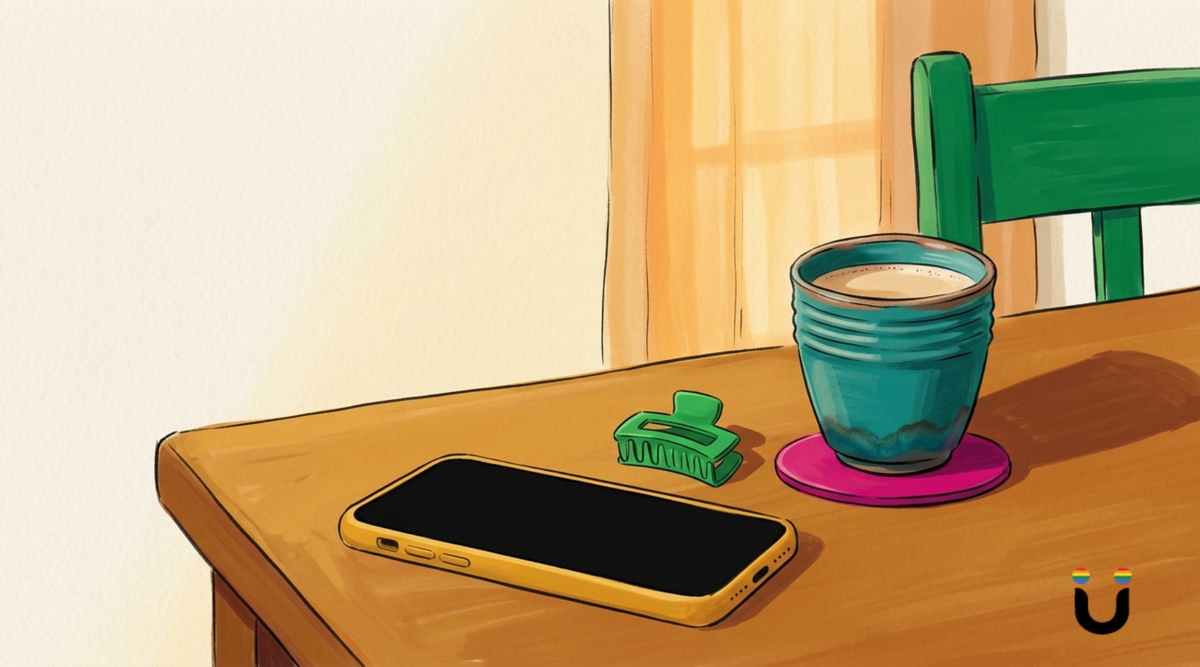
Do I have to tell them everything? What if I cry on the phone? What if they think it is not serious enough? What if they think it is too serious? Most people who book an introduction call with us have some version of this list running, and a few have it written down.
A therapy introduction call is a free conversation of about fifteen minutes with a therapist or an intake counsellor, before you pay for a first session. Its job is to hear the headline of what brought you here, check nothing is urgent, say plainly what therapy involves and costs, and book the first session on the call.
That is the whole thing. It is also, for a lot of people, the hardest phone call they will make this year, so here is what is on the other end of it.
What will the call cover?
Three areas, and it sounds like a conversation rather than a form. What made you start looking for a therapist now. Whether anything is going on that cannot wait. And what you would like to ask. Nobody is going to take your childhood over a fifteen minute phone call, and "I do not know, things have just been bad for a while" is a complete answer to the first one.
The third area is the one people skip. Most of us have a question we are slightly embarrassed by. How long does this take. Will you tell anyone. Am I wasting your time with something small. The person on the other end has heard every version of it, usually that week, and the answer is likely to be shorter and kinder than the one you have been giving yourself.
If you are calling from a parked car, or a bathroom with the tap running, you can say so. A good intake counsellor will ask whether now is a good time to talk freely, and it is fine to say no and find another time.
The first session is mostly the therapist getting to know you and your life. There is nothing to prepare and nothing you have to say before you are ready.
What should I ask back?
The boring things, because those are the ones you will go home and worry about. What a session costs, how long it runs, what happens if you cancel, whether it is online or in a room. Ours are on the booking page, and there is a sliding scale if the standard fee is not workable. Asking about it is normal and not an admission of anything.
Then ask how long it takes to feel different. The honest answer is longer than you want: most people start noticing something around the sixth to tenth session. Better to hear that now than to discover it alone at session four and decide the problem is you. And ask who you will actually be seeing. In our practice the call is usually with an intake counsellor who then matches you to the therapist most likely to fit. If you want the practical side of formats and prices first, we have a plain guide to online therapy in India.
What if something urgent comes up?
It gets dealt with on the call. The clock is fifteen minutes, but the clock is not the point. If you say something that suggests you are not safe, the person you are speaking to will extend the call and act, which may mean a same week slot or a different service that can see you sooner. If you are reading this at a bad hour and it cannot wait, Tele MANAS is the national helpline, free, all day and night, on 14416.
What should I have decided by the end?
One thing: whether to try the first session. You have not decided whether therapy will work or whether this person is right for you. Those questions come later, and your therapist will ask them out loud around the third session.
You will usually be offered two slots. Take one if you can. If you cannot, say what the hesitation is; that is useful too. The same day, you should get a short note with the practical details. Keep it and read it on the way in.
You will still be nervous walking into the first session. The call does not remove that. It turns the blank into a shape, so the nerves have somewhere to sit. Most people, afterwards, say some version of: I know what this is now, and I have decided to try. If you are ready, you can set up an introduction call here. If you are not, the page will still be there.
What else do people ask about the introduction call?
Is a therapy introduction call free?
At The Thought Co. it is. Fifteen minutes, no charge, before any session is booked or paid for. If a practice charges for the introduction, ask what the call includes; the point is that you hear the person before you pay for an hour of them.
Will I speak to the therapist I will actually see?
It depends on the practice. In ours, the call is usually with an intake counsellor who then matches you to a therapist. Ask which one you are on. Either way, what you said is passed on, so you are not starting from zero in session one.
What if I do not book a session on the call?
Nothing bad. You will usually be offered two slots, and if neither works or you want to think, say so. You will get a short note the same day, and you can book directly through the website later without repeating the call.
Sources and notes
Tele MANAS, the national tele mental health helpline of the Ministry of Health and Family Welfare, Government of India. Toll free on 14416 or 1800 891 4416, 24 hours. telemanas.mohfw.gov.in.
What the call covers, the three areas, and the timing of felt change (sixth to tenth session) reflect The Thought Co.'s own practice. Other practices will differ.