You go back on Monday. You have been rehearsing the first conversation for a week: what you will say if someone asks where you were, whether to say the real thing or the vague thing, what your face should do when your manager says it is good to have you back. You are also wondering whether you are actually ready, and whether you would know if you were not.
The World Health Organization recommends that people returning after an absence connected to mental health receive clinical care, either on its own or combined with work directed support such as a graded return. In India, mental illness is a listed disability under the Rights of Persons with Disabilities Act, 2016, and reasonable accommodation is a right under that Act.
Which is more than most people are told, and considerably less than a complete answer.
What Does the Evidence Actually Say Helps?
Two things, and one of them is the thing you are probably already doing.
Recommendation 11 of the WHO guidelines on mental health at work covers exactly this situation. For people on absence associated with mental health conditions, it says that either work directed care combined with evidence based clinical care, or evidence based clinical care on its own, should be considered, to reduce symptoms and reduce days of absence.
Read that carefully, because the second option matters. Continuing proper treatment, by itself, is supported. You do not need your employer to run a special programme for your return to count as evidence based. If they do run one, good. If they do not, the treatment you are already in is doing real work.
WHO grades this as a conditional recommendation on low certainty evidence, which is their way of saying this is the best available guidance rather than a settled fact. We would rather tell you that than pretend the science is firmer than it is.
What Can You Ask For?
Adjustments, and WHO sorts them into four kinds, which is a more useful way to think than trying to invent something from scratch at 11pm the night before.
Communication. A short regular check in with your manager. Instructions in writing rather than verbally. Agreement about what happens if you need to step out of a meeting.
Scheduling. A later start. More breaks. A phased return, three days before five. Extra time on a deliverable while you find your footing.
The job itself. Task sharing for a defined period. A temporary change to the parts of the role that are hardest right now.
The environment. A different desk. Somewhere with a door. Less noise.
In the evidence WHO reviewed, workers who received accommodations stayed in their jobs seven to twenty four months longer than workers who did not. And a caution WHO also records, which is worth naming because it will probably happen to you: in one study, workers described feeling overprotected, patronised and under challenged. Being handed the easy work indefinitely is its own kind of harm. Ask for what you need and say when you are ready to have it removed.
A phased return is not a concession you have to be grateful for. It is the thing that keeps people in jobs, and the evidence on that is better than the evidence for most of what your company spends its wellbeing budget on.
Do You Have Any Rights Here in India?
More than you would think, and less clearly than you would like.
Mental illness is one of the twenty one specified disabilities listed in the schedule to the Rights of Persons with Disabilities Act, 2016. Section 3 of that Act establishes rights to equality and non discrimination, and includes reasonable accommodation. Section 21 requires every establishment to notify an equal opportunity policy. In Vikash Kumar v Union Public Service Commission, decided in 2021, the Supreme Court held that failing to provide reasonable accommodation amounts to discrimination.
Here is where honesty is more use to you than encouragement. Section 20 of the Act, which contains the explicit employment duties on non discrimination and reasonable accommodation, is written in terms of Government establishments. Plenty of guidance online states flatly that the Act binds all private employers on this. The statutory text is narrower than that, and how far these duties reach into private employment is a genuine legal question rather than a settled one.
We are not lawyers and this is not legal advice. If your employer is refusing something you need, that is the point to speak to someone who is one, or to the Chief Commissioner or your State Commissioner for Persons with Disabilities.
Two practical notes. Claiming rights under the Act generally involves a disability certificate, and benchmark disability is set at forty per cent of a specified condition, which is a formal process and not a small decision. And nothing obliges you to frame what you have been through as a disability at all. Most returns happen through an ordinary conversation with a manager, without any of this being invoked.
How Much Do You Actually Have to Tell Them?
Less than the anxiety insists.
Your employer needs to know what you need in order to do your job. It does not need your diagnosis, your medication, or what happened. Those things belong to you and to your clinician, and Indian workplaces being what they can be, you are allowed to be careful.
A sentence that works: I am back and glad to be, and it would help to start at ten for the next month and keep my Thursday afternoons free. No explanation follows. If someone pushes, you can repeat it. You are not being difficult. You are declining to hand over information nobody is entitled to.
And if you do want to be open, that is a real choice too, and sometimes a good one. The thing to avoid is deciding it in the corridor on Monday morning because someone asked kindly and you were caught off guard. Decide now, while you are reading this, what your sentence is.
What Should the Employer Be Doing?
Preparing, rather than improvising on the day.
Agree the plan before the person walks in, in writing, including what the adjustments are and when they will be reviewed. Brief the manager on what to say and what not to ask. Decide who else knows, with the returning person, and then hold that line. Do not put someone straight into a client crisis in week one because they seem fine, and do not park them on filing for three months because they do not.
Set a review date. Adjustments that never end become a ceiling, and adjustments removed without discussion become a cliff. Both are avoidable with a date in a calendar.
If you are building this properly across an organisation, it sits alongside manager training and a confidential route to care rather than as a standalone policy. That is roughly what we build for employers, so weigh that sentence knowing what we sell.
What If You Get Back and You Are Not Ready?
Then you are not ready, and finding that out is information rather than failure.
Going back too early is extremely common, partly because leave is expensive and partly because being at home starts to feel worse than being at work. If the first fortnight tells you the timing was wrong, say so early rather than grinding through until something gives. The people who come back and then leave for good six weeks later are usually the ones who could not admit week two was going badly.
Keep whatever treatment you were in. That is the part WHO says works on its own, and it is the part most likely to get dropped once you are busy again. We have written about how exhaustion builds and what recovery actually needs, and if you would like to keep working on it with someone outside your employer entirely, our therapists are there.
Monday will be strange and probably smaller than you are imagining. Someone will say it is good to have you back and mean it. Someone else will not mention it at all, which will be a relief and also slightly wounding. By Wednesday you will have remembered your password and something ordinary will have happened, and that will be the actual beginning.
What Else Do People Ask About Returning to Work?
What helps most when returning to work after mental health leave?
The WHO guidelines on mental health at work recommend that people returning after an absence associated with mental health conditions receive either work directed care combined with evidence based clinical care, or evidence based clinical care alone, to reduce symptoms and days of absence. Continuing your treatment is supported on its own, so a return does not depend on your employer running a formal programme.
What adjustments can I ask my employer for?
WHO groups accommodations into four types: communication, such as written instructions or a regular check in; scheduling, such as a phased return, later start or extra breaks; changes to the job, such as task sharing for a period; and changes to the physical environment. Workers who received accommodations stayed in their jobs seven to twenty four months longer than those who did not.
Do I have to tell my employer my diagnosis?
No. An employer needs to know what you require in order to do your job, not your diagnosis, medication or what happened. You can request specific adjustments without explaining the reason behind them. Deciding in advance what you are willing to say is more useful than working it out in the moment on your first day back.
Does Indian law require employers to accommodate mental illness?
Mental illness is a specified disability under the Rights of Persons with Disabilities Act, 2016, and Section 3 establishes reasonable accommodation as a right. Section 20, which contains the explicit employment duties, is framed in terms of Government establishments, and how far these obligations extend to private employers is legally contested. The Supreme Court held in Vikash Kumar v UPSC (2021) that failure to provide reasonable accommodation amounts to discrimination. Take legal advice on your own situation.
What if I go back and realise I am not ready?
Say so early rather than continuing until something gives. Returning too soon is common, and discovering the timing was wrong within the first fortnight is useful information rather than a failure. Speak to whoever is treating you, and raise it with your employer before a difficult few weeks becomes a resignation.
This piece is for understanding, not diagnosis. If you feel close to harm, please reach out now. iCall: 9152987821 (Mon to Sat, 8am to 10pm). Tele-MANAS: 14416 (24 hours).
A note on the cover image
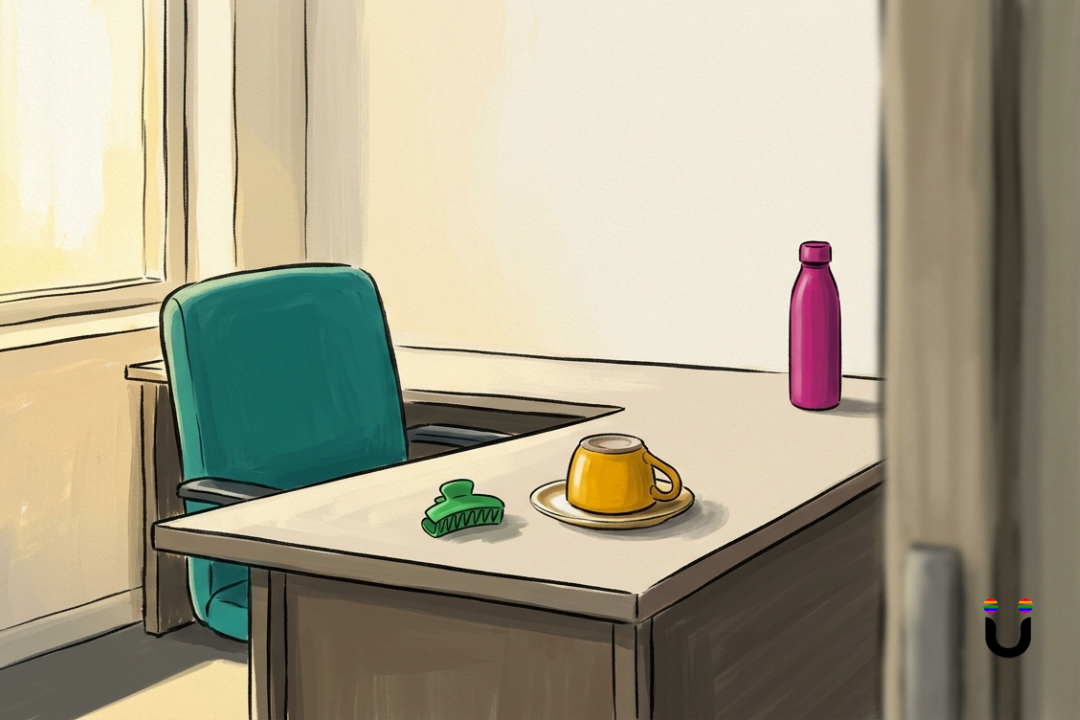
The image at the top of this piece was generated by AI, to a brief written by us. It is not a photograph and does not depict a real person or place.
Sources
World Health Organization (2022). WHO guidelines on mental health at work. Geneva: WHO. Recommendation 11 on returning to work, and Recommendation 3 with its accompanying evidence on reasonable accommodations. Executive summary and full recommendations, both read in full.
The Rights of Persons with Disabilities Act, 2016 (No. 49 of 2016). Sections 3, 20 and 21, and the schedule of specified disabilities. Full text, India Code
Vikash Kumar v Union Public Service Commission (Supreme Court of India, 2021), on failure to provide reasonable accommodation as discrimination. We have relied on legal commentary rather than reading the judgment in full.
Nothing in this article is legal advice. Take your own.