
At some point after the seed round, a well meaning investor or a LinkedIn post will tell you to "get an EAP." You will take two vendor calls, hear a per employee per year price, multiply it by your headcount of 22, and wonder why the number feels both small and wrong. Your instinct is correct. It is wrong. We sell EAPs for a living, and we would not sell you one.
Most startups under about 50 employees are too small for a retainer EAP: the per head economics fail, there is no HR function to run it, and in a tiny team nobody believes the confidentiality. What works instead is founder and manager training, a referral pathway, and one good workshop.
Here is the reasoning, so you can check it against your own situation rather than taking it on faith from a vendor with an obvious interest.
Why doesn't a retainer EAP fit a company under 50 people?
Start with the arithmetic. In the largest published benchmarking study of external EAP providers, Attridge and colleagues (2013, Journal of Workplace Behavioral Health) found an average case level utilisation of 4.5% of covered employees per year, with a median of 3.6%. Apply that to a 25 person company. It means one employee, in a typical year, actually opens a counselling case. You would be paying an annual retainer for a service that helps one person, who could have been helped directly for a fraction of the cost.
Then the operations. A retainer EAP assumes someone runs it: launches it, explains it, fields questions, reviews the reporting, chases the renewal. At 25 people that someone is you, the founder, and the program joins the long list of things you own and never look at. An EAP without an internal owner does not get used, and an unused EAP is a line item that exists to make the benefits slide look complete.
And then the real killer: trust dynamics at small scale. EAP confidentiality is believable in a 2,000 person company because the user disappears into the denominator. In a 20 person team, the mental math is different. If anyone finds out one person called, everyone can guess who. Whether or not the fear is justified, it only has to exist to hold usage at zero. The published utilisation numbers come from large organisations. In tiny teams, the practical figure is usually lower still.
What does mental health support look like at 15 or 30 people?
Three things, none of them a retainer. The first and highest value is training the people who set the weather: the founders and the two or three people who have started managing. At your size, the entire mental health experience of your company is how those individuals respond when someone is struggling, and that response can be taught. A trained founder in a 25 person company reaches more of the team than a helpline reaches in a company of a thousand.
The second is a referral pathway: a pre agreed answer to "where do I send someone who needs real help." One vetted external practice, terms agreed in advance, so that when the moment comes the manager is handing over a name and not googling in a panic. This costs almost nothing to set up and does the single most important thing an EAP does, without the retainer wrapped around it.
The third is one honest workshop a year, on something your team actually faces, run by someone clinical. Not a motivational speaker. One good session that makes struggling discussable does more for a small team's culture than twelve months of an unused benefit, because culture at this size is set by what visibly happens, and a workshop is visible.
What should a small startup not buy?
The wellness app subscription. It is the most tempting purchase at this size because it is cheap per head, requires no operations, and lets you announce something. It is also, in our experience of watching companies buy them, the purchase most reliably followed by silence. Download rates spike in week one, usage decays to a rounding error, and the subscription auto renews annually because cancelling it feels like admitting the gesture was a gesture.
The deeper problem is what it teaches. A struggling employee who gets pointed to an app has learned the company's honest answer to distress: here is a login, please be well somewhere we cannot see. The WHO's 2022 workplace mental health guidelines put their recommendation weight on manager training and organisational measures, and there is a reason the individual app is not the spine of any serious guidance. Support that nobody human is accountable for is not support. It is deflection with a UX.
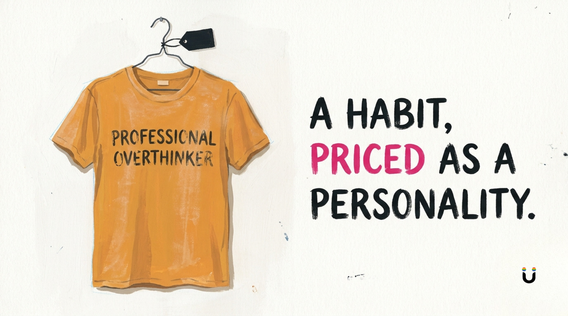
A benefit nobody uses is not a benefit. It is a receipt.
When does an EAP start making sense?
Watch for three thresholds rather than a headcount. You have someone who owns people operations as an actual job, so the program has an internal owner. You have crossed the size, usually somewhere between 50 and 80 people, where an individual can use a service without being identifiable. And you are seeing the volume: managers coming to you with situations often enough that ad hoc referrals are straining. Cross those and a retainer starts earning its fee. Buy it then, and when you do, walk in armed with the utilisation question so you never pay for coverage nobody touches.
One disclosure before you take any of this as neutral. We sell the alternatives we just recommended: the training, the workshops, the referral relationship. Telling you not to buy our retainer is still, in the end, a company telling you what to buy. So do not trust the recommendation. Trust the test underneath it, and apply it to every vendor including us: a provider worth working with at any size is one willing to tell you what not to buy from them. Ask each vendor what they would refuse to sell a company your size. The ones with an answer are the ones to call back at 60 people.
What do small companies ask about mental health benefits?
What size company needs an EAP?
A retainer EAP generally starts making sense between 50 and 80 employees, once three things exist: a dedicated people function to own the program, enough headcount that users are not identifiable, and a regular flow of situations that ad hoc referrals cannot absorb. Below that, per head economics and small team trust dynamics work against it.
What can a startup do instead of an EAP?
Three things: train founders and early managers to notice, respond, and refer well; set up a pre agreed referral pathway to one vetted external mental health practice; and run one clinically led workshop a year. Together these cost less than a retainer and reach more of a small team.
Are wellness apps worth it for small teams?
Rarely. Engagement typically collapses after the first weeks, no human is accountable for outcomes, and the purchase can substitute for the harder, more useful work of training the managers people actually talk to. If budget is limited, spend it on training and a referral pathway before any subscription.
How much does an EAP cost in India?
Pricing is typically per employee per year on a retainer, and varies widely by provider, headcount, and scope, so treat any specific figure quoted online as unverified. The more useful question than the price is the cost per employee actually helped, which is the retainer divided by real utilisation. Ask every vendor for that number and its formula.
Sources: Attridge, M., Cahill, T., Granberry, S., & Herlihy, P. (2013). The National Behavioral Consortium industry profile of external EAP vendors. Journal of Workplace Behavioral Health, 28(4), 251-324. DOI 10.1080/15555240.2013.845050 (open archive record) · WHO guidelines on mental health at work, World Health Organization, 2022. Cover image for this article is AI generated.