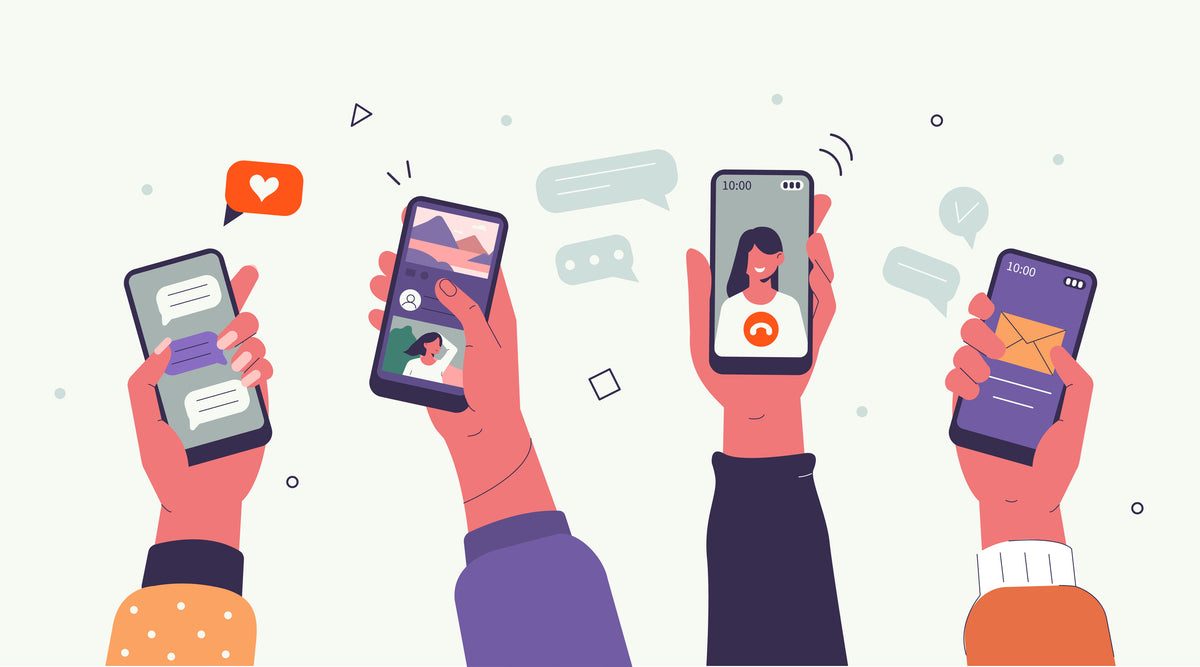
Our daily experiences have a huge impact on our mental health. Social media was always a huge part of our daily experiences but the Pandemic increased the influence to a much larger scale. For most of us in the beginning, it was a saviour so we could be in touch with each other and support each other through the biggest crisis most of us have experienced in our lifetime. From Dalgona coffee to banana bread to TikTok dances - we all shared so much without any physical contact with each other.
While social media created a sense of connection for us and fulfilled our need of belonging in isolation, it also fed our anxieties. We could check death stats all times of the day, watch sensationalized news and compare our lives to everyone we saw online - a habit very famously called doom-scrolling. It became so easy to spiral because the devices that connected us to this chaos were so accessible to us.
We saw an increase in the number of resources that were available for mental health on the internet as professionals realised how important access to them had become. So social media has also become a tool for useful information and guidance for better mental health. At the same time, it's also become a hotspot of misinformation for unverified sources.
If you’re noticing a pattern here then you’ve been paying attention! Social media like any tool is not inherently good or bad. It's not all connection or all chaos, it depends on moderation. So how can we use social media in a way that can help our mental health?
- Take charge of your feed by choosing the “not interested” option for things that might trigger you. You have control over social media and can decide what you would like to see and what you don’t!
- Stay away from sensationalization. Your feeds might show you things that elicit strong reactions from readers irrespective of their accuracy - it might be important to acknowledge that not everyone who sounds confident is always going to say the truth.
- Avoid comparisons by recognizing that people’s social media selves are not always their true selves. If your feelings of envy persist you can read through this post to understand how you can deal better.
- Let yourself scroll aimlessly as a leisure activity but make sure it's not the only one. Engage in other no-screen activities too! This way you won’t feel guilty for it and won’t feel restricted by trying to quit cold turkey.
- Address the anxiety. If you feel like there is a lot of stress and anxiety that comes with being a part of social media, address it. Talk to a mental health professional and/or use our toolkit for anxiety to understand yourself and learn and unlearn to deal with the stressors better.