
Why You Feel Lonely Around Friends Who Are Doing Well
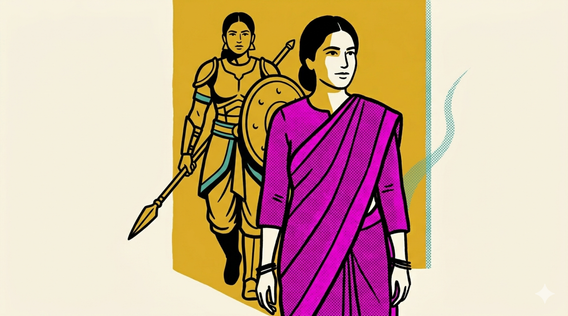
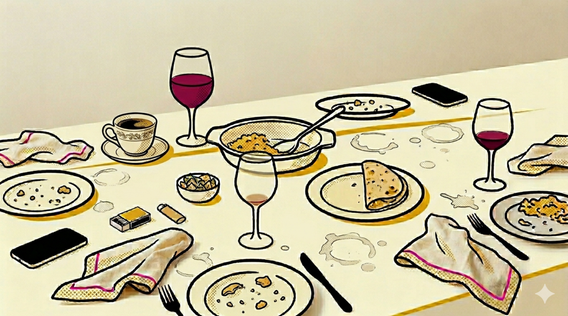
Neha noticed it gradually, the way you notice the seasons changing — not all at once, but in small accumulations that eventually become undeniable. Her friends were the same people: same humour, same warmth, same willingness to meet for dinner. But when she sat across from them now — listening to talk of preschool applications and sleep schedules, of mortgage rates and maternity leave — she felt something she hadn't expected to feel. Not envy, exactly. Not resentment. Something quieter and harder to name.
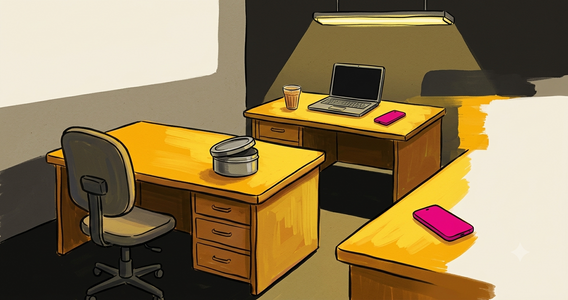
She was deep into her PhD, which felt like parenting a difficult, abstract child. She was in therapy, doing the uncomfortable work of becoming a different version of herself. She was navigating a dating scene that felt increasingly surreal and fielding arranged marriage proposals from her parents with varying degrees of grace. Her life was full, even fulfilling — but it was not conventional. And when she tried to share any of it, the small victories, the daily frustrations, she could see her friends trying to understand, genuinely trying, but the shared language they'd once spoken seemed to have diverged into different dialects.
What surprised her most was not that their lives had changed. It was that she felt guilty for noticing.
It turns out she was experiencing something far more universal — and far more neurologically real — than she imagined. Loneliness among friends who are doing well is not a character flaw. It is a predictable response to a very specific kind of loss: the loss of a shared context. And your brain registers that loss the same way it registers any other threat to survival.
Why Does Being Around Happy Friends Sometimes Feel Worse Than Being Alone?
Loneliness is not the absence of people. Researchers have been clear about this for decades. Loneliness is the gap between the social connection you have and the social connection you need — specifically, connection that is mutual, contextual, and reciprocal. You can be surrounded by people who love you and still feel profoundly alone if none of them can meet you where you actually are.
This is the specific ache Neha was feeling. Not isolation. Context loneliness. The experience of being in the room but not quite in the conversation — present for the surface of things but unable to access the depth that used to feel effortless.
In India, this particular form of loneliness carries an additional layer of confusion, because our entire framework for friendship is built on the assumption of shared trajectory. We make friends in school, in college, in the first years of a job — and those friendships are formed in the crucible of shared circumstances. Same canteen, same exam pressure, same family expectations, same approximate timeline for what comes next. When the timelines diverge — when one person marries and the other doesn't, when one leaves for a PhD and the other stays, when one is in therapy questioning everything and the other is contentedly not — the friendship doesn't necessarily end. But its shape changes. And nobody talks about that, because talking about it would feel like a complaint about someone else's happiness.
What Is Your Brain Actually Doing?
Social Baseline Theory, developed by psychologist James Coan at the University of Virginia, proposes that the human brain does not treat social connection as a bonus feature. It treats connection as its default operating state. Your nervous system evolved to share cognitive and emotional load with others — to distribute the work of threat detection, decision-making, and emotional regulation across a group rather than carrying it alone. Being with people who understand your context is, quite literally, your brain's most efficient mode.
Coan demonstrated this in a study with married women in brain scanners. Participants were told they might receive mild electric shocks, and their neural activity was measured under three conditions: alone, holding a stranger's hand, and holding their husband's hand. When alone, the brain's threat-response regions activated intensely. When holding a stranger's hand, those regions quieted. When holding a trusted partner's hand, in high-quality relationships, the brain barely reacted to the threat at all. The better the relationship, the less the brain had to work.
What this means for Neha — and for anyone in a period of divergence from their social group — is not a metaphor. It is physiology. When the people around you no longer share your context in the way they once did, your brain loses its co-regulators. It has to do more work to manage the same level of emotional and cognitive load. That registers as exhaustion, as a faint but persistent sense of effort, as the feeling of being slightly more alone than you can easily explain.
Why Does the Indian Context Make This Harder to Name?
In most Indian families and social circles, friendship is a collective value and a personal obligation simultaneously. You are expected to be a good friend. Good friends show up. Good friends are happy for each other. Good friends do not make other people's milestones about themselves.
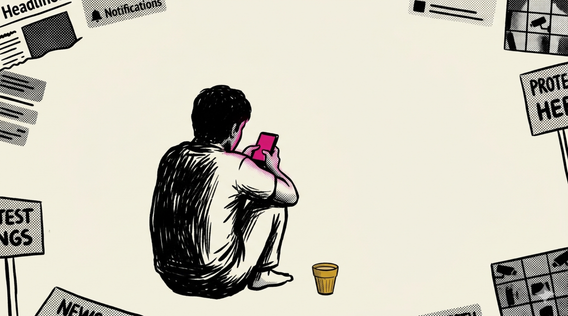
So when you start feeling the distance — when your friend's excitement about her child's school applications lands in you as something you cannot quite access — the guilt arrives before the feeling has even finished. You tell yourself you are being selfish. You tell yourself your life is not as complicated, these small things, what are you talking about. You perfect the role of the listener, the one who asks questions and is genuinely interested, and you stop noticing that you are consistently the one not being asked.
This is what Neha was doing. Minimising herself out of the friendship while staying physically present in it. It is a very Indian solution to a very human problem: perform the version of yourself that keeps the relationship intact, and carry the discomfort somewhere private.
The difficulty is that the discomfort does not stay private for long. It starts to colour your experience of the friendship itself — not with resentment, exactly, but with a faint sense of performance, of effort where there used to be ease. You are still there. But you are working harder than you used to, and you are doing it alone.
Is This the End of Those Friendships?
Not necessarily. But it does require honesty about what a friendship can hold at a particular moment — and honesty of that kind is not something most of us are taught to bring to our closest relationships.
Erikson's theory of adult development is useful here: the stage he called generativity, roughly covering the thirties through sixties, is defined by investment in things that will outlast the self — children, career, community, legacy. People in this stage are not being less interested in you. They are being pulled by the particular gravity of their current developmental task. That pull is real, and it is not personal, and it does not mean the friendship is over. But it does mean the friendship is changing, and pretending it is not changing does not preserve it. It just makes the change lonelier.
The honest complication — the one that is easy to skip past — is this: sometimes you are also changing in ways your friends cannot quite access. Sometimes the person navigating a PhD, or therapy, or a life path that refuses to follow the expected sequence, is also hard to be present for. The divergence is not always one-directional. Both people may be carrying versions of this same quiet distance without either of them naming it.
What Does Moving Through This Actually Look Like?
Neha's brain eventually did what healthy brains do when their social baseline is disrupted: it started looking for new co-regulators. She found a reading group. She found people who were in a similar phase of life — people for whom the PhD was a shared reality, for whom the arranged marriage conversation was not exotic but exhausting and familiar, for whom the version of adulthood she was living made immediate sense.
This is not a replacement for old friendship. It is a supplement — the brain finding additional sources of the co-regulation it needs, rather than trying to extract from one source what it cannot currently provide. Old friendships can coexist with new ones. They often deepen, eventually, when both people stop performing ease and start being honest about the effort.
What it requires, though, is permission to stop pretending that nothing has shifted. Permission to say, even if only to yourself: the shape of this friendship has changed, and I am allowed to grieve that, and that grief is not a betrayal of anyone. It is just accurate.
That accuracy — the willingness to name the thing rather than manage it — is where most healing in adult friendship actually begins.
When social connection feels strained and you are carrying more than usual alone, grounding your nervous system is not a small thing — it is a real physiological need. The Ground Breaking Mindfulness Cards are psychologist-designed prompts that help you slow down, reconnect with the present moment, and regulate emotional overwhelm when co-regulation is not available.
Frequently Asked Questions
Why do I feel lonely when I'm surrounded by friends?
Loneliness is not about the number of people around you — it is about contextual connection. When your friends are at a different life stage, your brain loses access to the co-regulation it previously relied on. According to Social Baseline Theory, humans evolved to share emotional and cognitive load with people who understand their context. When that shared context shifts, the brain has to work harder, which registers as loneliness even in the presence of people who love you.
Is it normal to feel disconnected from friends who are getting married or having children?
Yes, and it is neurologically predictable. When friends move into different life stages — marriage, parenthood, relocation — the shared context that made the friendship feel effortless changes. This is not a reflection of the friendship's value or your capacity for closeness. It is a natural consequence of diverging developmental paths. Research on adult loneliness consistently shows that life-stage transitions are one of the most common triggers for feelings of social disconnection.
How do I stop feeling guilty for being lonely around happy friends?
The guilt usually comes from conflating two separate things: your friends' happiness and your own unmet need for contextual connection. Being glad for someone's life milestones and feeling disconnected from their daily reality are not contradictory experiences. Naming the feeling accurately — this is context loneliness, not resentment — makes it considerably easier to carry without the additional weight of self-judgement.
Can friendships survive being at different life stages?
Yes — but they require honesty about what has changed rather than performance of continuity. Friendships that survive divergent life stages typically involve both people acknowledging the shift, adjusting their expectations of the relationship, and allowing it to evolve rather than trying to hold it to its previous shape. New sources of co-regulation — communities, groups, colleagues in similar phases — can take pressure off existing friendships and allow them to continue in a different but genuine form.