Climate Grief Is Real: Why You're Allowed to Mourn a Changing World
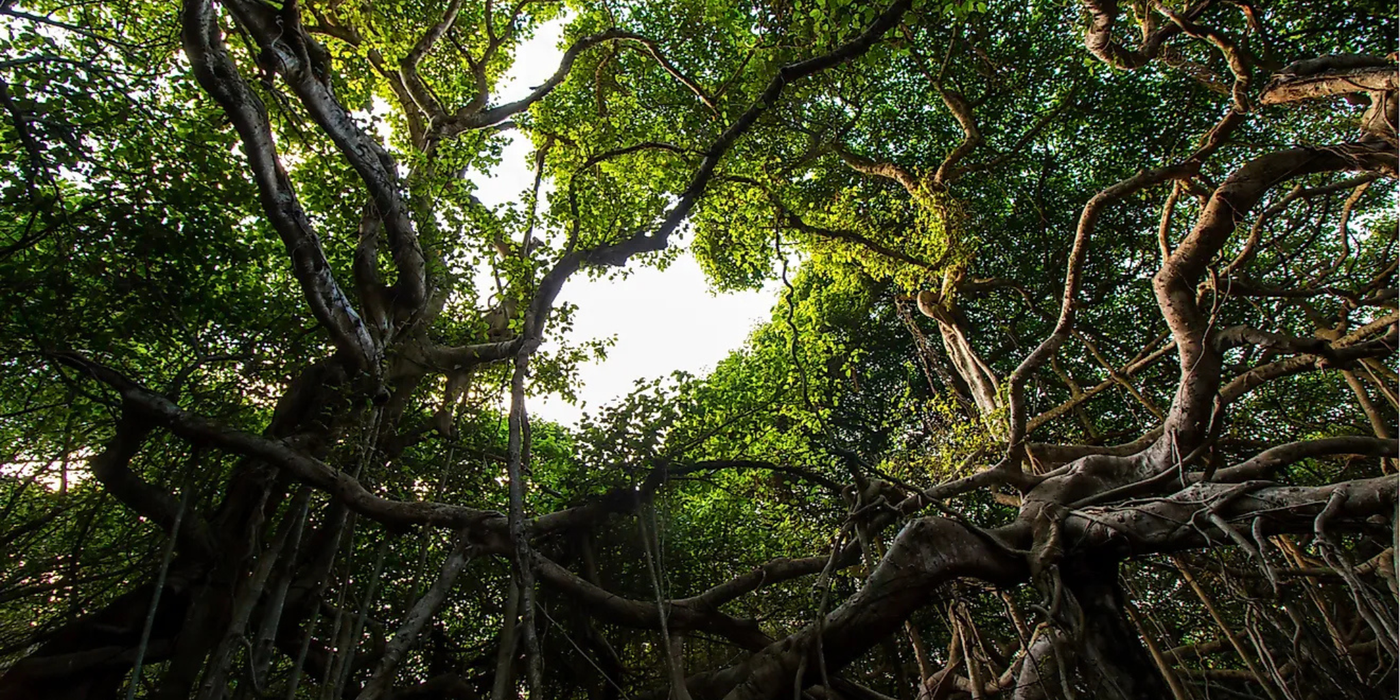
I found myself tearing up recently over the remains of a very old banyan tree. I'd known it since school. A steady fixture outside the Hanuman temple by the police station, that old, wide banyan tree. I used to pass it regularly on the way to church, when my dad and I would walk our dogs to the creek. It was the post my dog and I would reach before turning back. We'd greet it, then head home.
I know it was there before I was born. For years, it was just something we walked past. Just there, existing.
I did a double take when I saw its stump on the side of the road. The road needed widening for traffic to pass smoothly, and the tree was felled for "progress." Witnessing its stump discarded there gutted me. It felt obscene, like a body part of someone you've known just tossed aside as if it held no value, no significance, didn't matter. I felt guilt at being so disconnected that I didn't know this was going to happen. I teared up. My reaction caught me by surprise, but the sadness was real.
Do All Of Us Feel This Way?
How do you feel when the park you grew up playing in turns into concrete? When you can't step out because of the air quality, or you notice it's very difficult to see the stars because of light pollution? Have you found yourself missing the sound of sparrows or the shade of trees on your street? Or thinking how rare it's become to just breathe freely outdoors?
You might wonder why this stirs something inside you. A confusion over the mix of disappointment and dread that's subtly felt. Is it okay to feel this way? Then a bit of dismissal: Don't think about it. Or annoyance: Why don't people understand? Or you might not acknowledge it at all, even though you're experiencing the difference. The hotter summers, the cloudy winters, the unpredictable weather.
Why Climate Change Feels Different in 2025
Climate change is a slow process. It creeps up through small things we notice, and there are many responses, ranging from outright denial, denying our losses, dependency, or responsibility toward the environment, to debilitating anxiety and helplessness.
At some level, we register the complexity and enormity of the issue and the long-term threat it poses. But unlike COVID-19, climate change is slow-acting, barely noticeable. By the time we fully register the outcome and the cause, we're gripped by anxiety over what's happened and what needs to be done, guilt over not acting quickly enough, and sadness for everything that's changed. Things we didn't account as important parts of our day-to-day, but in their absence, we feel the loss.
It starts to impact our mood and everyday lives. In recent times, psychology has coined terms to give words to this experience: climate anxiety and climate grief.
Climate anxiety is the worry for our futures tied to the future of the planet. It includes feeling helpless and thinking of worst-case scenarios. Climate grief is the sadness we feel over losses related to the environment. An unspoken sadness someone carries over losing their livelihood because their land was used for development.
Sometimes the grief is direct, related to extinction of a species, a flood, wildfire, or destruction of a familiar place. Other times, it's subtler: what psychologists call anticipatory grief, the quiet ache from realizing what's changing and what's still being lost. We grieve not only what's gone but also what's slipping away slowly.
In a way, it's like mourning someone who hasn't died yet. A slow goodbye we can't complete. Our minds don't know where to place that sadness, so it lingers as restlessness, anxiety, or numbness.
What Led To My Own Slow Reckoning
When I saw my neighborhood in Mumbai change, first buildings replacing open fields, then slums taking over spaces where we played as kids or gathered as a community, it took a long while before I could register the impact on my mental health. I loved cycling down our roads. I hadn't registered how important that was until I couldn't do it anymore. My sadness seemed small compared to the vast losses others face: displacement, floods, livelihoods tied to nature disappearing. From the safety of the city, my grief felt, and still feels, almost indulgent.
I've had clients who felt ashamed for caring so much about trees, animals, or faraway places. The immediate response is confusion, embarrassment, dismissal. However, one can also argue that feeling sorrow for dying forests halfway across the world or concern when you see wildlife sanctuaries being converted to tourist parks is an appropriate response to slow-moving, insidious change. It's awareness.
But in a system designed to focus on GDPs, productivity, and outcomes, focusing on the loss of our connection with the natural world can seem like a frivolous distraction. That people are thinking too much or feeling too much. Often, people experiencing this hide their thoughts and feelings, going about business as usual while it builds in the background.
In therapy, we see clients experiencing isolation, unexplained anxiety, sleeplessness, irritability, loss of belonging, or meaninglessness. People wonder why they feel so heavy without a clear reason.
Can Grief Become Something Else?
While the way climate grief is often handled can feel disheartening, I've also seen people find meaning and connection through it. Grief, or even anxiety, even this vast kind, can be held when we stop seeing it as something to fix and start seeing it as something to feel.
Clients often speak about relief when they feel heard and not dismissed in safe spaces where their anxiety and grief find resonance and understanding. In those spaces, people can talk about their experiences, how they feel, and how they'd like to move forward. There's something deeply healing about realizing you're not alone in caring this much.
Psychologists in this area understand that the anxiety mustn't be dismissed because it also leads people to act. However, much motivation is driven by guilt and unrealistic outcomes. A disproportionate presence of it tends to leave us overwhelmed and paralyzed. They agree that dealing with something as large as climate anxiety isn't just about fixing the outer world but learning how to stay grounded within it. These ideas hold value beyond climate issues. They can shape how we approach any challenge that feels overwhelming or uncertain.
They center around building emotional resilience through community.
Find Your Sphere of Influence
When dealing with something as vast as climate change, it's easy to swing between panic and paralysis. One moment feeling driven to plant trees, protest, or educate others, and feeling numbed out, overwhelmed, and guilt-ridden the next.
Start small. Choose something meaningful and doable: reducing waste, volunteering, or simply talking about climate emotions openly. Action won't erase grief, but it gives it direction, turning helplessness into care. Even small, consistent steps can ground us. They bridge our inner anxiety with the outer world.
Gather Emotional Resilience
Resilience isn't about shutting out pain. It's about having the capacity to face it. Journaling, mindfulness, time in nature, or therapy can help you hold emotions instead of being overwhelmed by them.
Remind yourself that you don't need to do everything, only what you can. That's an act of self-care. Recognize when you're fueled by anxiety and pause. You can't care for the planet if you're running on empty. Resilience isn't about hardening. It's about staying soft without breaking.
Connect to Community
Climate grief often feels isolating, too heavy or too "serious" for casual conversation. But when shared, it transforms. Our grief becomes a collective truth instead of a private weight.
Connecting with others in local groups, creative spaces, or online communities helps restore hope and belonging. Psychologically, community provides a holding environment where feelings can be witnessed and metabolized together.
Hope, then, becomes relational. Not blind optimism, but the strength that arises when despair meets empathy. We heal best in connection: with people, with place, and with the planet itself.
If you’re feeling the weight of it all…
Grief — even climate grief — softens when your nervous system has something steady to hold.
Our Dots to Ground You tool is designed exactly for moments like this: a simple, sensory grounding ritual that helps your body return to center when the world feels unrecognizable.