Image Source: AI Generated
What happens when a birth, a marathon, a birthday, a promotion, an anniversary, a funeral and an engagement all happen in one weekend?
Short answer: chaos and confusion.
There always seems to be no end to the number of events piling up at any given time — dystopian experiences and genuinely beautiful ones, running in parallel. Because that's just how it goes.
Confronting the continuity of life has been front of mind lately. It feels like before you've even processed one thing, the next has already started with a bang. And somewhere in that blur, I kept coming back to the same observation — how connected we all are to each other's lives, and yet how completely alone we are inside our own.
Grief Has Bad Timing
I remember coming home from the crematorium and hearing my friend gleam over an engagement. It's an odd thing — feeling so much, yet so little, at the same time. Was I distraught? Yes. Was I genuinely excited for her? Also yes.
The numbness of grief, the exhaustion of trying to function and sort and figure things out — and then, in the same breath, talking about a proposal, event planning, all the details and excitement of a new chapter. The internal dissonance stretched further than my brain could hold. I was checking out.
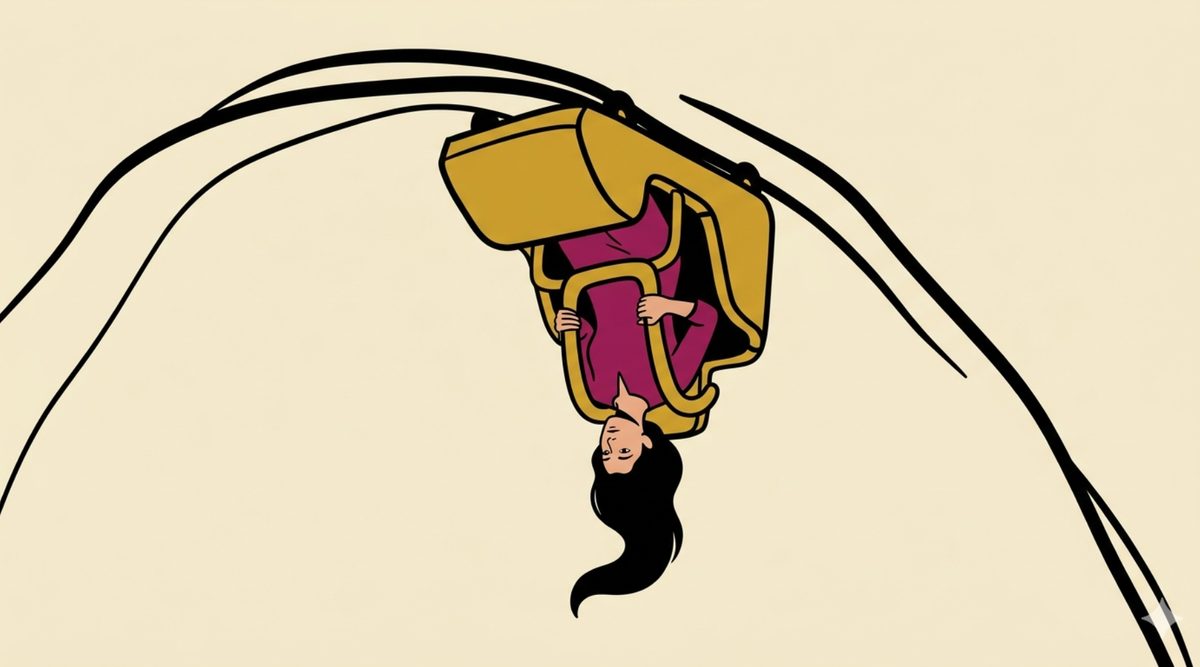
There were a series of such contradicting experiences and reflecting on it now, I think — boy, it's an exhausting rollercoaster. But having such a wide range of emotions all at once is also, honestly, pretty impressive. Getting caught up in one event after another keeps you on your toes, but it also makes you dizzy. The confusion of having to show up for multiple big emotional moments while still keeping up with the daily is real. And the more I ignored the dissonance, the more disoriented and checked-out I became.
The ironic part? The more disoriented I got, the more I adapted to it — this is just life, you continue. The more you sit on the merry-go-round, the more you forget what stability feels like.
Still On the Rollercoaster Ride
The rollercoaster doesn't end. It's the Disneyland of emotions — all action, characters, and nausea.
Have you ever sat on a swing for too long, and when you finally get off, your brain is still moving? That's what jumping back into routine after big news feels like — good or bad. Like coming back from holiday and being expected to write emails when your hair still has sand in it. Itchy, uncomfortable, supposedly what normal looks like — but as much as you ignore it, it lingers.
It shows up physically: migraines, fatigue, medical parameters quietly going off. Mentally: forgetfulness, restlessness, checking out. Emotionally: irritability, exhaustion, isolation, sadness.
There's a deep sense of aloneness that comes with having to feel things and still show up — because only you can do it.
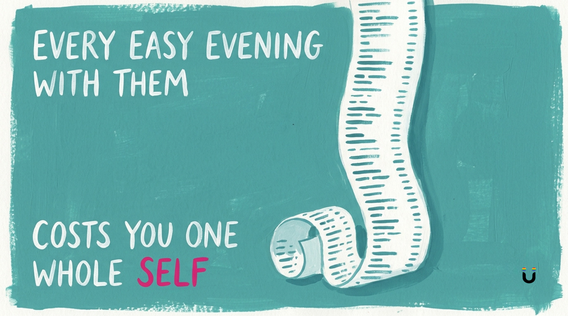
You feel it, but not fully. Trying to explain it feels pointless because you don't entirely understand it yourself. It's too much and not enough at the same time. And talking about it would mean actually processing something you've been quietly avoiding — which sounds like a lot when you're already spent, and the next thing is already on the horizon. So you keep it close. Almost like a secret — from others, and from yourself. And that silence makes you feel more trapped.
There's always something to learn from reflection. Did I need to do things differently? Maybe. Maybe not. But what I would have liked was to spend more time with the emotions, rather than just trying to be efficient through them.
Nobody Needs to Stop, But You Might Need to Pause
Things will always keep moving. You don't have to stop everything, avoid anything, or gatekeep how you feel from yourself or others. The full range of your emotions is pretty darn remarkable — but you can be impressed by them and stay tuned into the disorientation. Both are allowed.
The first thing that helped was simply letting myself feel things before they piled up and came for me sideways. When everything feels like too much, avoidance feels like the only option — but feelings don't dissolve just because you're occupied. They accumulate. Sometimes, the more useful move is finding one thing that grounds you: a walk, some window shopping, gardening, folding laundry, even baking. Not to confront everything head-on, but to give yourself a slower, less jarring way through. And if baking a tray of cupcakes gets you there, so be it.
The second was learning the difference between being busy and actually building capacity. Staying occupied is a legitimate coping mechanism — yes, it gets things done. But feelings don't go anywhere just because you're moving. Allowing yourself to sit with feeling stuck, helpless, hurt, grieving, or angry is what actually builds the ability to hold those emotions over time, rather than being blindsided by them.
And then there's trust — which is the hardest one.
Your mind and body are giving you signals constantly, directing you toward what you need. The work is learning to move toward those signals rather than override them. Trust that you'll handle what comes up. You usually do.
The 5% Rule
Acknowledge when you need to pause. It'll probably arrive at the most inconvenient moment, loaded with heavy feelings and overwhelm. That's okay. That might be exactly where you need to be.
You don't have to be 100% to show up — for anything or anyone. Show up for your friend at 5% because you want to. Show up for yourself at 5% because you need to. Dropping the expectation of full presence across the board isn't giving up — it's the only sustainable way through. Intermittent pausing is what helps you recalibrate so you can actually show up more over time. Staying on the rollercoaster is what keeps you dizzy; stepping off, even briefly, is what keeps you oriented.
For me, it meant shedding some avoidance — letting go of the need to perform efficiency, to blur over things that made me uncomfortable — and being more intentional at whatever capacity I actually had. Not because I had it figured out, but because that's what my mind and body kept nudging me toward.
That crematorium-to-engagement afternoon will probably always sit in me as one of the stranger emotional experiences of my life. Two completely different worlds, colliding in one conversation, in one body. But somewhere in that collision was the whole point — life doesn't pause for grief, and it doesn't pause for joy either. All you can do is find your footing between the two.
That's all any of us can do.