What Parents Get Wrong During Divorce (It's Not What You Think)
Image Source: AI Generated
What children carry from divorce is rarely the legal event itself. It is the emotional climate that follows.
I was recently listening to a conversation between journalist Ambika Anand and family lawyer Malvika Raj Kotia — a woman who has spent four decades watching Indian marriages begin, unravel, and sometimes combust in court. There was a moment I couldn't stop thinking about. Kotia was asked what parents should never do during a separation. Her answer was immediate: bring down the other parent in front of the child.
Then she added something that sat with me: "They all say, 'No, I've never done that.' But children are very smart. They pick it up anyway."
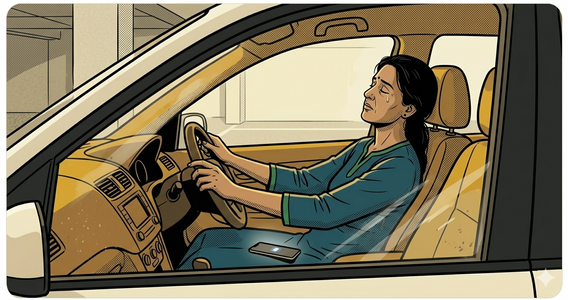
Most parents going through a divorce are not bad people. They are people in tremendous pain, trying to hold it together for their children while being completely undone. The mistakes they make are not from cruelty—it’s grief wearing the mask of protection.
And that mask is the problem. When you genuinely believe you are acting in your child's interest, you stop questioning your own motives. It can show up in ways that look like good parenting—being so present, so available, that you tip into creating an emotional dependence that isn't healthy for either of you. We want our children to know we are there for them. But guilt has a way of distorting "present" into something else entirely. Indian society doesn't always make this easier; it is still struggling to accept that two happier individuals, apart, can be better parents than two miserable ones together.
What Does a Child Actually Experience During Divorce?
Before we talk about what parents get wrong, it's worth sitting in the child's experience for a moment—because most parents, understandably, are too deep in their own to do this well.
A child in a divorcing family is not simply sad about the separation. They are navigating a structural collapse. The people who were their entire world—their primary attachment figures—are now in opposition to each other. And that child loves both of them. That love doesn't go anywhere. It just becomes very, very complicated.
John Bowlby's attachment theory tells us that children need a felt sense of safety with their caregivers to develop securely. When that feeling is threatened—not just by one parent leaving, but by the atmosphere of hostility that surrounds separation—children don't just feel sad. They may feel unsafe. They start managing the emotions of the adults around them, reading rooms, choosing sides without wanting to, suppressing their own feelings so as not to add to the load.
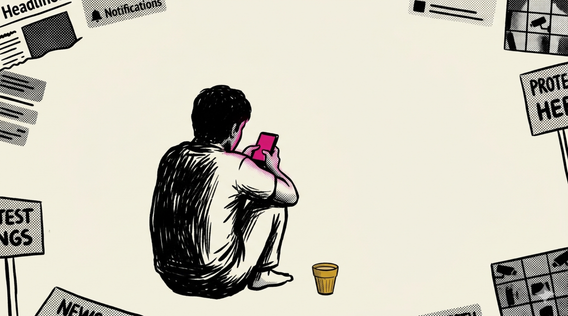
Some children of divorcing parents become very still, very well-behaved. This isn’t because they're fine, but because they've learned that their feelings are one more thing the adults can't hold right now.
Why Do Parents Keep Making the Same Mistakes?
Kotia said something else that was clinically exact: children often become "the only asset" one parent is fighting to retain.
When a marriage ends, identity takes a direct hit. Everything organised around that partnership—sense of self, social world, vision of the future—destabilises. The children are often the only thing that still feels certain, still feels theirs, still feels like evidence that they exist and matter. Holding on to them, even in ways that aren't healthy, is an attempt to hold on to themselves.
Understanding this doesn't excuse it. But self-awareness is the only route out of it.
Parents who are using their children to process their own pain—usually without realising it—tend to tell themselves stories that sound like good parenting. "I just want her to have a relationship with both of us." "I'm keeping things normal for him." "I never say anything negative — I always encourage them to spend time with their father." These all sound right. But the lens they come through matters. Are they coming from genuine concern, or from grief looking for somewhere to go?
The Things Children Actually Absorb
Research on children and parental conflict is unambiguous on one point: it is not divorce itself that causes lasting psychological harm. It is the level of conflict children are exposed to—before, during, and after—that determines outcomes.
E. Mark Cummings, a developmental psychologist who has spent decades studying interparental conflict, found that children are exquisitely sensitive to emotional hostility between parents—even when it isn't directed at them, even when parents believe they are shielding their children from it. What researchers call "emotional security theory" describes exactly this: children are constantly monitoring the emotional climate of the family and regulating their own behaviour accordingly.
Which means the things parents think their children don't notice. They notice. The tone of voice when the other parent's name comes up. The split second of tension before a handover. The way one parent goes very still when certain subjects arise. Children read all of it.
And what they read, over time, they internalise. Something about love leads here. Something about closeness leads to this. Something about me caused this.
That last one is the one that does the most damage. And it is entirely preventable.
The Hardest Honest Thing
Collaborative co-parenting—the idea that two people who have hurt each other deeply, who are grieving, who are fighting about money and custody and the version of events, can somehow show up as a united parenting front—is extraordinarily difficult. Kotia put it plainly: when you hate each other, doing anything collaboratively is almost impossible.
This isn't a value problem. When we are in survival mode—when our nervous system reads the other person as a threat—co-regulation simply isn't available. We cannot access the patient, generous, child-centred parts of ourselves when we're flooded with our own pain and fear.
Which is why "just be civil for the children" is not only unhelpful—it can create the illusion that parents are coping when they aren't, and then the slow leak happens anyway, in all the ways children pick up but adults deny.
The more honest goal: each parent working on their own regulation, in their own therapy, with their own support system—so they are not using their children as the container for feelings those children were never meant to hold.
What Actually Helps
Kotia's language for what the legal system is working towards is "collaborative caregiving"—a custody arrangement where both parents are actively involved in the child's day-to-day life, rather than the old model of mother as primary caregiver and father as weekend visitor. Courts can mandate the structure. They cannot mandate the emotional work that makes it function.
That requires something no legal framework can order: two people with enough of their own resources to parent from their own lane, without constantly crossing into the other's.
In practice, this should look like specific things. Do not ask your child to carry information between households. Do not use access visits as leverage or maintenance as a bargaining chip. Allow your child to love the other parent without reading that love as a betrayal.
It also means getting honest with yourself about when you are parenting and when you are grieving. Both are necessary. They cannot run through the same channel without the child paying the cost.
The parents who manage this—and they exist; Kotia mentioned one or two—are not the ones who feel no pain. They are the ones who have found somewhere else to put it. Their own therapy. Their friendships. Their own internal work. They have decided, consciously, that the marriage ended, but the family did not, and they hold that line even when it costs them something.
It is a decision made over and over, on bad days and worse ones. On the day, the settlement feels unfair. On the day your child comes home from the other house and says something that tells you exactly what's being said about you there. On the day, you are so tired of being the bigger person that the phrase itself feels like an insult.
And yet.
The research is consistent: children are not damaged by the fact of divorce. They are shaped by what divorce looks like in the years that follow. Whether the adults in their lives found a way to carry their own pain without handing it to the people least equipped to hold it. Whether love—even love that has changed form, even love that now expresses itself through logistics and school pickups and difficult phone calls—remained the organising principle.
No custody arrangement protects a child from a home full of unspoken hostility. No financial settlement undoes the damage of being used as a messenger. No legal structure teaches a child that relationships, even broken ones, can be navigated with dignity.
Only the parents can do that. This might not be done perfectly. Or by failing at it repeatedly. But the decision to try—made again in the morning after the worst night, made again when it costs something real—is the thing children carry forward. Not the divorce. Not the courtroom. Not who got what.
The marriage ended. The family did not. Holding that distinction, when everything in you wants to let it go, is the most protective thing a parent can do.
For the season that asks a lot from a woman
If you’re building emotionally thoughtful resources for families, pregnancy is another place where support matters. Bump: Affirmation Cards for Expecting Mothers is a therapist-designed set created to offer steadiness, reassurance, and emotional support through pregnancy.