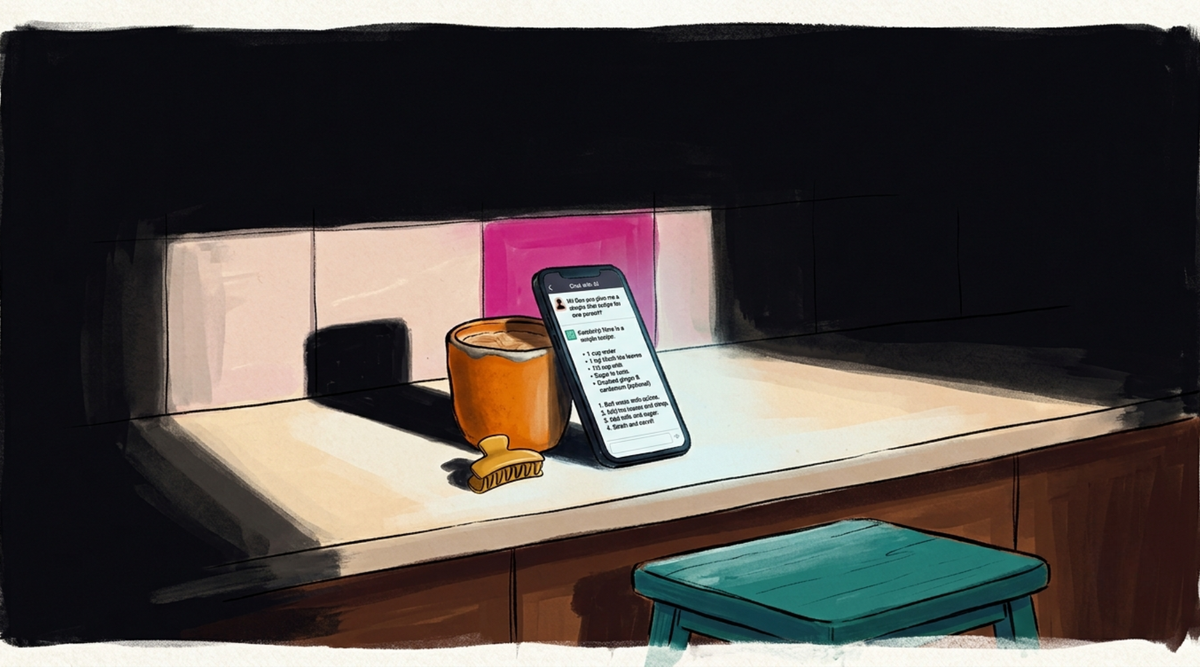
A few weeks ago, a client mentioned, almost in passing, that she'd already sorted through most of what she wanted to talk about; she'd "processed it with ChatGPT" the night before. She wasn't embarrassed about it. She said it the way you'd say you'd already eaten, or already handled it. No big deal.
It wasn't the first time I'd heard something like that. These days, it comes up constantly: "I just asked ChatGPT," "That's where I vent," "I ran it by AI first." It's slipped into everyday language the way calling a friend once did.
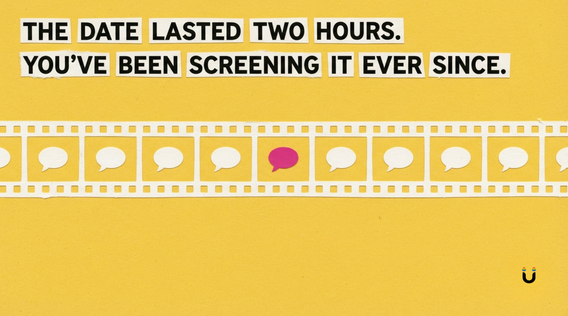
For many people, AI has become the place you turn to when your mind won't stop racing. You type out the spiral, the rant, the overthinking, and within minutes, sometimes even seconds, something coherent comes back. Your messy thoughts, arranged into neat little paragraphs. Your emotions, labeled. You're offered perspective, sometimes even a list of next steps.
There's something undeniably relieving about that.
The Appeal Is Real — And It Makes Complete Sense
AI is available at 3 a.m. It doesn't interrupt or look confused when you contradict yourself. It doesn't charge cancellation fees. It doesn't react when you cry. There's no scheduling, no commute, no visible human expression to interpret. You can edit your thoughts before pressing send. You can delete them. You can close the tab whenever you want.
For people who struggle with shame, vulnerability, or people-pleasing, this is enormous. You don't have to manage anyone else's response. You don't have to worry about being "too much." You don't have to sit in silence while someone watches you try to find the words.
Control feels comforting. And AI offers a lot of it. When your thoughts feel chaotic, it organizes them. When you're confused, it hands you pros and cons. When you're hurting, it validates you. It mirrors your language back to you in calm, measured sentences. For someone feeling alone or overwhelmed, that steadiness can feel genuinely regulating.
What Happens When You're Always Given an Answer
A client I worked with had been relying heavily on AI for years. Whenever he felt uncertain, he'd ask it what to do. It analyzed his options, offered structured opinions, and told him what he might be feeling.
Over time, he couldn't tell the difference between what he actually felt and what had been suggested to him. His language started sounding borrowed. His confidence in his own instincts weakened, and making decisions became harder without external input; he had stopped trusting his own thoughts entirely.
When we began working together, he would ask me what he should do, look for my opinion, then grow visibly uncomfortable when I didn't provide one. He'd spent so long outsourcing his inner world that therapy felt slow and unsatisfying. He expected summaries, bullet-point clarity, structured insights every session. The absence of easy answers felt like the absence of progress.
When I asked how ChatGPT had helped him, he said it had helped him label his experiences and give them a name. He now had an impressive psychological vocabulary, but no felt sense of what any of it actually meant. The language had quietly become a way to describe the experience without having to go through it.
The Difference Between Naming a Feeling and Actually Feeling It
Around the same time, another client came in after a minor argument with her partner. She had already asked AI whether it was an "anxious attachment trigger." She had the answer. What she didn't have was the experience.
In our session, as she walked me through the argument, her body told a different story entirely. We slowed things down. Eventually, through pauses, through tears, through something shifting in the room, she said: "It felt like when my mother would stop talking to me for days."
The panic wasn't about the argument at all. It was an abandonment memory surfacing. That kind of emotional layering doesn't reveal itself through logical questioning and labeling alone. It comes through the body through what goes unsaid, through the laugh that shows up when someone is describing pain, through the shoulders that tighten when you say something "wasn't a big deal." AI reflects what is said. A therapist listens for everything that isn't.
Therapy is uncomfortable in ways that are intentional. Sometimes you leave a session more aware of your confusion than your clarity. Sometimes the most important moment is a long pause one where you finally feel something you've been running from.
A client I worked with needed three sessions of mostly silence before he could say certain things out loud. He didn't need analysis or a reframed perspective. He needed a witness. Someone who would stay in the room long enough for his courage to catch up with his fear.
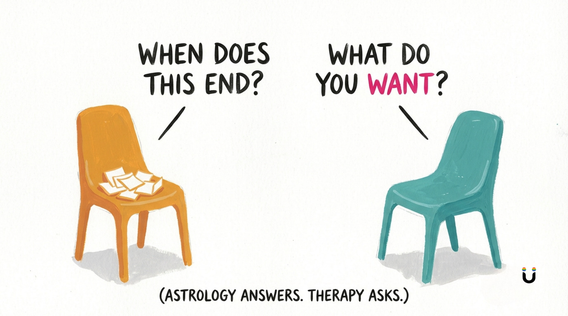
AI fills silence instantly. A therapist can sit inside it. That's not a small distinction.
Something else I've noticed: AI tends to move quickly from validation to interpretation. It reframes. It balances both sides. Therapy sometimes allows the rejection to land, the failure to sting, the shame to surface before any reframing begins. Because sometimes, the reframe is the avoidance. A therapist can challenge your defenses across months, notice patterns repeating across years, and eventually step outside the frame you've always presented in to ask harder questions. AI will always respond within the frame you give it.
AI doesn’t Get You (The Way Therapy Can)
A client once came in with a pros-and-cons list about quitting his job. He'd already run it through AI. He wanted me to confirm the "right" answer.
Instead of choosing for him, I asked what quitting represented. We sat with it. Eventually, he said it wasn't about the job at all; it was about proving to his father that he could succeed on his own terms.
The whole question shifted. We weren't weighing salaries anymore. We were working through a lifelong need for approval.
That kind of shift doesn't happen when the goal is efficiency. It happens when someone is willing to stay with a question long enough to find out what's actually underneath it. Therapy gives the decision back to you not as abandonment, but as a form of respect. It asks, "What feels true for you?" and then actually waits for an answer.
What Therapy Is Actually Trying to Do
Over time, therapy helps you recognize your own voice. You develop internal authority instead of reaching for external certainty. How you relate to your therapist tends to mirror how you relate to the world. Do you minimize yourself? Seek reassurance? Prepare for rejection? Avoid closeness? All of it shows up. And in a room with someone whose job is to notice you, that becomes the work.
What you practice there honesty, boundary-setting, tolerating discomfort, staying present during conflict becomes rehearsal for life outside it. A therapist doesn't replace your inner voice. They help you rebuild it.
So Is AI the Enemy?
No.
AI can be a genuinely useful companion for reflection. It can help you articulate feelings, offer psychoeducation, and organize your thoughts, even before therapy. But a tool is what it is. Therapy is a relationship. One can help you understand your patterns. The other helps you experience and shift them, in real time, with another person present.
The real question isn't whether AI is good or bad. It's more personal than that: what kind of support are you actually seeking?
If what you're carrying feels less like a decision to sort through and more like a heaviness that won't lift, that's often where therapy for depression becomes worth exploring - alongside, or instead of, talking it out with AI.
Are you looking for clarity, something that organizes your thoughts and gives you direction? Or are you ready for a space that might increase the tension before it transforms it? There's nothing wrong with wanting structure or immediate reassurance. But it starts to replace genuine reflection when the question shifts from "Help me think this through" to "Just tell me what to do."
Transformation asks for participation. It asks for vulnerability. It asks for a relationship where you cannot edit yourself before you are seen. And sometimes, what a person needs most isn't another answer or another balanced perspective; it's to be witnessed by someone who stays when things get uncomfortable, and says, "I'm here. Let's understand this together."
Venting to AI can be a start. But if what you're navigating feels bigger than a single conversation can hold, depression therapy offers the kind of steady, human presence AI can't replicate.