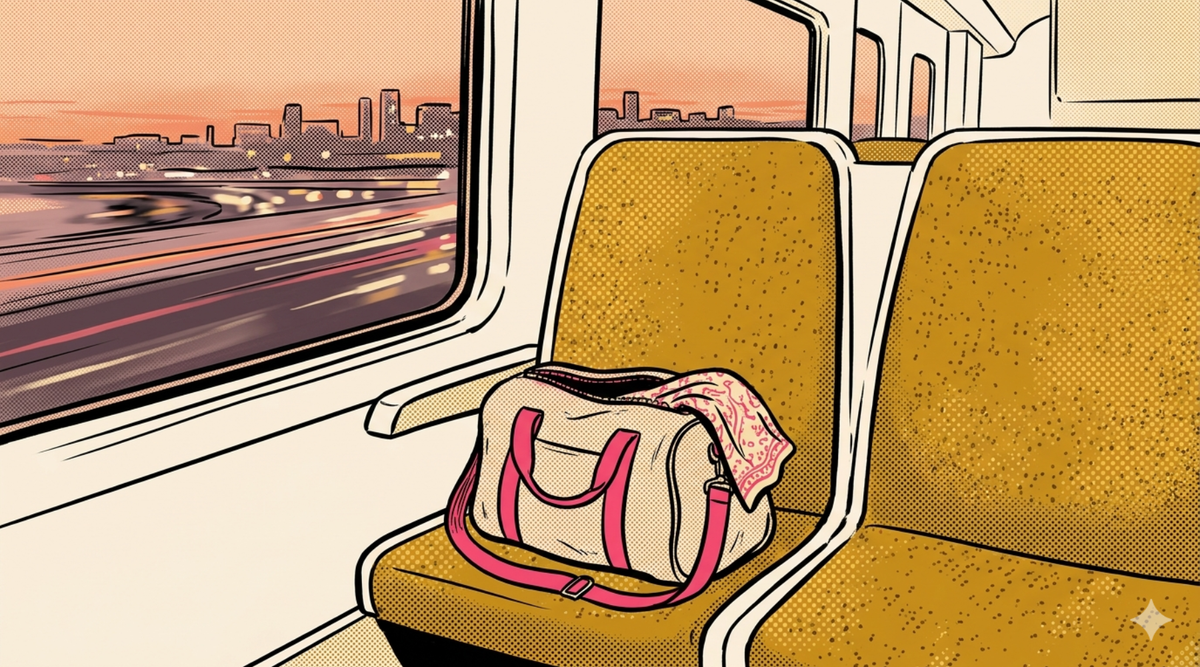
Friday, 8.15pm, Dadar. The Volvo to Pune. I have done this so many times my body knows the route before my head does. My shoulders, which have been somewhere up near my ears all week, drop the moment the bus pulls onto the expressway. I put my headphones in and do not actually listen to anything. I just sit and let the orange highway lights blur past the window, and somewhere around Lonavala, my chest stops feeling tight.
By the time I see the lights of home, I am already softer. My mother has made the dal she knows is my favourite. It is 11pm on a Friday and she has waited up so we can eat together. My father has put my phone charger by my side of the bed I have slept in since I was eleven. The mattress is older than my whole adult life and somehow still softer than the one in my flat in Bandra. I sleep deeper that first night than I will sleep all the next week, in a city I am supposed to be living in.
This is a love story. I want to be clear about that before I say anything else. It is also a love story I have started to look at sideways, because something about it has begun to feel less like medicine and more like a slow, soft trap. I think a lot of people my age in this country are sitting inside the same one.
It is so easy to keep doing this. Every weekend, the bus, the relief, the unclenching, the dinner, the deep sleep. The new city becomes the place where I cope. The home city becomes the place where I live. Six months pass. Then a year. And the new city has not become a home, because I have never been there long enough on a weekend to make it one.
The pattern is real coping. It is also the thing in the way.
Going home every weekend is genuinely soothing the ache. I do not want to take that away from you, or from myself. The body needs to be held by something that already knows it. There is real psychological repair in the food your mother made the way she has always made it, and in the bed your dog still sleeps next to.
But it is feeding the part of you that misses home. It is not feeding the part of you that needs to build a home in this new place. The two parts are not the same part. And if you only feed one for long enough, the other starts to atrophy. (I noticed this in myself before I had words for it. I would land in Bandra on Sunday night and not unpack my bag, because what was the point. I was leaving again on Friday. My flat was a hotel.)
For me, the realisation came in waves. Wave one was Sunday nights starting to feel like grief. Wave two was noticing I had not made a single new friend in nine months, because friendship in your twenties forms on weekends, and I was never there for any of mine. Wave three was the harder one. I was using going home to skip the slow, awkward, lonely work of building something in a new city from scratch. If you are six months in and recognising any of this, Vidhi has written something gentler on that exact six-month mark that you might want to read alongside this.
The parents piece. The tender bit.
Indian parents are, often, unintentional accomplices in this. I want to say this carefully. They miss their child too. They cook the favourite food. They buy the return ticket. They say, "don't go back, stay one more day, na, your boss will understand." Their love is real. The pull is real. Both are true at the same time.
They are not the villains. But it is okay to disappoint them sometimes for the longer thing. The first time I told my mother I was staying back in Bandra for a long weekend, she went silent on the phone, and I felt like I had done something cruel. I had not. I had done something for the version of myself she actually wants me to become, the one who has a life of her own in the city she moved to.
There is also a thing nobody talks about, which is what going home can no longer give you. The childhood bedroom is not exactly the same childhood bedroom. The friends from school have moved too, most of them. The dinners with your parents are sweeter now and also shorter, because they are getting older and the rhythms have changed. You are returning to a memory of home that lives most fully in your head. Some of the loneliness you are avoiding in your new city is also there in the old one. You are just much better at not seeing it there.
I am not telling you to stop going home. Please don't read it like that. I am telling you to try an experiment. Stay back for three weekends in a row. Not as punishment. Not because your parents are toxic, mine are wonderful, that is not the point. Just as an experiment. See what your Sunday is like when you have to make your own Sunday instead of inheriting one. You might hate it. That is fine, that is information. You might make your first friend, find the cafe that becomes yours, finally walk to the beach instead of thinking about it. Also information. The point is to find out what the new city could be if you ever fully arrived in it.
I still go home, often. But not every weekend anymore. The city I live in is finally starting to feel like a place where I live, not a place where I cope. The home I grew up in is still there. It will always be there. But the home I am building, slowly, badly, three Saturdays at a time, that one needs me here.
If you want a longer companion piece on loneliness in general, there is An Optimist's Guide To Tackling Loneliness. If you want to start small with the friendship-building part of this, our Friendship Foundations journaling series is a kind place to begin. And if any of this feels heavier than what one Sunday afternoon and a blog post can hold, therapy is always a real option, no big deal made of it.
Frequently Asked Questions
Why does going home every weekend make me feel more lonely instead of less?
Because it is feeding the part of you that misses home, but not the part of you that needs to build a home in this new city. Both parts exist. Both need attention. If you spend every weekend in your home city, the new city stays a hotel, and the loneliness of not having roots there stays untouched. The trips home are real psychological repair, but they are not the whole repair. The slow work of friendship in the new city only happens when you are physically there on weekends to do it. For more on the early texture of new-city loneliness, read Vidhi's piece on the six-month mark.
Is it wrong to go home every weekend if I miss my parents?
No, it is not wrong. Missing your parents is not a clinical problem. The question is whether the pattern is preventing you from building a life in the city you have moved to. If you have been there a year and have not made a single friend, not found a regular place, not had a full weekend that belongs to your own life there, the every-weekend pattern is probably part of why. Loving your parents and building your own adult life are not in conflict, but they do compete for weekends.
How do I tell my Indian parents I am staying back this weekend?
Honestly, gently, and without overexplaining. Your parents are not your therapist and you do not owe them a full psychological case for why you need a weekend in the city you live in. "I am going to stay back this weekend, I have some plans" is enough. They may go quiet on the phone. They may push back. That does not mean you have done something wrong. It means they miss you, which is allowed, and you are choosing the longer thing, which is also allowed.
How long does it take to start feeling at home in a new city?
Longer than you want it to. Friendships in your twenties form on a slower timeline than the one you experienced in college, when you were stuck in proximity for years and intimacy was almost involuntary. As a working adult, you are choosing it on purpose, every weekend, with effort, and the payoff is delayed. Most people who fully commit to being present on weekends report the city starting to feel like theirs somewhere between months nine and eighteen, not weeks. That is not a personal failure. That is the rhythm of adult belonging.