
Why the Most Capable People Often Feel the Most Alone
Image source: Desperate Housewives, television series still. © ABC Studios.
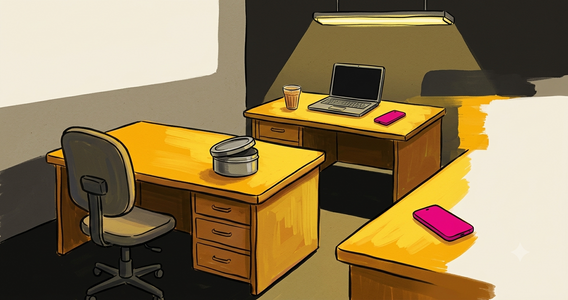
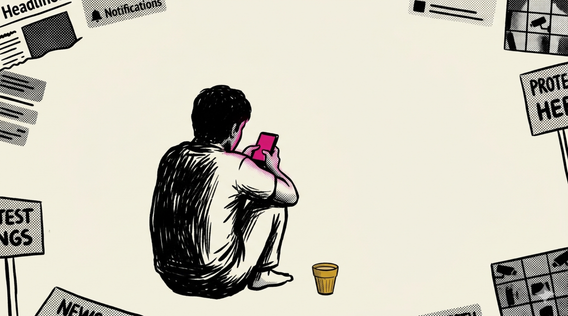
Loneliness doesn't always look like isolation. Sometimes it wears the face of the person who has everything together — the high-achiever, the reliable friend, the one everyone assumes is fine. It's the paradox of being surrounded by people yet feeling fundamentally alone, unable to ask for the very support you freely give to others.
We tend to picture loneliness as visible — someone isolated, withdrawn, obviously struggling. But loneliness doesn't always announce itself that way.
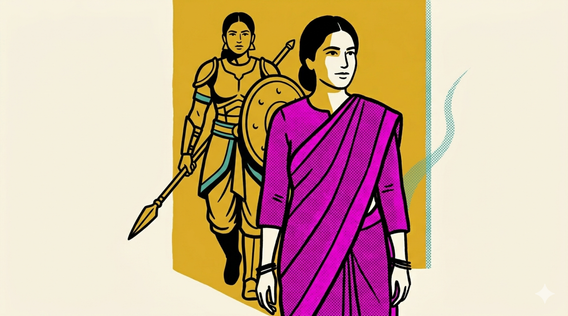
Laxmi is 31. She runs a successful firm with her partner and has racked up her share of wins and losses. Yet despite the accolades, despite the busy calendar, she couldn't shake a persistent sense that she didn't really matter. If she disappeared tomorrow, her family would manage. Her friends would adjust. The business would continue.
From the outside, you wouldn't clock any of this. That's the thing about loneliness — it often looks like having it together. It's the competent colleague, the friend who never forgets a birthday, the high-achiever everyone assumes is fine. It sits quietly behind a well-constructed life, undetected.
Where Does This Kind of Loneliness Begin?
Laxmi unconsciously treated her loneliness like a disease to hide behind the facade of her life. What she was experiencing now had its seeds sown in her early years.
As the eldest of three siblings, she'd always played the caregiver, the high achiever, the one who made the family proud. She was the emotional regulator, the protector, the example-setter. When her father started his own business to help the family navigate financial difficulties, Laxmi willingly helped shoulder his responsibilities.
Her mother was a silent spectator in her growth. She provided for Laxmi's physical needs but couldn't attune to her emotions and sometimes became overwhelmed by them. With her father busy and stressed, and her mother emotionally misattuned, Laxmi was generally alone. She learned from a very young age to keep her feelings to herself and that if she wanted to be noticed, she had to perform.
When a caregiver is physically present but emotionally unavailable, the child constructs an internal working model: "My emotions threaten connection." "I must disappear to be loved." This model doesn't disappear in adulthood — it becomes the silent architect of loneliness.
What Happens When You Lose Yourself in Others?
Laxmi coped by becoming attuned to the needs of her family and those around her. It became second nature, something she took pride in. But this wasn't just good-naturedness — it was almost compulsive. She would lose touch with her own needs while meeting everyone else's.
Jeffrey E. Young, founder of Schema Therapy, calls this "other-directedness": an excessive focus on the desires, feelings, and responses of others at the expense of one's own needs, to gain love and approval, maintain connection, or avoid retaliation.
A person orients themselves around other people's needs, moods, and expectations, often at the cost of their own inner life, because love and belonging feel conditional — they must be earned by being agreeable, helpful, or emotionally manageable. Over time, expressing one's own preferences, anger, and desires can feel risky, as if asking for too much.
Many who live this way learned early that their needs mattered less than keeping the peace or maintaining approval. In adulthood, this shows up as self-sacrifice, over-compliance, constant effort to please, and difficulty asserting oneself — often accompanied by unacknowledged resentment, emotional exhaustion, and a lingering sense of being unseen.
This was Laxmi's way of coping in an emotionally deprived atmosphere. She provided the care she wasn't receiving, hoping it would be reciprocated without having to ask — because asking felt threatening. While playing this role, she didn't realize it was silently building and reinforcing this schema in her mind.
A schema is a mental blueprint, our brain's way of organizing experience. For Laxmi, her schema meant a quiet surrender of control out of fear that asserting herself would lead to anger, rejection, or abandonment. Suppressing her needs and looking out for others brought approval, made her feel seen and safe — these were her conditions of worth. As long as she fulfilled them, she could believe she was loved.
However, this also meant she learned that restraint, compliance, and self-erasure were the price of belonging. Over time, she became invisible, even to herself. If you ignore your needs long enough, they don't go away — they just become invisible to you.
Can You Learn to Be There for Yourself?
As we looked closely in therapy, we eventually started to see the unmet needs and an internal script: "I have to be there for others at the cost of myself." Being understood felt like too much to ask from a caregiver who couldn't be there emotionally. She hadn't internalized receiving care as the norm.
It took everything out of her just to say, "Hey, I need help." It felt scary and shameful.
Through many emotional sessions — and sessions where she felt guilty about being emotional, or projected her internalized critic onto me — she slowly started to name and witness what she felt. Gradually, a shift emerged. She began recognizing the old scripts she'd been living by:
"I shouldn't burden anyone."
"If I open up, I'll be rejected."
"My feelings are too much."
"People only love me when I'm useful."
Confronting these scripts was painful and frightening. Initially, it felt like betraying the child who survived by following them. She was afraid of how her boundaries and requests would be received. She experienced a roller coaster of self-criticism and empathy, each step bringing her closer to understanding her experience and empathizing with herself.
This is the work: reparenting the self who was emotionally abandoned.
Slowly, she reached the most honest and transformative question:
"It's not just about who hasn't been there for me… but how much have I been there for myself?"
That was the beginning of healing her loneliness — not through finding people who saw her, but by turning toward the parts of herself she'd learned to ignore, suppress, and dismiss. Because the truth is: loneliness is not the absence of people. It is the absence of self-attunement.
And healing begins when we finally come home to ourselves.
Try this if you want an easier way to start opening up
If asking for support feels loaded, start with structure. What Happens After Hello is a psychologist-designed conversation game that helps you move from small talk to real talk, without forcing vulnerability on cue.