The One Thing Therapists Know About Change That You Don't
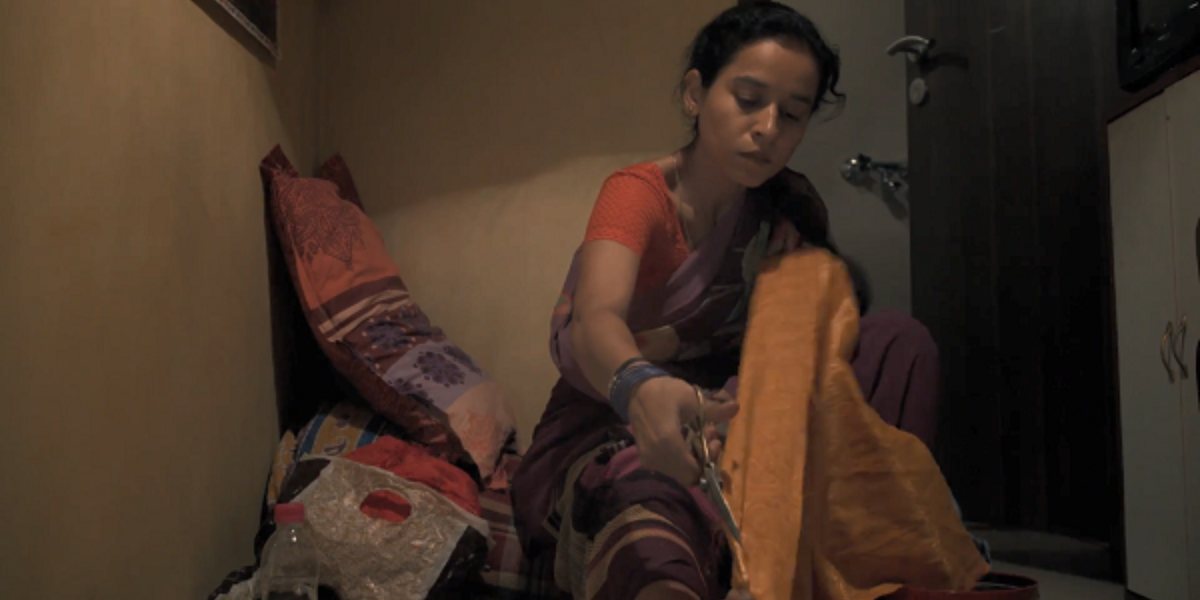
Image source: Sir (2018), directed by Rohena Gera. Courtesy of Netflix.
"I can't digest what you are saying."
Mira’s words are quiet, but the realization that followed wasn't quiet at all. "This is a core aspect of who I am, of how I lived my life. If I have to change this, it means I was doing it wrong all along."
What was being grappled with wasn't just a therapeutic insight. It was the recognition that loneliness didn't have to be suffered the way it had been for most of a life. Those things could have been done differently. The grief was held between us. A brief depression followed. But what was also being forged in that moment was the beginning of real change.
Change is sought in therapy, but it's rarely experienced as transformation. It's felt more as friction—like ignoring a screaming toddler long enough for them to learn they can't control you with a tantrum. It's frustrating, painful, messy. Sometimes it makes you want to cry. Sometimes, giving in feels easier. And sometimes, you do.
A quote shared by our supervisor captures it: "People come to therapy not to be cured, but to become more adequate in their neurosis." — Fritz Perls.
Change is what brings us to therapy. But the realization that we are what needs to change?
That's discovered slowly.
What Are We Actually Changing?
The behaviors we've adopted helped us cope. We never questioned them because they worked. But now those very behaviors come in the way of authentic expressions of who we are and add to our dissatisfaction and conflict—with life, with the people around us, and sometimes with ourselves.
Mira is unable to express annoyance in many areas of her life. Instead of entering confrontation, she silences herself. This leads to a more peaceful outcome, but her anger has nowhere to go. It turned inward, becoming a harsh internal voice that constantly criticizes her and fuels anxiety. That same inner harshness makes it difficult for her to absorb or register her successes, while her attention is pulled again and again toward failure. She stays caught in a loop of constantly doing more—because if she stops, the voice might win, and the fear is that her lack of worth would finally be exposed.
For Mira to change this pattern, she first needed to acknowledge it and learn to observe it as it plays out in her life.
Why Does Change Feel Like Confrontation?
As Mira became more aware of how silencing herself led to the internal harshness she'd grown tired of meeting, the same pattern began to show up in therapy. She started to cancel sessions or end them midway. This confused me at first and brought up my own fears of not being a good (enough) therapist. Supervision helped me see that the feelings coming up for me mirrored what Mira was experiencing: a sense of inadequacy and frustration with herself. Mira was avoiding confrontation again—this time with me.
Therapy had begun to feel overwhelming and helpless for her, and she started to doubt the work she was doing. Afraid of offending, she responded in the way she always had: by silencing herself to avoid conflict.
When I brought this up with her, she initially denied it, citing busy schedules, unpredictable work, and poor planning. It was difficult for her to entertain the idea that she could be mad with me, with therapy. It was, after all, unlike her to be annoyed with the spaces in her life she really valued.
The gaps continued until, after a prolonged absence, Mira scheduled a session. She cautiously admitted that she was, in fact, mad with me and didn't think therapy was working for her. She was also angry that this pattern had been pointed out, and that's when she told me how being a peacekeeper was central to her identity. It was what kept a turbulent household calm, and it's what she learned as the "right" way of doing things. Having to change that was physically unthinkable—she was scared of what could happen if she really expressed what was on her mind.
I told her that she was doing the very thing she feared right now, with me. She paused, teared up, and shared how hard it had been for her to do this. Together, we held space for the emotional release that followed once she allowed herself to just be.
Why Is It So Hard to Let Go of Old Patterns?
Our patterns helped us adapt. They brought us safety. It hits us quite hard when we realize those are parts of ourselves we need to rework.
Sometimes these are core aspects of who we think we are: the person who holds everything together, the accommodating friend, the person who everyone relies on to deliver harsh truths, the golden child who has to somehow elevate the family in terms of status and class. We find ourselves caught up in these patterns to the point of enmeshment. We mistake the pattern for who we are, and sometimes we don't realize what it costs us.
We can't really blame ourselves entirely for that. Our patterns formed in specific emotional ecosystems as a way to help us cope—families where harmony mattered more than honesty, where love was conditional, where visibility came with a cost. We've invested so much in being this person that doing anything different feels risky. "I've already worked so hard at being this person," we might think. "If I start doing things differently now, all that effort will be wasted."
There's also a quiet psychological bias at play here: the sunk cost fallacy, the tendency to keep investing in something because we've already put so much into it, even if it no longer works for us. In our emotional lives, we repeat the same strategies, hoping for different results, until therapy gently builds awareness of the loop and slowly interrupts it.
In therapy, this recognition doesn't arrive all at once. It unfolds slowly, often with denial in between. Acknowledging the disadvantages that our patterns put us in can feel like a betrayal of the version of ourselves that survived because of those patterns.
What Does Change Actually Look Like?
As Mira understood why her anxiety came up when we talked about her patterns—because they were linked to survival and her identity—she also understood how her patterns were leaving her burnt out, resentful, anxious, and mad with herself. She decided she would start speaking up when she felt the need to keep quiet. It started in the therapy room and slowly percolated to other areas of her life.
To Mira, the change didn't look like empowerment at first. It looked like friction. She worried that expressing her needs would make her seem unaccommodating, difficult, or noncompliant, and feared backlash. Even so, she began to pause before agreeing to requests, resisting the automatic "yes". She noticed her irritation when her partner made thoughtless comments instead of brushing them off. She started asserting herself with friends when plans didn't work for her.
These new ways of responding brought confusion and sometimes annoyance from the people in her life, and moments of anxiety and doubt for Mira. She was slowly trading the security that comes from always pleasing others for taking up space. In moments where her new stance was questioned, her inner critic would spring to life, questioning whether she had misread the situation, overreacted, or failed. Should she have just "let it go," as she always had?
Sometimes she did give in to older ways—in moments of hesitation when the old peacekeeping reflex took over, or when the inner critic was very loud. But gradually, as her patterns became visible to her and no longer automatic, she was able to continue to stumble toward where she wanted to be.
Mira began to speak about how satisfying it was to express herself. Each time, she noticed something important: nothing fell apart. The world didn't collapse. Her relationships with me and with those she loved remained intact. The ones that didn't support her fell away, and she mourned them. She came to see that acknowledging her anger didn't destroy the connection as she had feared—suppressing it eroded her sense of self. Slowly, she learned to hold anger as information rather than a threat, without punishing herself for having it.
Is Change Ever Really Linear?
Change, as Mira was learning, rarely feels linear or tidy. There are advances, setbacks, moments of courage, and moments of doubt. Psychologists James Prochaska and Carlo DiClemente outlined stages most people go through when making meaningful change: pre-contemplation, contemplation, preparation, action, and maintenance—with relapse often included as a sixth, informal stage.
These stages are rarely linear, and most people move between them as they try to change. Relapse isn't failure; it's part of the process.
An important moment arrived when Mira relapsed into her old patterns. When encountering a crisis, she found herself doing something familiar: she swallowed her irritation, stepped in without being asked, and started soothing everyone else before checking in with herself. The anger turned inward again. But this time the recognition came faster, followed by the familiar disappointment and shame. "I thought I was past this," she said.
No, this wasn't undoing the work she did—it was information that, under stressful circumstances, her anger still felt scary. The relapse showed where the work needed to continue.
Where Is the Hope in All This?
Were you expecting something more hopeful when it came to change?
Well, to me, this is the hope.
Change lies in all of this, including the relapse. It's not failure but the process. It more often than not shows up in smaller moments before we see it in the big ones. It's messy, and it involves a lot of back and forth, even when it's what we want for ourselves.
Through therapy, we don't move neatly from one stage to the next. Instead, resistance, insight, effort, and retreat coexist in the therapy room. We might find ourselves feeling defensive, shutting down, denying our feelings, or saying "I don't know" when we're closer to something in us that feels tender. At other times, we find ourselves engaged and looking forward to it. Change is a process of repetition, reflection, and return—it rarely involves one single resolution that would sort us for life.
Mira learned to embrace the discomfort. Now she says with a smile, "I know something is going to come out of it." She also exercises more agency and communicates when she's at capacity. She chooses what she wants to work on now and shelve for later. It's always a work in progress.
Change for her now is not the absence of old patterns, but a different relationship to them. She has accepted that sometimes she would have to begin again, but now it's without the same urgency to judge or correct herself.
As we build awareness, heal, accommodate our missteps, and are more compassionate toward our humanness, sustainable change eventually becomes a choice—a choice to keep trying, keep going, and keep catching ourselves as we come in the way of the lives we are trying to nurture.
Change is not perfection, not getting it right, but the willingness to acknowledge relapse and commit to repair.
Try this next: Ground Breaking Mindfulness Cards
If you want a structured way to practise noticing your patterns in real time, these cards give you prompts you can actually return to on a hard day.