
unsafe love
If you keep saying “I’m fine” and you’re not…
Some relationships don’t leave bruises. They just leave you smaller, quieter, doubting yourself more each year. There is a name for what’s happening. There is a way out. You are not the only one in this.
4 min read · 10 if you stay for the practical
86%
of Indian women who experience violence never tell anyone
1 in 3
Indian women report controlling behaviour by a partner
Most
leave the call saying “actually I’m fine, it’s nothing.” That sentence is the story.
Things that are easier to recognise on a page than in your own life.
01
You manage his mood like it’s your full-time job.
You know the silences. You know the warning signs. You’ve gotten very good at predicting which version of him is walking through the door tonight. That hypervigilance is exhausting. It is also a clue.
02
Your friends have started seeing you less.
Maybe he doesn’t like them. Maybe he gets weird when you go out. Maybe you’ve started cancelling on your own to avoid the conversation later. Isolation is rarely a single decision. It’s a hundred small ones.
03
You’ve started doubting your own memory.
Did he say that? Did you imagine it? You’re writing things down to check. You replay conversations. The doubt isn’t weakness — it’s what happens to a person who has been told her version of reality is wrong, repeatedly, by someone she loves.
04
Your phone, your messages, your location — somehow it’s all his business.
It started as “just checking in.” Then it was “why didn’t you reply?” Now you screenshot before you delete. Now you tell him before you go. This is not trust. This is surveillance dressed as love.
05
You apologise even when you’re the one who got hurt.
You’re sorry he’s upset. You’re sorry you brought it up. You’re sorry it’s late. Somewhere along the way, your apologies became the airbag for his moods. Notice it. It’s not who you are. It’s who you learned to be.
06
You leave the conversation saying “I’m fine, I’m fine.”
Twice. Always twice. Because the first one didn’t convince the friend, and you’re trying to end the call before she asks again. If you have said “I’m fine” twice in one breath this week — you are not fine. You are protecting him. Notice who you are protecting.
For years I thought I was overreacting. The first time someone said the word ‘abuse’ out loud about my marriage, I felt sick — and then I felt relieved. Sick because it was true. Relieved because it was finally named.
a client, in her first session
Read
Loading essays…
hold this
Something to put your hands on, when words feel too dangerous.
Tools our therapists use when a person needs a way back to herself. Not a substitute for therapy. Sometimes just a way of being held by something on a hard night.
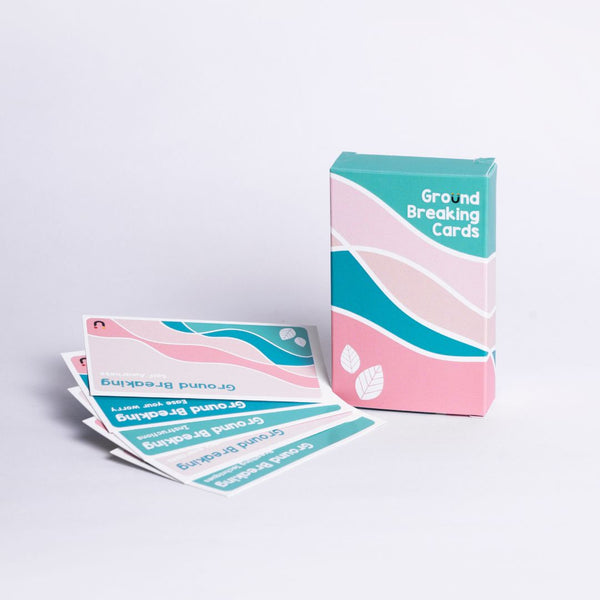
For the nights when your body is bracing and your mind has gone somewhere else.
Ground Breaking - Mindfulness Cards
Rs. 500.00
→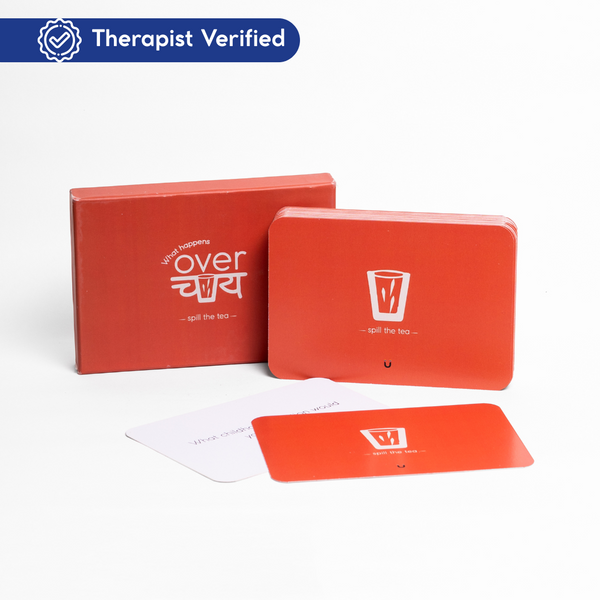
For the friend who keeps saying “I’m fine”. To start the longer conversation.
What happens over chai?
Rs. 800.00
→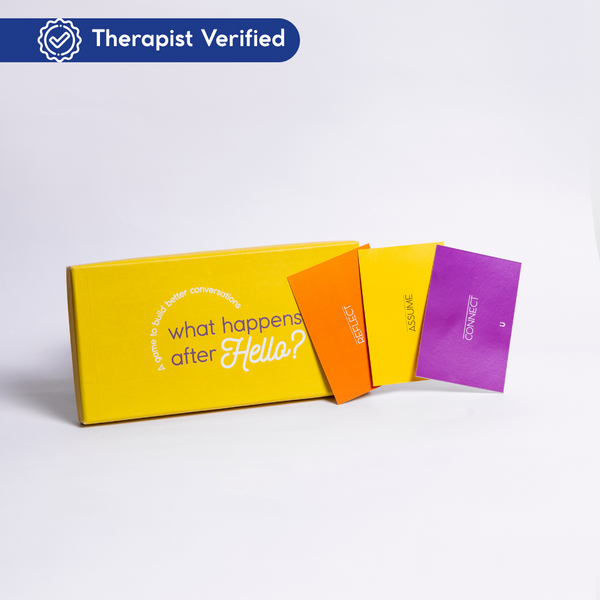
For rebuilding the friendships that got quiet while you were managing him.
What happens after Hello?
Rs. 1,500.00
→if you’re in it
Six small things, when leaving feels too big.
If anything on this page is making your stomach drop, you don’t have to do anything dramatic today. The work right now is small. It is internal. It begins with believing your own perception again. Tap the ones you want to come back to.
01
Write down what actually happened.
Keep a private note — not on the shared cloud, not on the phone he sometimes checks. Write the date, the time, what was said. You are not building a court case. You are building back the part of you that knows what is real.
02
Tell one person the unfiltered version.
Not the funny version. Not the “he’s actually really sweet most of the time” version. One friend, one therapist, one sister — and the version where you don’t defend him. Saying it out loud once changes the relationship between you and the truth.
03
Re-thread one friendship he isolated you from.
The college friend. The cousin. The work friend you used to laugh with. Send one message. “I’ve been thinking of you.” That’s enough. You do not have to explain anything yet. You are just reminding yourself that there is a world outside this house.
04
Open a bank account he doesn’t know about.
Quietly. In your name. Even a small balance. Financial independence is not a betrayal — it is the floor that lets you make any choice from a place of safety rather than panic. Indian banking lets you open a savings account online in twenty minutes.
05
Stop trying to make him understand.
You have explained yourself a thousand times. You have tried every word, every tone, every angle. If understanding was going to happen, it would have happened by now. You are not failing at communication — you are talking to someone who needs you to be wrong. Save the words for yourself.
06
Talk to a therapist — even once.
You do not have to decide anything in the first session. You do not have to be sure it “counts.” A therapist is not going to tell you to leave. A therapist is going to help you hear yourself for the first time in years. That is the work. That is where it starts.
if she’s the one calling you
The phone call where she almost tells you.
If a friend has called you late and said something that didn’t quite sit right — and then walked it back, said it was nothing, hung up too quickly — read this slowly. She was almost telling you. What you do next matters.
what to listen for
in someone who’s almost telling you
She says “I’m scared” and then immediately softens it. “Not scared scared. He hasn’t hit me.”
She mentions his anger in passing. “He gets loud, but…” Believe the first half. The second half is for her, not for you.
She has started asking you about your relationship in a tone that feels like research. “Does Kush check your messages?”
She apologises for taking up your time. She thanks you for listening. She makes herself small inside the conversation.
She ends the call with “I’m fine, I’m fine.” The double-fine is the giveaway. Once is a sentence. Twice is a confession she couldn’t finish.
what to do, what not to do
when you’re the one she picked up the phone to
Don’t minimise. “Every couple fights” sounds kind. To her, it sounds like the door closing.
Don’t wait for proof. “Did he hurt you?” teaches her she has to be visibly damaged before her fear counts. Her fear already counts.
Do name what you heard. “You said you were scared. I want to come back to that.”
Do keep the door open. “You can come here. Tonight. Any night. You don’t need a reason.” Say it out loud. Say it twice.
Do stay close, even if she goes back. People leave abusive relationships an average of seven times. Going back is not a betrayal of you — it’s a sign you need to keep loving her through it.
if it’s urgent
If you or someone you love is in immediate danger, or experiencing physical violence, please reach out now. These are free, confidential helplines that work across India. You don’t need to know what to ask. You just need to call.
safety planning
If you’re not ready to leave — but you might be one day.
Safety planning is not the same as planning to leave. It is the quiet, sensible work of making sure that if you ever needed to — at 11pm, in a hurry, with the kids — you could. Most women who leave do it on a Tuesday afternoon when something just shifts. The preparation is what makes that Tuesday possible.
- Memorise one trusted person’s number. Not just stored in the phone — actually memorised.
- Keep copies of important documents (Aadhaar, PAN, passport, bank papers, marriage certificate, children’s documents) at a friend or family member’s house, or scanned to an email he doesn’t know about.
- Open a savings account in your name only. Set up a small auto-debit into it each month. It doesn’t have to be much. It has to be yours.
- Note one place you can go for at least 48 hours that is not his family’s and not where he would think to look first.
- If there are children, keep a small bag with a change of clothes, a charger, and any medication where you can grab it in two minutes.
- Clear your browser history after visiting pages like this one. He may be checking.
- Know two phone numbers by heart: 181 (Women Helpline, all India) and 1091 (Women in Distress).
This is not a checklist of fear. It is a checklist of options. You are allowed to have options without having decided.
If you’re the friend who is exhausted from loving her through this.
We see you too. Loving someone who keeps going back is one of the hardest things you can do. You watch the cycle. You hold the door open. She goes back. You doubt yourself. You wonder if you’re enabling. You wonder if you’re abandoning her by stepping back. There is no clean answer to this — only a long, complicated love that does not get easier.
The most useful thing you can do, most of the time, is stay reachable and stop keeping score. Don’t make her earn your help. Don’t ask her to prove she’s ready. Just keep being the person whose door is open. That door is sometimes the only thing keeping her tethered to the world outside of him.
If you’d like to talk to someone yourself — about how to hold this without losing yourself — our therapists work with this too. Vicarious trauma is real. Caring for someone in an unsafe relationship asks something of you that nobody talks about.
Questions, mostly whispered
six things people don’t want to ask out loud
Yes. Abuse is not defined by what your body looks like at the end of it. It is defined by the pattern: control, intimidation, monitoring, isolation, intermittent affection, the careful management of your fear. This is called coercive control. It is a recognised form of abuse in most countries and a growing focus of Indian domestic violence law. The reason you don’t have visible injuries is not that nothing is happening to you. It is that the injuries are being done somewhere harder to see.
Because part of you still loves him. Because the good days were genuinely good. Because you remember who he was at the beginning, and you’ve been waiting years for that person to come back. Because leaving is logistically terrifying — financially, socially, especially in India where the cultural narrative still treats marriage as a woman’s success metric. None of that is weakness. It is also called a trauma bond — a real, neurologically observable attachment that forms in relationships with intermittent kindness. Going back doesn’t mean you don’t see what’s happening. It means leaving takes more than seeing.
They are loving you in the language they were taught. “Adjust kar lo” is shorthand for a generation of women who had no other option. Their advice is not a measure of your reality — it is a measure of what they had to survive. You are allowed to have a different threshold for what you will accept. Adjustment is showing up on time, dividing the bills fairly, swallowing the occasional small irritation. Adjustment is not being afraid of your own husband. Those are not the same thing, no matter how often they get treated as such.
This is one of the most common questions we hear, and it tells us something important: people who genuinely have done damage to a partner almost never lie awake worrying about it. The fact that you are asking suggests you are responsible in a way that the relationship has been weaponising against you. Yes, you might be flawed. Yes, you might react badly sometimes. That does not mean you are the cause of his behaviour. Two things can be true: you have things to work on, and he is using your normal human imperfections to justify treating you in ways that are not okay.
You are helping. Women in unsafe relationships leave an average of seven times before they leave for good. Each return is not a failure — it is part of a long process of dismantling what is keeping her there. Your job is not to make her leave. Your job is to make sure that when she is ready, you are still reachable. Don’t guilt-trip. Don’t say “I told you so.” Don’t make her earn her way back to your sofa. The door stays open. That is the help. That is the difference between a friend and a verdict.
Now. Not when it gets worse. Not when you’ve decided to leave. Now — when you are confused, when you don’t know what to call it, when you just want one hour a week of being heard by someone who doesn’t have an agenda. A therapist will not tell you to leave. A therapist will help you locate your own voice underneath the years of doubt. Whatever you choose to do with that voice — leave, stay, try couples work, take a year to think — is your choice. The therapy is for you, not for the marriage.
Therapy is not a verdict. It’s a room with one person who is on your side.
Our therapists work with women in unsafe relationships — coercive control, emotional abuse, the years of small things that have started to add up. You don’t have to know what to call it before reaching out. That’s what the first call is for.
Find a therapistFirst introduction call is free. No obligation. Confidential.