The term abnormal means deviating from the normal. But how do we decide what is normal in the first place? That is an important question; since a large part of the world is constructed around normalcy.
In statistics, normal distribution describes a set of values that are found in the shape of the bell curve. The average of all the values is at the centre of the curve and the other values fall within the hump of the bell. What makes the distribution normal is that it follows this curved shape. Normal doesn’t describe a single data point, but a pattern of diversity. Several human characteristics, for example; height, follow a normal distribution. Some people are very tall or very short, but most people fall close to the overall average.
mental health and biasOutside of statistics, normal often refers to an average that is a single number taken from the centre of the bell curve that removes all the nuance of the normal distribution.
Often, our calculations of normal are distorted. Take ‘Body Mass Index’ (BMI) as an example. BMI is a measure that calculates an individual's body fat by dividing their weight by their height. The results are defined in four categories: underweight, normal, overweight and obese. It is implied that those who fall in the normal category are healthy. Yet, BMI is not a valid predictor of health or healthy weight. BMI does not take into account body fat distribution, blood pressure, amount of physical activity the person engages in and their body fat percentage. Nevertheless, people out of the normal category are advised to lose or gain weight.
What is even more worrisome is if the sample is not representative of the population. This means we are choosing criterias from the wrong distribution entirely. A lot of earlier research was based on samples that were western, educated, industrialised, white and male.
Let’s look at the ‘Diagnostic and Statistical Manual’ (DSM) and ‘International Classification of Diseases’ (ICD) ; these are the two most used classification systems for mental illness. These two classification systems are also based on statistics. These books are a tool that is helpful for professionals to classify and communicate symptoms. Nevertheless, it is important to take into account the context behind them. Statistics that are used to define what is normal and what is not and used as a rule book to exclude or include people become problematic because then the context is not taken into consideration. When things are stripped out of context, they can become pathologizing. Like homosexuality was classified as a mental health disorder in DSM. The repercussions of not taking the context of society, power and privilege into consideration can be very harmful.
History has taught us that our blind adherence to the concept of normal can be weaponized and used to justify violence, exclusion, and sometimes, even extermination of those who are considered abnormal.
Even today, people are often discriminated against on the basis of theur sexual orientation, mental health conditions, disabilities, gender identities, and other characteristics that are considered “not normal.”
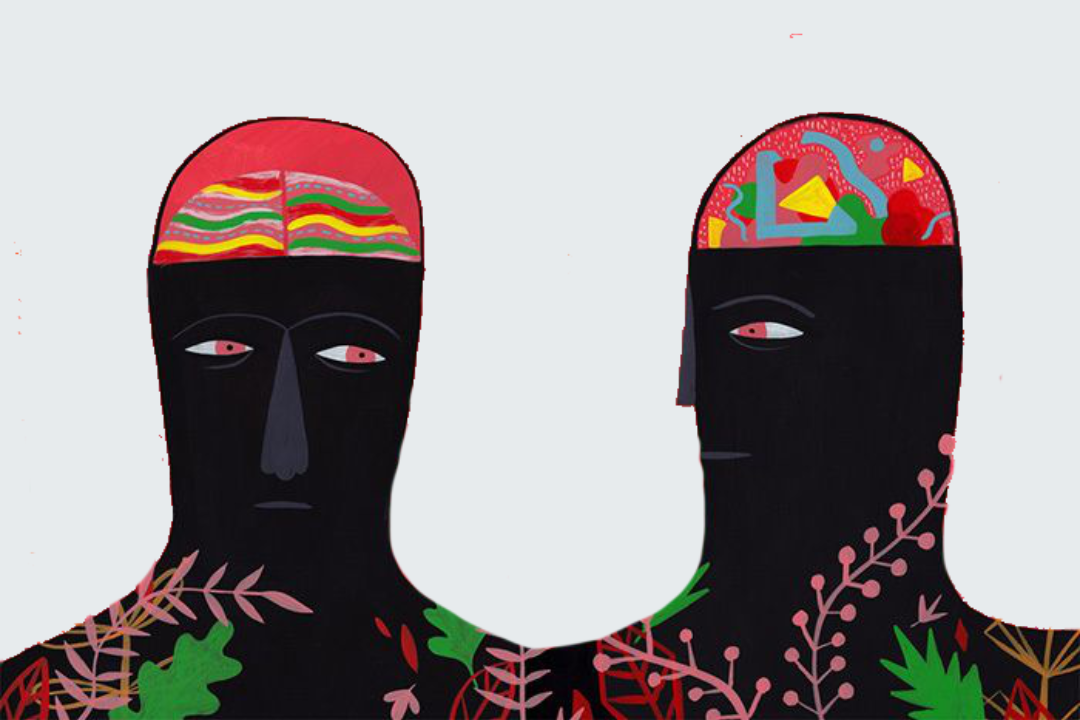
The reality is that the differences in our bodies, minds, perceptions, ideas and likes are normal, because diversity is the true normal.
mental health and bias