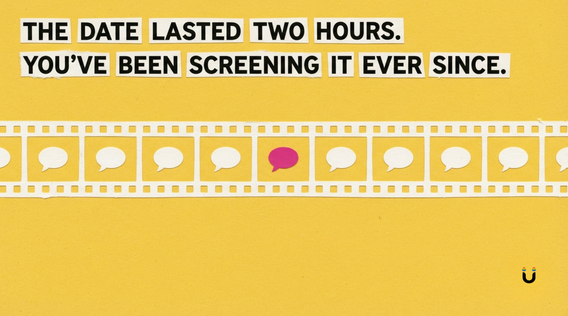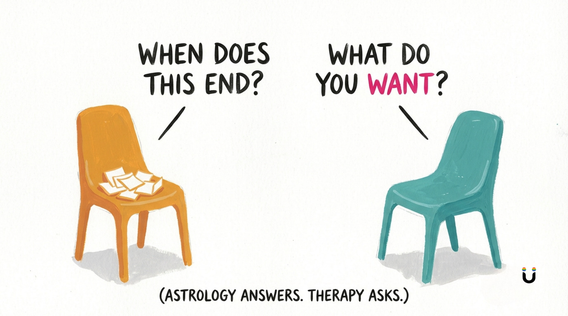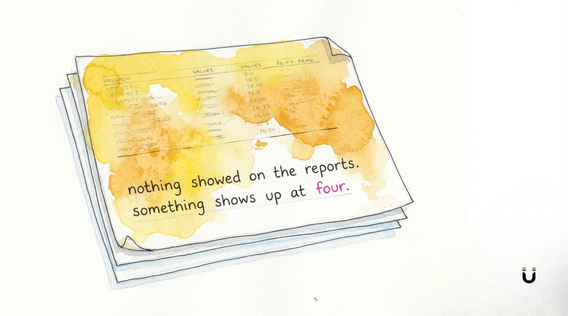
The cruellest thing one of my clients was ever told happened at three months postpartum. Mira (name changed; shared with consent) was crying. She was asking for help. And someone she was married to at the time turned around and told her, I don't know what you are crying about. Women before you have done this. Women after you will. They all survive.
I want to be precise about what that sentence does, because I am writing this entire piece around it. It does not yell. It does not threaten. Read on a page with no context, it is almost philosophical. Which is part of what makes it so disorienting when you receive it at three months postpartum, sleep shredded, hormonally undone, with a baby asleep on your chest and no language available for what is happening to you.
I am, professionally, a psychologist. I have spent over a decade in the room with women in this exact window of time. And I will tell you what I tell them: the difference between the thing that goes away on its own and the thing that does not is not how bad you feel, or how often you cry, or whether you love the baby. (You do.) The difference is time. And, sometimes, the difference is also who is in the room with you when you ask.
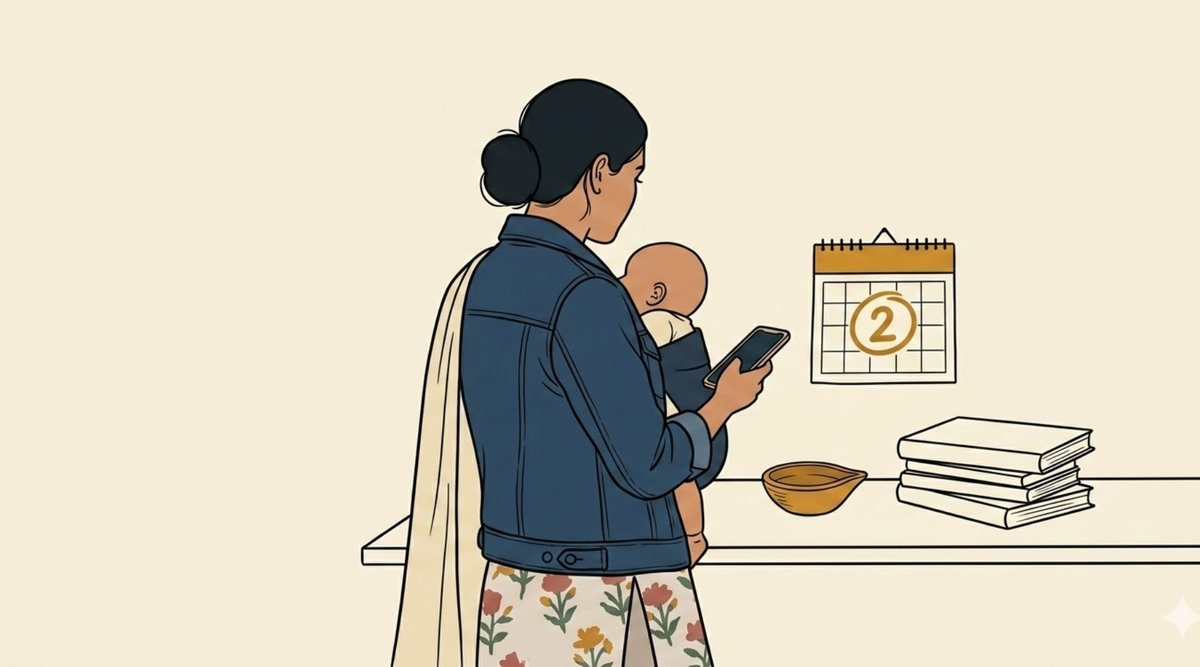
Two weeks. That is the line.
What are the baby blues, really?
Baby blues are a temporary mood disturbance that affects roughly 80% of women in the first two weeks after giving birth. They are caused by the rapid hormonal shifts of the immediate postpartum period and resolve on their own without treatment. If symptoms persist beyond two weeks, the condition is no longer baby blues.
They begin two or three days after delivery. Right around when your milk comes in, your hormones do what one of my supervisors used to call a controlled demolition, and the visitors who came with mithai have gone home to their own beds.
Estrogen and progesterone, which had been doing forty different jobs to keep the pregnancy going, plummet within seventy-two hours of birth. Your body is healing from a wound the size of a dinner plate where the placenta detached. You are also expected to feed a person every two hours and have a sense of humour about it. Of course you cry.
Baby blues look like mood swings that come and go, weepiness without a trigger, irritability, a feeling of being deeply overwhelmed. They do not look like the inability to function. They do not look like a wall between you and the baby.
And they lift. On their own. Within two weeks. The trajectory is downward, not upward. By the end of the second week, you can feel the floor underneath you again. That is the test. If you are getting better, slowly, even imperfectly, what you have is the baby blues.
If you are not, keep reading.
What does postpartum depression actually look like?
Postpartum depression is the baby blues that did not end. It is a clinical depressive disorder that emerges when symptoms persist beyond two weeks, intensify rather than resolve, and begin to interfere with daily functioning. Around 1 in 8 women globally develop it. In India, the WHO Bulletin meta-analysis by Upadhyay et al. (2017) put the pooled prevalence at 22%, and a more recent meta-analysis covering 2020 to 2024 reported 19%. Roughly one in five Indian women, against a diagnostic rate that is far lower.
That is the most useful sentence I can give you, so I am putting it on its own line. Postpartum depression is not a more intense version of the baby blues. It is what happens when the timeline is wrong.
It does not always start in the first two weeks, which is part of why it gets missed. It can show up between weeks four and twenty, sometimes disguised as exhaustion, until the husband has gone back to work, the mother in law has gone back to her own house, and the woman left in the room with the baby realises she has not felt like herself in a very long time.
What I watch for clinically:
A persistent low mood. Not waves, a flat grey baseline that does not lift even when good things happen.
Disconnection from the baby, or so much anxiety about the baby that you cannot put them down.
Trouble sleeping that has nothing to do with the baby. The baby is asleep. You are awake.
A sense of being unrecognisable to yourself. Not changed. Unrecognisable.
Thoughts that frighten you. About not wanting to be here. About the baby being better off without you.
If any of those have been sitting next to you for longer than two weeks, you are not making a big deal.
Why does "women before you have done this" do so much damage?
Because it is doing two jobs at once, and only one of them is honest.
It is, on the face of it, true. Women before us have done this. They have. Some of them did it well. Many of them did it badly and never got to call what happened to them by its real name. The line is technically a fact. What it is not, despite presenting itself this way, is a useful response to a woman crying at three months postpartum.
"Women survive this" can mean two completely different things, and only one of them is helpful. It can mean: you are not alone, this is real, this is hard, you will get through it. Or it can mean: be silent. The first is solidarity. The second is dismissal in the costume of solidarity. They sound, on the surface, almost identical. The fog of postpartum is part of what makes them so difficult to tell apart in the moment.
In Indian families, especially in joint households, this sentence gets weaponised in a particular way. It gets used to mean: do not embarrass us. Do not see a therapist. Do not take medicine. Do not be the daughter in law who could not handle it. The implication, often unspoken, is that asking for help is a verdict on your character.
It is not. It is data.
What if the people I am supposed to tell are part of the problem?
This is the part most articles skip, so I want to name it directly.
Sometimes you tell the person closest to you and they tell you you are overreacting. Sometimes the people who should be the safety net are the reason you are falling. The Upadhyay meta-analysis identified the most consistent risk factors for postpartum depression in Indian women as financial difficulties, domestic violence, marital conflict, lack of support from the husband, past psychiatric history, and the birth of a female baby. None of those are about hormones. All of them are about the room she is in.
If the person you are asking for help is consistently the source of why you need help, that is information about who to ask next. Not information about whether you deserve help. You do.
This is the moment in clinical work where I often watch women try to make their experience smaller so the people around them do not have to feel implicated. It does not work. The depression does not get smaller. The room does not get safer. What gets smaller is her.
So when do you actually pick up the phone?
Call a mental health professional if it has been more than two weeks since the birth and you are not getting better. If you cannot do daily things. If your relationship with the baby feels off, too distant or too anxious to ever put them down. If you are having thoughts that frighten you. If someone who loves you has gently said "I am worried" and your first instinct was to perform okayness rather than agree.
That last one is the most underrated diagnostic sign in my entire practice.
If you are having thoughts of harming yourself or the baby that feel like they are forming a plan, please do not wait. Call iCall on 9152987821 or Vandrevala Foundation on 1860-2662-345. Both are free, confidential, and answered by trained counsellors.
What does recovery actually look like?
It does not look like going back to who you were before. That woman is gone. There is a third person now, and the work is finding her, not retrieving someone she replaced.
For the women I have walked through this with, recovery has usually taken some combination of therapy, sometimes medication, a partner or family member who finally heard what was being said, and a series of small ordinary moments where they chose differently than they had been choosing. Sometimes it has taken leaving a room they had been told they should be grateful to be in.
Two weeks is the line. That part is clinical. The rest of it, who you tell, who listens, whose information you trust, is harder, slower, and more personal than any blog post can answer for you.
But I can tell you this. Asking for help is not a verdict on you as a daughter, a wife, or a mother. It is a verdict on whether you would like to feel better. Most of us would. And the people who tell you that wanting to feel better is itself the problem are giving you information about themselves, not about you.
If you are reading this past midnight with a baby asleep in the next room and a knot in your chest, start with one conversation. With your sister. Your gynaecologist. A therapist trained in this. TTC's therapy team includes psychologists trained in perinatal mental health.
Book a first session with a TTC therapistFrequently Asked Questions
How long do baby blues last after delivery?
Baby blues typically begin two to three days after delivery and resolve on their own within two weeks. They affect roughly 80% of women and are caused by the rapid drop in estrogen and progesterone in the first 72 hours postpartum, combined with sleep deprivation and physical recovery. If symptoms persist beyond two weeks or worsen, it is no longer baby blues and warrants a clinical assessment.
How do I know if I have postpartum depression and not just baby blues?
The clearest difference is duration and trajectory. Baby blues lift on their own within two weeks. Postpartum depression persists beyond two weeks, deepens rather than resolves, and interferes with daily functioning. Other indicators include a flat persistent low mood, disconnection from the baby or extreme anxiety about the baby, sleep difficulty unrelated to the baby's schedule, and frightening thoughts about yourself or the baby.
How common is postpartum depression in India?
The pooled prevalence of postpartum depression in India is between 19% and 22%, according to two systematic reviews and meta-analyses (Upadhyay et al., 2017, and a 2020 to 2024 meta-analysis). This means roughly one in five Indian women experiences clinical postpartum depression, though the actual diagnosis and treatment rate is far lower because of stigma, lack of screening, and family pressure to dismiss symptoms.
What should I do if my family says I am overreacting?
If the people closest to you consistently dismiss your distress, that is information about who to ask next, not whether you deserve help. You can speak directly to your gynaecologist, contact a mental health professional independently, or call iCall on 9152987821 or Vandrevala Foundation on 1860-2662-345. Postpartum depression is a clinical condition, not a character verdict, and you do not need family permission to seek treatment.
Sources
Upadhyay, R. P., Chowdhury, R., Salehi, A., Sarkar, K., Singh, S. K., Sinha, B., Pawar, A., Rajalakshmi, A. K., & Kumar, A. (2017). Postpartum depression in India: a systematic review and meta-analysis. Bulletin of the World Health Organization, 95(10), 706–717.
Mishra, S., et al. (2025). Barriers to mental health in post-partum women in India: A systematic review and meta-analysis. Asian Journal of Psychiatry.
Tosto, V., Ceccobelli, M., Lucarini, E., Tortorella, A., Gerli, S., Parazzini, F., & Favilli, A. (2023). Maternity Blues: A Narrative Review. Journal of Personalized Medicine.