A Spotify Playlist for Every Stage of Change
A Spotify playlist for every stage of change, this piece uses the Transtheoretical Model to explore denial, contemplation, action, maintenance, and relapse with humour, therapy insight, and songs that make the process feel more human.
A Spotify Playlist for Every Stage of Change (Yes, Even Relapse)
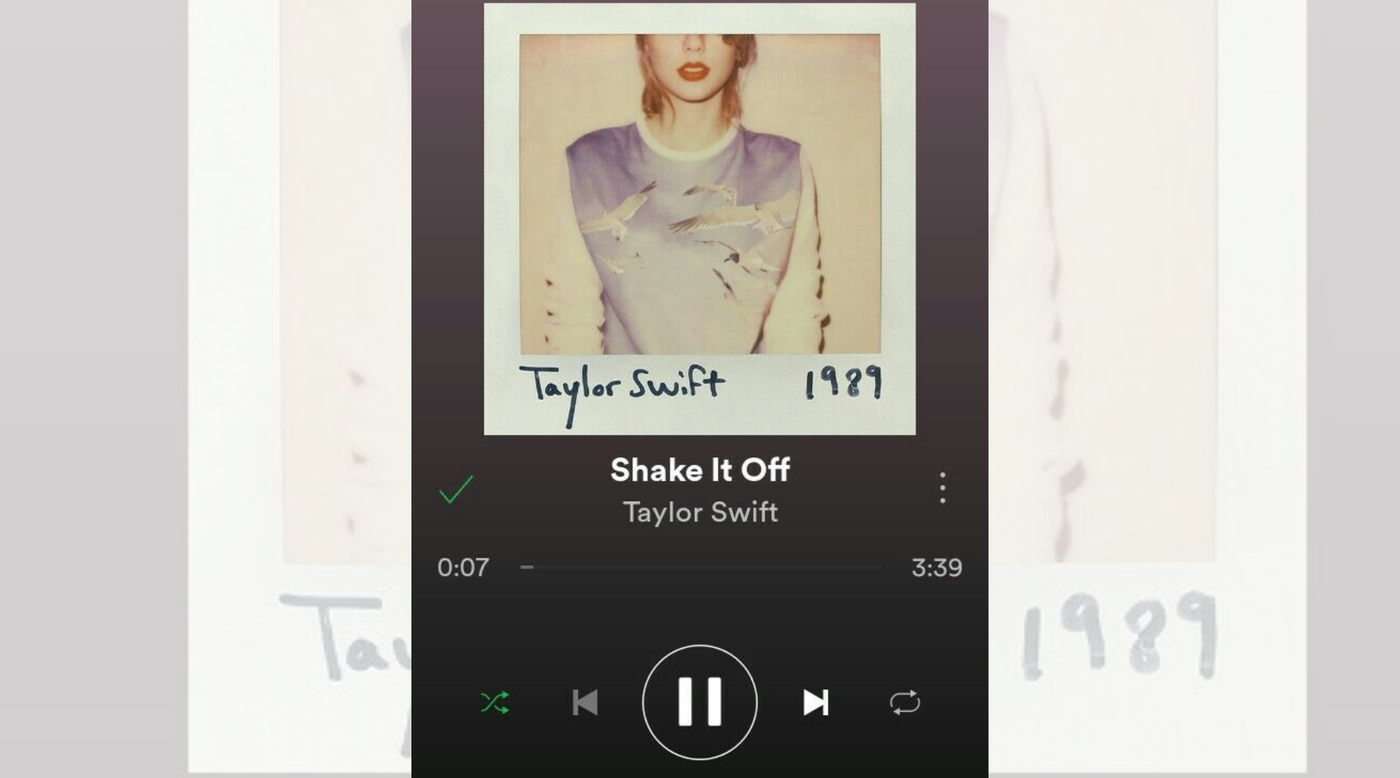
Image: 1989 album artwork by Taylor Swift (2014), photographed by Sarah Barlow and Stephen Schofield. Image found via Pinterest
I’m sure you’ve been there — listening to Taylor Swift for the hundredth time, blowing off steam, thinking Look what you made me do, replaying situations where you felt slighted, misunderstood, or just flat-out furious. Asking yourself: Why me? What did I do wrong? And then it hits you—the uncomfortable realisation that something has to change. That you have to change.
But the moment is fleeting. Bad Blood comes on, and you’re singing along again.
If only change were as easy as flipping to a different track.
Change is slow. Messy. We oscillate between wanting it and dreading the work it requires. I’ve found myself genuinely exasperated with my own process—the resistance (“Why should it always be me?”), the denial (“If it ain’t broken…”), the fear of consequences (opting for familiar pain rather than risking new pain, because at least the familiar kind doesn’t rock the boat).
As much as I’d like change to arrive like a moment of clarity—a realisation, a resolve, a clean break—like going from Bad Blood to Shake It Off at the push of a button, the reality is far less cinematic.
What did help me, though, was understanding that change is a process—and recognising where I am in that process. That reframe was surprisingly relieving. It helped me make sense of my resistance, my ambivalence, my setbacks—not as a failure of willpower, but as part of how change actually unfolds. It also helped me see that different parts of me can be at different stages at the same time. Some parts I feel settled about. Others are still in progress.
The model I’m talking about is the Transtheoretical Model of Change—TTM, if you prefer something snappier. Developed by James Prochaska and Carlo DiClemente, TTM maps how people move through change. The short version: change doesn’t happen all at once. We move through a few recognisable stages—thinking about it, getting ready, taking action, keeping it going, and sometimes, stumbling along the way.
The five stages are:
Precontemplation
Contemplation
Preparation
Action
Maintenance
Relapse is often added as a sixth, informal stage—not because it’s inevitable, but because we’re human and setbacks are a normal part of the process.
Change isn’t easy. But we can still build a playlist for the journey—one for each stage. You might love it, tweak it, or ignore it entirely. Either way, I wanted to have a little fun with this, and maybe show that navigating change doesn’t have to be entirely grim.
Stage 1: Precontemplation — “This Is Just How Things Are”
For Neha, burnout was a lifestyle. The nature of her job—or so she told me. Her bosses were unempathetic, her colleagues were passive-aggressive bullies, and her friends never really understood her. She came into therapy after an outburst at work: dysregulated and furious, she lashed out at a colleague and received a formal warning for hostile conduct. She spoke about unfairness, provocation, and workplace politics.
She also mentioned, almost in passing, that this had been a recurring experience across all five workplaces she’d been in over the last seven years.
The common denominator, at least for now, remained invisible to her.
Precontemplation is the stage of blissful unawareness. The problem is always out there—in other people, in circumstances, in bad luck. Things are happening to us. Our patterns feel normal, inevitable, justified. Any negative consequences are minimised, intellectualised, or blamed on someone else. “We’ll stare directly at the sun but never in the mirror.”
The soundtrack here?
Look What You Made Me Do.
Oh no, Oops!… I Did It Again. Oh well, It Wasn’t Me. Next, We’re Waiting On The World To Change, itching to place the blame on Somebody That We Used to Know—while remaining entirely unbothered by our own role in any of it.
Some more songs for this playlist:
Anything that explains away distress
Songs that blame circumstances or other people
Songs about feeling stuck and helpless, with no curiosity about alternatives
Stage 2: Contemplation — The Tug of War
This is when you start to notice that the common denominator might actually be the person staring back at you in the mirror.
And so you think. And think some more.
There’s awareness now—an acknowledgement that something isn’t quite right. For some of us, that’s enough to move toward action. For most, we linger here. We talk ourselves back into thinking the problem isn’t really a problem. Or we explore it from every angle without actually doing anything about it.
We oscillate: It’s My Life, I Did It My Way—and then, briefly, we glimpse at the Man in the Mirror—before circling back to wondering if we were even right to start questioning things. Maybe things were better before. Maybe, if we could recreate what once was, we’d be fine. Overthinking, we decide, is probably the real problem. We are the embodiment of the lyrics of Mamma Mia—we have the self-awareness to see our pain, yet we seem to run towards our patterns instead of away from them.
This can go on for months. Sometimes longer. The tricky thing about contemplation is that it feels productive. There’s insight. There are realisations. Books, podcasts, late-night conversations. None of it technically counts as action—but we’re at least talking about it now.
Songs for this stage are thoughtful, introspective, and… inconclusive. They sit with the problem without resolving it—like Anti-Hero on loop, or Pam Tillis’s Cleopatra, Queen of Denial, if you want to get specific.
Stage 3: Preparation — Testing the Ground
Something has shifted.
The benefits of change—however uncomfortable, inconvenient, or ego-bruising—have started to outweigh the comfort of staying the same. “It’s me. Hi. I’m the problem; it’s me.” It stings. But we’re past just thinking about it.
We begin to suit up. That looks different for everyone—self-help books, asking friends about their therapist, Googling what’s worked for others. Podcasts, Instagram accounts, YouTube rabbit holes. A vision board of the person we’re trying to become.
This stage matters more than it gets credit for. Think of it as the getting-ready phase before the newer version of you steps into the ring against a formidable opponent: your old self. Your old patterns.
That version of you is experienced, strategic, and stubborn. It knows exactly how to pull you back to the familiar—especially when you’re tired, lonely, or stressed. Preparation means studying that opponent: how it shows up, what situations wake it up, what excuses it reaches for. Not to destroy it—to understand it.
Because when you slip — and you will — the goal isn’t to be surprised. It’s to recognise the move. To say “Ah. That’s where I slipped. That’s what still needs work” instead of “This is just who I am.” Preparation helps you expect the slip, so it doesn’t become a surrender.
The preparation playlist starts with Eye of the Tiger, obviously. Add whatever gets you moving after that. Anything that makes difficult things feel possible. You need songs to amp you up, songs with the energy of Thunderstruck, and Immigrant song, and (only) if you are in the mood for some drama, maybe some Muse.
Stage 4: Action — Moving With Fear
In the action stage, change becomes visible.
We gather our courage and actually try. Behaviours shift. Boundaries get tested. Old reflexes get interrupted. And—importantly—action rarely feels confident. It’s anxious, uncertain, and sometimes immediately followed by the urge to take it all back.
A fight is happening—sometimes internally (old ways against new ways), sometimes externally (people close to us adjusting to how we’re showing up differently). Avoiding certain situations. Saying no. Not making amends you don’t owe. Not drunk-dialling your ex.
For this stage, you need some encouragement. Some courage. Some Sara Bareilles — Brave. Some Fight Song to keep you going. If you’re walking away from old patterns and people, a little Nancy Sinatra energy never hurts, and you sometimes have to be the “Bad Guy” when you have to do good things for yourself, so we can also get the Billie Eilish energy. When things need to get really intense, I resort to Knights of Cydonia by Muse. No judgements.
Stage 5: Maintenance — Staying With Yourself
Maintenance is the most underrated stage of all. No fanfare, no breakthrough—just the quiet, daily work of keeping the change alive. Continuing to choose the new thing, even when the old thing feels easier.
The challenge is sustaining momentum when the initial motivation has faded, when stress creeps back in, when you start wondering why you’re doing any of this. The work continues, silently, with no applause.
This is where you call in Miley: you can buy yourself flowers, write your name in the sand, maybe love yourself better than anyone else can. Songs that make you feel capable, grounded, and quietly proud. Songs that remind you you’re still going, even when no one’s watching.
A really meaningful song for me here that I feel a little embarrassed to share (but am going to any way) is Rob Thomas’s Little Wonders, which really capture the magic of this stage, and when I am in a maintenance stage with changes I am holding in myself that move me closer to expressing myself, Animal song is very close to my heart. It's the song of my inner child, a song that reminds me what I am doing all of this for.
Relapse — Read It, Don’t Run From It
Relapse is the part of change that nobody puts on Instagram. It’s the quiet moment when you do the thing you said you wouldn’t, and you feel your heart drop to your gut. You want to curl into a ball—but you’re also so angry with yourself that you can’t. And the thought creeps in: after all that work, I’m right back here again.
What’s actually happened is that your body defaulted to a familiar pattern before your brain could catch up. Usually under stress, exhaustion, or both. What follows tends to look like discouragement and shame, and a creeping suspicion that the change was never really real.
But when relapse is understood as information—a data point, and not a verdict—it deepens insight and strengthens future change. You find out where the gaps are. Which situations still have a pull on you. That’s useful. That matters.
The soundtrack for this stage needs to do two things at once: sit with you in the feeling and nudge you gently toward hope. Fix You or Angel for the drop in your stomach. REM’s Everybody Hurts for the solidarity. Johnny Cash’s Hurt for when you need to really feel it. And Lift Me Up by Rihanna when you’re ready to come back. A song that fits beautifully in this stage and introduces some hope (and is probably the spirit you want to embody) is Shake It Out, by Florence + The Machine.
Remember, relapse doesn’t send you back to the beginning. It usually sends you back to contemplation or preparation—but with more information than you had the first time. And that matters.
So… Change Isn’t a Moment
Well, not for everyone. And, not for most of us.
For Neha, it was a few months into therapy and a lot of frustration till she was able to confront the common denominator of her workplace problems—herself and her deep-rooted fear of being wrong.
For me, I find myself at different stages with different parts of my life. The part of me learning to speak up and advocate for myself moves between preparation (usually in therapy), action (when I actually manage to say what’s on my mind in the moment), and maintenance (checking in on self-censoring, having honest conversations in relationships). With physical fitness, I’m somewhere between preparation and action—haven’t made it to maintenance yet. And there are parts of me probably still in precontemplation, entirely unbothered about needing to change at all.
What TTM gave me was a way to hold all of that without collapsing. My idea of change had been idealistic—a clean switch, a before and after. The model showed me I was already moving through it. Slowly. Messily. Sometimes sideways.
Some parts of me are in action. Some are still contemplating. Some are maintaining. And some are absolutely not interested right now. And that’s okay.
Change is rarely one decision. It’s a hundred small, inconvenient choices made in quiet moments, by a nervous system that is, above all else, trying to keep you safe. Growth doesn’t usually feel like courage. It feels like hesitation, discomfort, doing the thing anyway, while every part of you argues for the familiar.
The most powerful question to start with isn’t Where should I be? It’s Where am I — right now—in this process?
Want a place to hold what this stirs up?
If this piece leaves you thinking about where you are in your own process, the Gratitude Journal can help you stay with the work a little longer. It is a simple place to notice patterns, track what is shifting, and return to yourself with more honesty.
Explore the Gratitude Journal