
I never found a grief tool that spoke to an Indian context until this. The prompts were honest, the tone was warm and I finally felt seen.
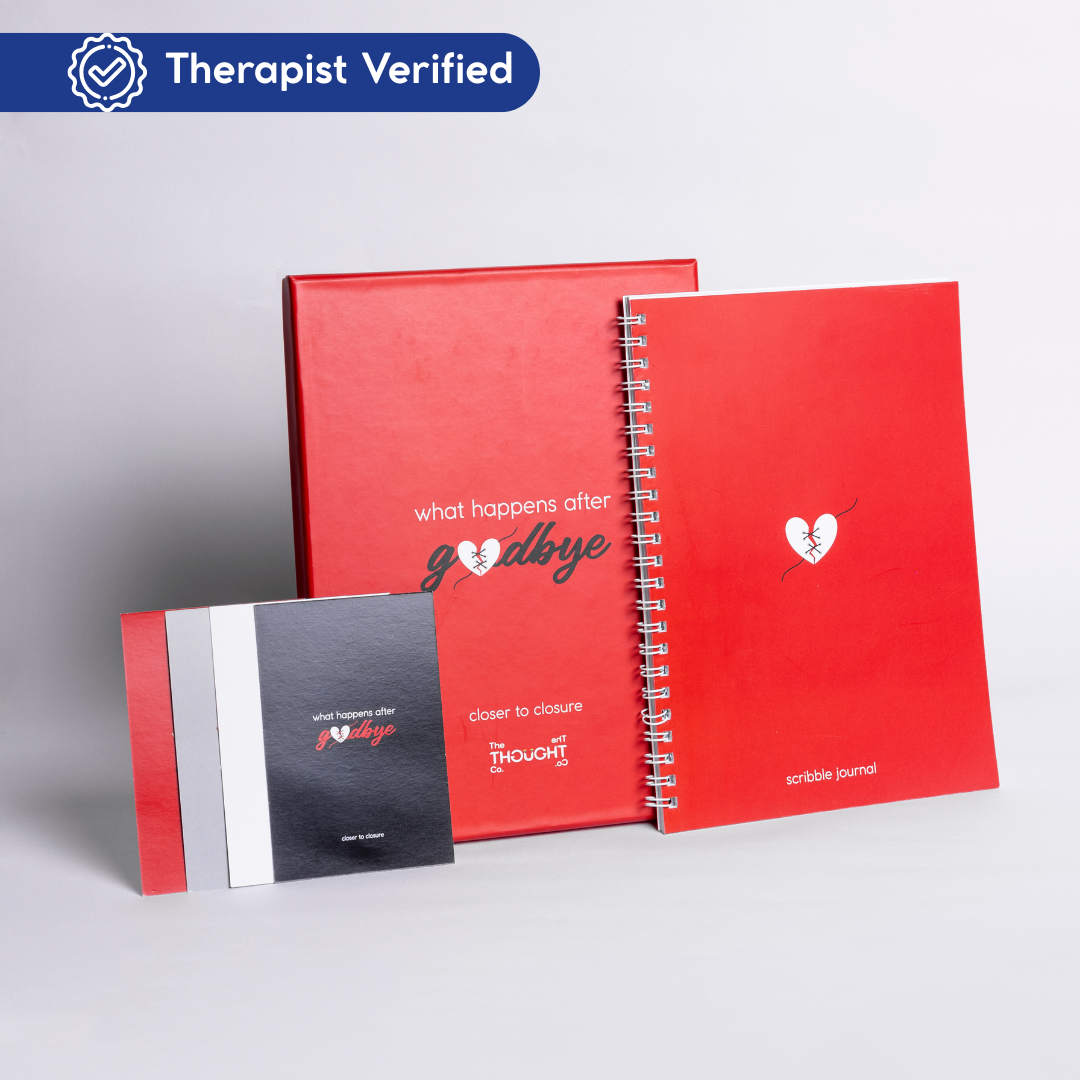
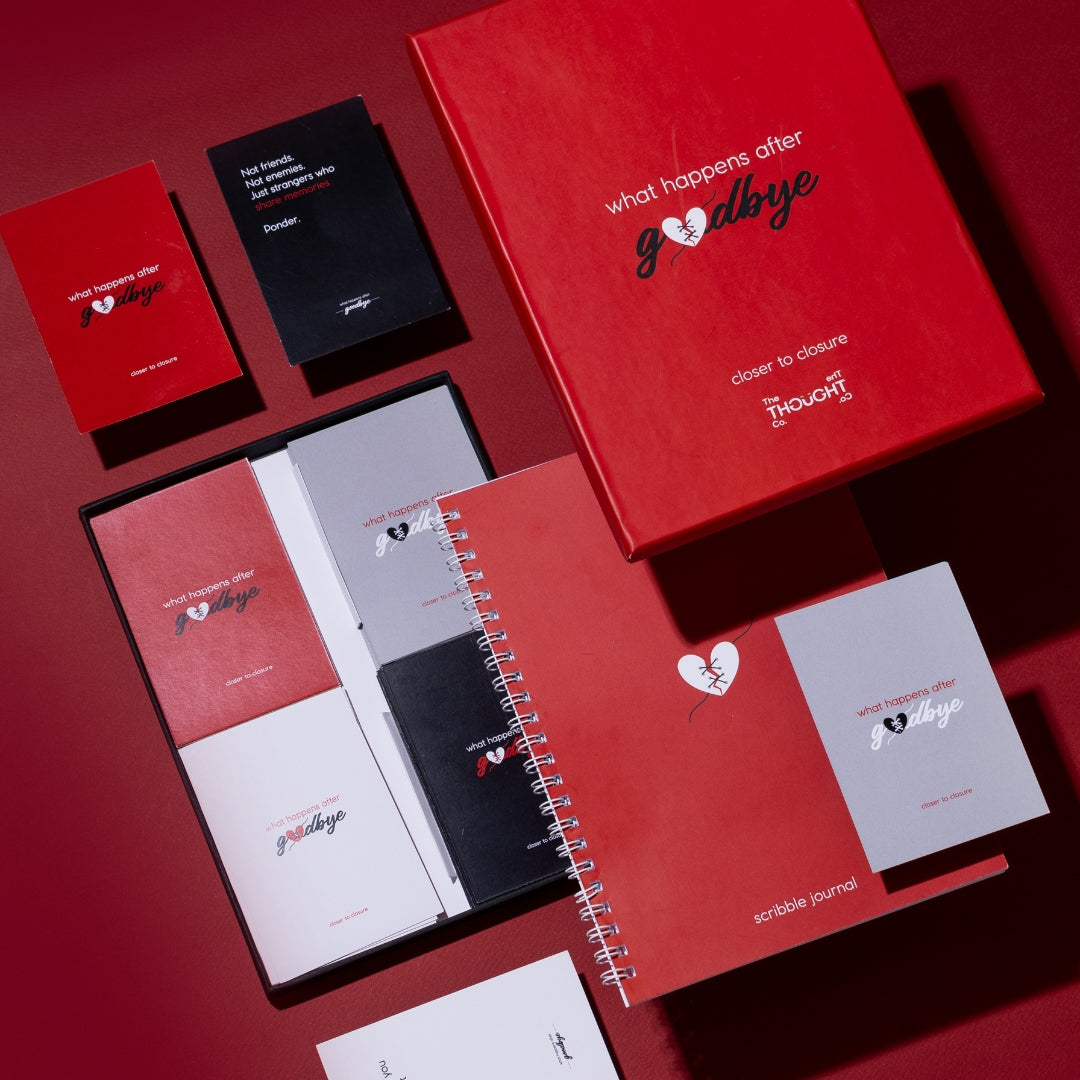
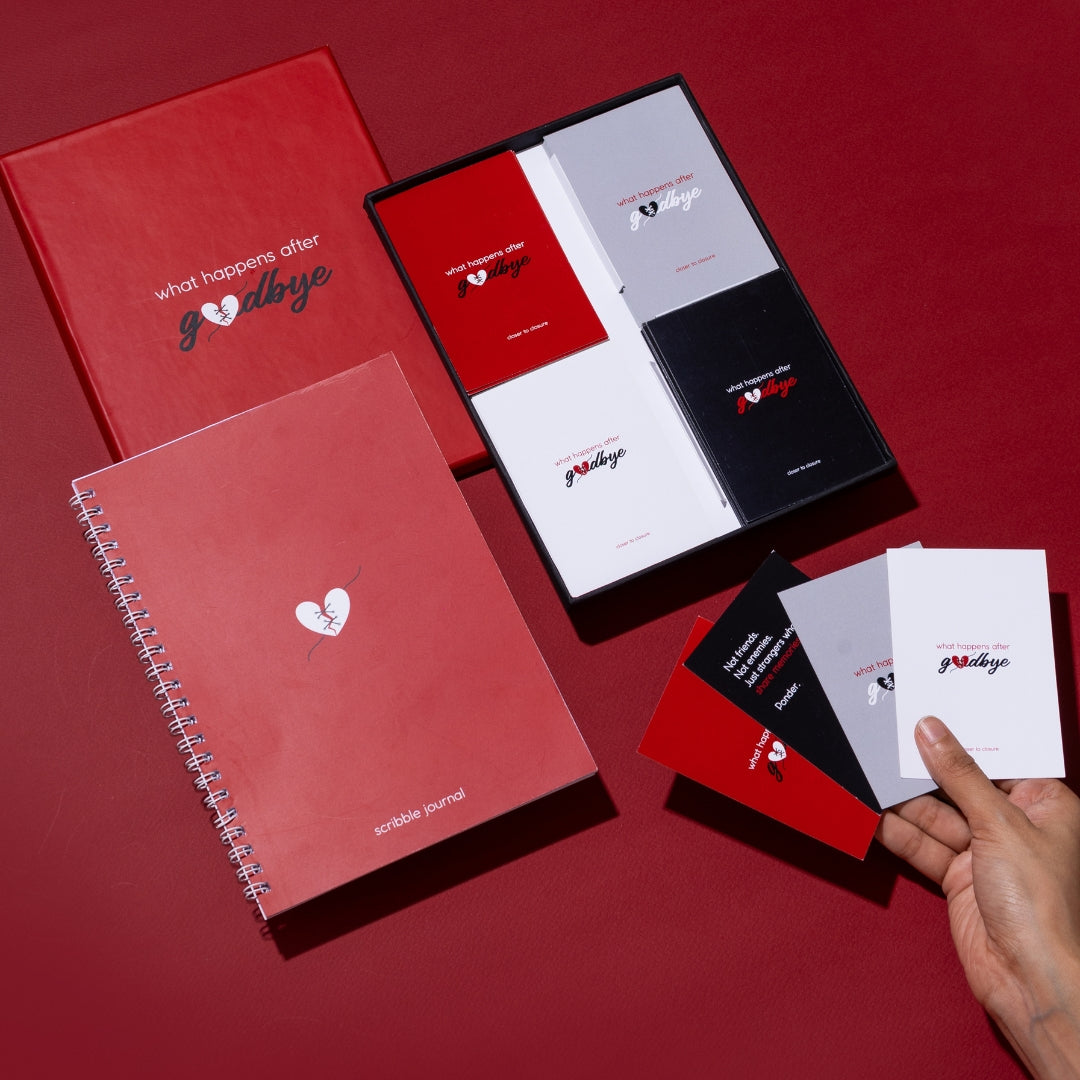

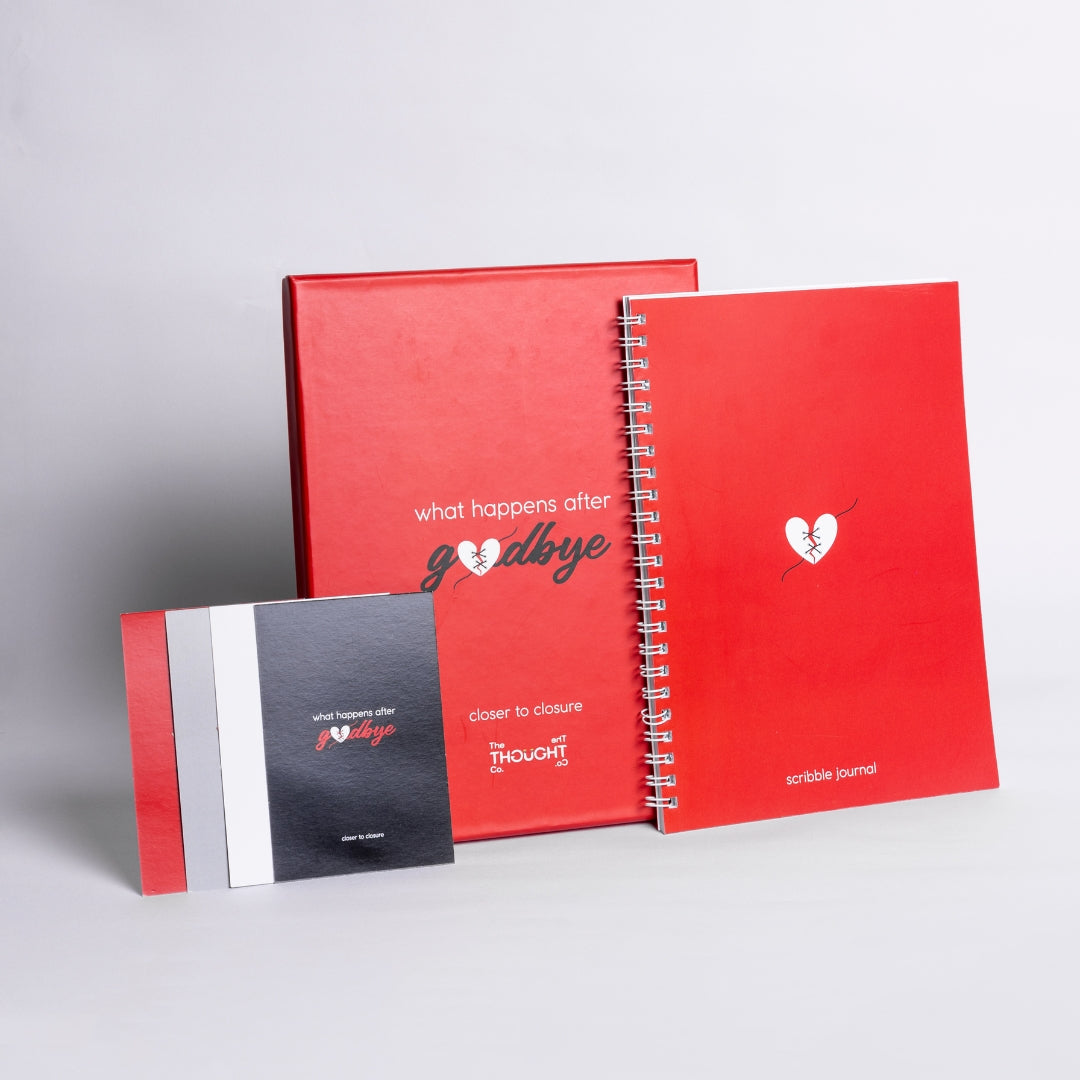
A card deck and a journal
What happens after Goodbye?
No candles. Just cards and a pen.
For the stage after the crying has slowed down and the replaying has started. Four decks of prompt cards and a spiral journal, built by TTC's psychologists, for working through a breakup at your own pace.
- 4 decks, 1 journal
- CBT + narrative prompts
- No schedule, no deadline
Rs. 800.00
Ships across India in 2 to 4 days
- Format
- Four decks of prompt cards (red, grey, white, black) and one spiral bound journal, in one box
- Method
- CBT, narrative therapy and mindfulness prompts, written by TTC's psychologists
- Time
- 10 to 15 minutes, a few times a week. No deadline, no streak to keep
- Best for
- Breakups, divorces, and relationships that ended without a real conversation
What's in the box
Four decks of prompt cards, in red, grey, white and black, and a spiral bound scribble journal to write your answers in. You pull a card, read it, and write. Some ask you to finish a sentence. Some give you a line to sit with for a while. One of them reads: “Not friends. Not enemies. Just strangers who share memories.”
Why writing helps
A breakup leaves you with a conversation that never got finished, and your mind keeps trying to finish it at 2am. The cards give that conversation somewhere to go. Each prompt takes one piece of the breakup, such as what you miss or what you keep telling yourself, and asks you to put it into words. Writing about a painful event in short, structured sittings is one of the better studied habits in psychology, going back to James Pennebaker's research in the 1980s. It will not make you miss them less overnight. It stops the same thoughts from circling unexamined.
Who it's for
Anyone getting over a breakup, a divorce, or a relationship that ended without a proper conversation. It's a fair gift for a friend going through one, for when you don't know what to say.
People also use it for other kinds of endings, but the cards were written with relationships in mind, so if you're grieving a death, start with the prompts in the photos first.
How to use it
Pick a time when nobody needs you for fifteen minutes. One card at a time, from any deck, in any order. Write whatever comes first in the journal. Three sittings a week is plenty. If a card is too much today, put it back and take another. There is no order, no deadline, and nobody checking.
If you want the longer read first, start with our guide on how to get over a breakup. If it's getting in the way of your sleep, appetite or work, you can talk to one of our psychologists.
This will not give you closure.
Closure is a word marketing uses. Most breakups do not get a tidy final conversation or a clean, done feeling. What these cards give you is somewhere to put the conversation you never got to have, in the hardest ten minutes of your week.
We know that's an odd thing for a product page to say.Our tools support reflection. They are not therapy and do not diagnose anything. If you are struggling, Tele MANAS (14416) is a free and confidential government helpline, open all day and night, across India.
Rs. 800.00
This Emotional Wellness Tool Helps You:
Practical, psychologist-designed ways to feel grounded and clear.
What people say
Loved by thoughtful humans
I’m not a big ‘journalling’ person—but the CBT exercises through journaling helped me shift from self-blame (“I should be over this”) to self-care.
After my breakup I felt invisible. Working through the rituals reminded me that I still exist, beyond the relationship.
I use it alongside sessions with my therapist. The monthly check-in tool helped me notice patterns I’d missed between appointments.
In Mumbai’s 24/7 rush, the mindfulness pages offered 5-minute pockets of calm. Thank you for making this.
Because great things rarely travel alone.
Pairs well with
Handpicked add-ons our therapists actually use.
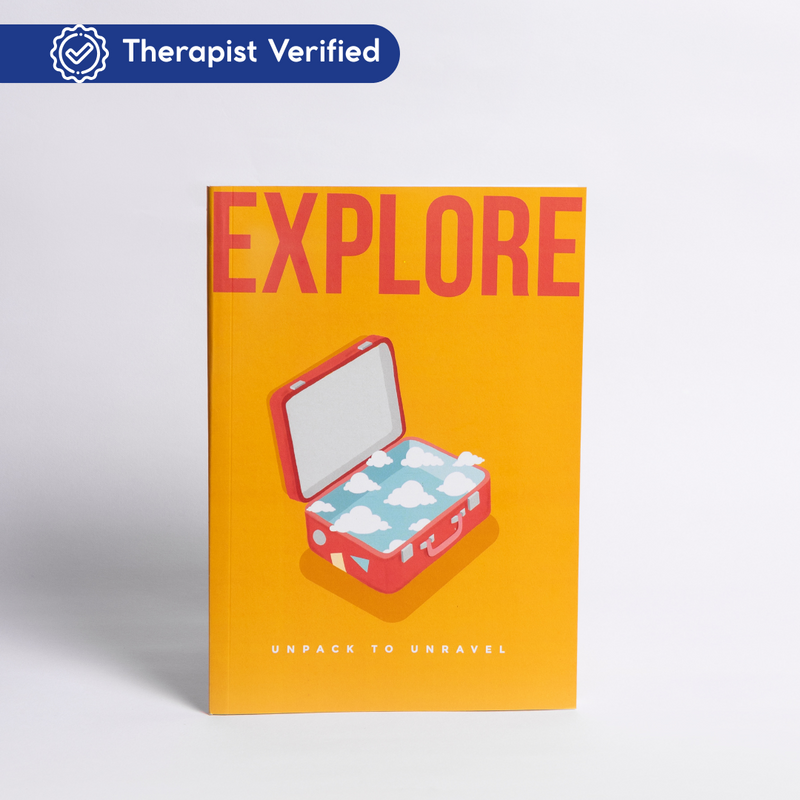
Explore: Unpack to Unravel (Self-exploration Journal)
Rs. 999.00
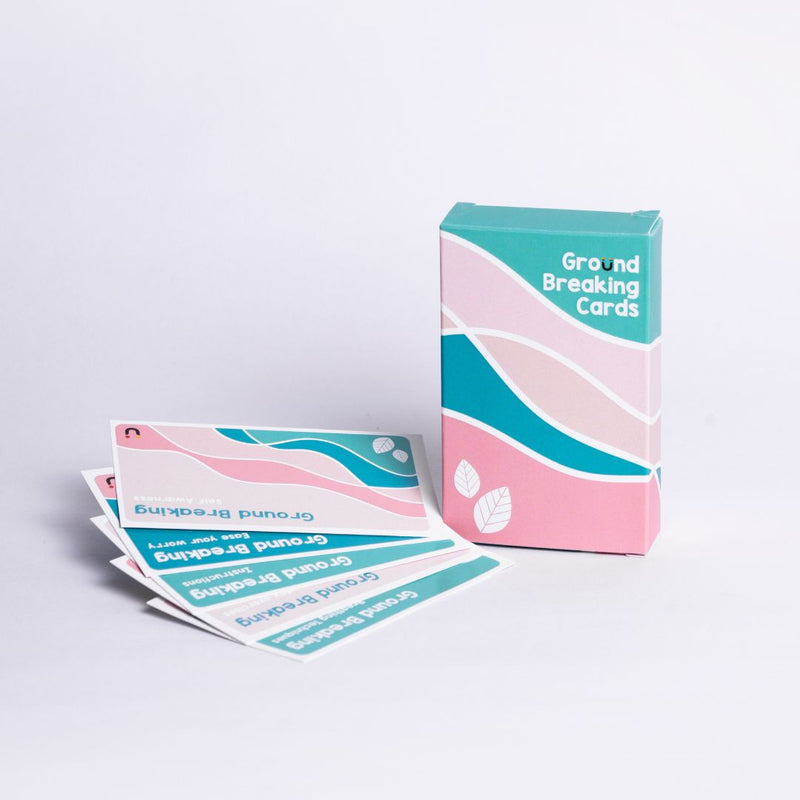
Ground Breaking - Mindfulness Cards
Rs. 500.00
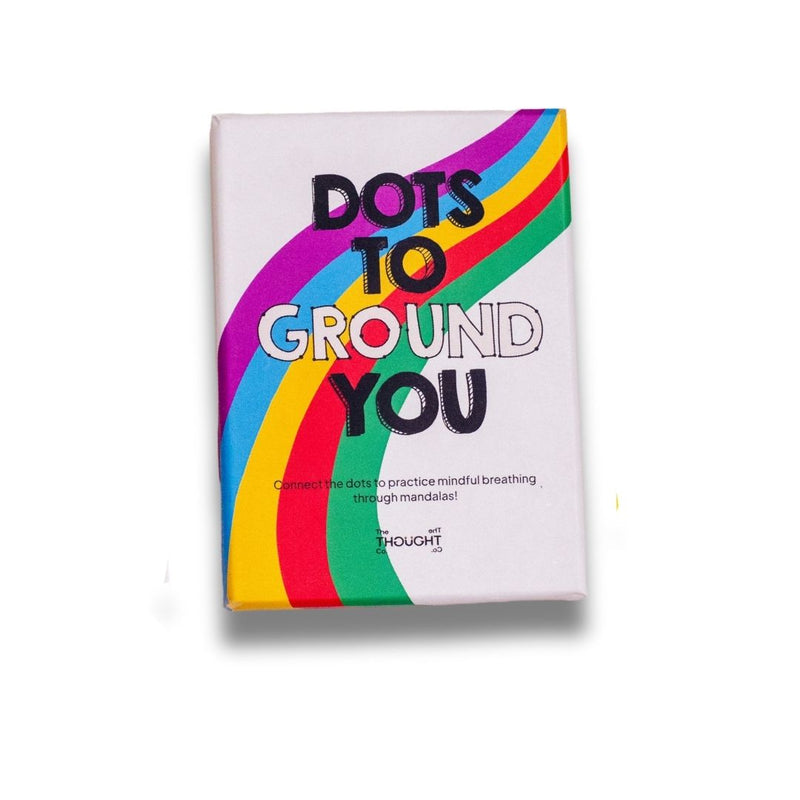
Dots To Ground You
Rs. 800.00

Behind the design
Why we build tools for feelings (not just vibes).
When I first trained as a therapist in India, one of the recurring narratives I met was this: “I’ve lost someone, but the world expects me to move on. I can’t talk. I’m supposed to be okay by now.” I realised that while there are many resources for grief, few are built for the Indian urban professional who’s emotionally savvy — and yet lonely in their experience. That’s why we created What Happens After Goodbye? — a grief journal rooted in therapeutic frameworks (CBT, narrative therapy, mindfulness) and designed with the city-dweller in mind. We tested it with clients, refined the language, added prompts that refer explicitly to Indian cultural touchpoints (festivals, family expectations, work-life pressures). We wanted this to feel less like “another self-help book” and more like a safe, quiet companion—one you can carry, open, pause, breathe into. My hope is that this journal gives you back your voice when all you’ve heard is ‘you should be fine now’. Let it help you re-find your rhythm, reconnect to meaning, and carry your goodbye gently into your becoming. Warmly, [Founder’s Name], Founder & Lead Clinician, The Thought Co.
~ Priyanka Varma
Founder, The Thought Co.
Therapist-led
Radically honest
FAQs
Common questions about confidentiality, setup speed, and formats.
Is this journal only for bereavement?
Not at all. While it covers death and loss of a loved one, it is equally suited for endings such as relationship break-ups, job identity loss, migration, or any major life chapter that ended.
We initially conceptualised this for break-ups but research and experience showed us that the end of the emotional intensity experienced with the end of a relationship is similar
Do I need a therapist to use this?
No. It’s self-guided and thoughtfully designed for independent use. That said, if you are in therapy, the journal can complement your sessions very well.
It can serve as a companion in your therapeutic journey.
How long does it take to complete?
he structure spans approximately 8–10 weeks if you use it regularly (3 sessions/week), but there’s no strict deadline. Go at your pace.
You decide the pace. It's your journey.
Is it culturally relevant for India?
Yes. The language, references, and resource list have been localised for Indian emotional-wellness contexts while maintaining a globally informed therapeutic foundation.
We embrace our desi-ness and recognise we need to contextualise emotional care for ourselves.