Why Sitting Is a Radical Act of Self-Love
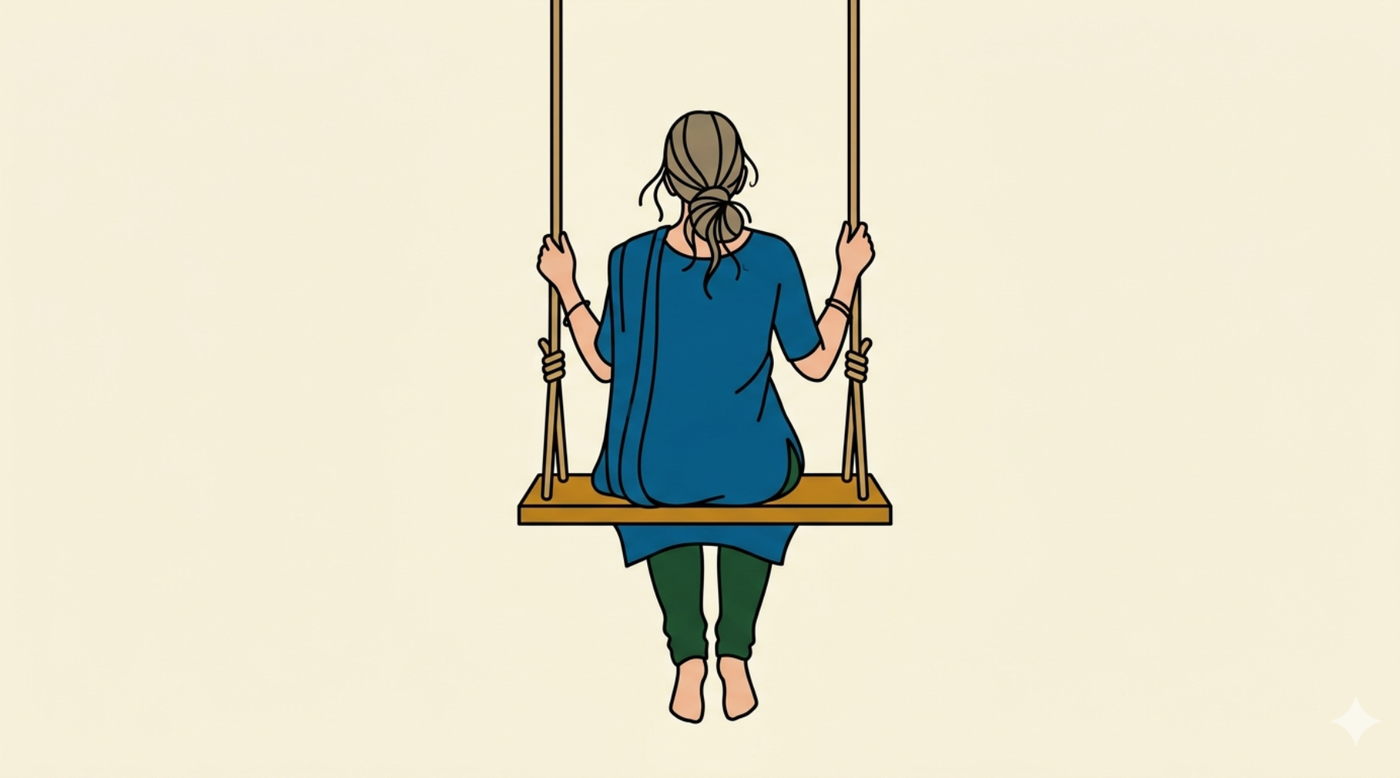
Image Source: AI Generated
I've been doing something strange lately. I've been letting myself be angry. Partly because our editor said you get better blogs that way — but if I'm being serious, I've been recognising the toll that swallowing my anger has taken on me and my relationships. The quiet shut-downs. The self-censorship. The slow, suffocating build of resentment.
Anger from a girl? Inappropriate. Unpleasant. Arrogant. The threat of rejection always lurked somewhere nearby. Good people always accommodate was the insistent voice in my head, and anger made me ugly, ungood, and very, very difficult.
So, I paid for that flawed understanding with a protective part of myself, and now I'm trying to take it back. Conceptually, I thought expressing anger would be easy. Being angry with someone means it's their fault, right? I could just adopt a righteous stance and let it rip.
Turns out, it’s not.
Expressing hurt and anger, especially to the people I'm closest to, has been one of the hardest things I've done. My version of anger expression used to follow a predictable arc: absorb, explain away, distort, deny, absorb some more. Until I couldn't hold it anymore, and then it came out sideways. An explosion. Followed by shame. Followed by the familiar cycle of self-berating that would keep me company for days.
The first time I actually said it
One of the people I was recently angry with was my therapist. This sounds small, maybe even obvious. Of course, people get angry with their therapists. But for me it wasn't. In the past, I would deny it, then cautiously admit it while immediately softening the blow: yes, I think I'm angry with you, but... The "but" was load-bearing. It was where I kept my escape hatch.
This time was different. For the first time, I said it plainly: I am angry with you. I feel hurt by what you said. The words left my mouth, and my heart lurched. Every instinct in me rose to take it back. No, it's not your fault, I'm too sensitive, I should have understood better. I didn't act on any of it. I told him about the impulses instead of following them. I sat with the fear that he'd find me insolent, ungrateful, difficult. That he'd leave.
He didn't leave. He apologised. A potential rupture became something else: a repair, and one of the stranger moments of quiet pride I've felt in my own therapeutic journey.
It was only afterwards that I understood what had made it possible. I hadn't fixed it, explained it away, or reached for the exit. I had just sat there, with the discomfort, with the fear, with the anger, and let it be. That was it. That was the whole thing.
Why this is actually brave (and I don't use that word lightly)
I work as a therapist. I watch people do this kind of thing, turn toward the uncomfortable rather than away from it, and I find myself genuinely moved by them. There is nothing glamorous about it. It is not a glow-up. It is painful and, at times, feels almost masochistic. But people who choose to sit with their own discomfort are doing something very difficult, and I think they deserve to know that.
Sitting with yourself, really sitting, not fixing or fleeing or reframing, means letting yourself feel the full range of what you actually feel. Not just the pleasant stuff. The jealousy, the helplessness, the quiet resentment toward people you love, the grief you've been deferring for years. The deep fear that if you let yourself be fully seen, something will fall apart.
A lot of therapy is just that: running away from yourself, and then slowly coming back.
Your brain is working against you (with good intentions)
We are not, as a rule, honest with ourselves. We think we are. We have a whole story about what kind of person we are, how we feel, and why we do the things we do. But there is a part of the mind, active, tireless, mostly unconscious, that is constantly scanning for anything that threatens that story and quietly dismantling it before it reaches us.
It distorts. It reframes. It buries things underground and reshapes them until they're something you can live with.
Anger at someone you love? Converted into self-criticism, because that's much safer. Helplessness? Replaced with rage, because at least that feels like power. Something you don't like in yourself? Projected outward, onto someone else, where you can hate it at a comfortable distance.
Think about the last time you felt something and immediately talked yourself out of it. Maybe it was envy you quickly reframed as concern. Maybe there was a sadness you couldn't quite name, so you got busy instead. Answered emails. Started three projects. Cleaned the kitchen at 11 pm. Your brain isn't malfunctioning when it does this. It's doing exactly what it was built to do: protect the story you carry about who you are.
Most people let it. They go their whole lives without ever turning toward the thing the brain is working so hard to keep hidden, and that is not a moral failing. The brain is very good at its job.
But some people turn toward it anyway
They move past the distortion, the deflection, the frantic busy-ness, toward a truer understanding of themselves, their feelings, their relationships, and how their life has shaped them. They let themselves actually feel it, in their body, not just as an intellectual exercise.
That is not a comfortable project. Nobody signs up for it on paper. But in choosing to stay, with the inadequacy, the ordinariness, the deep and embarrassing messiness of being human, something shifts. You become, incrementally, more honest. More present. More yours.
The more human you let yourself be, the more it sucks.
And sitting with that sucky feeling, the vulnerability, the ordinary and the messed up bits, turns out to be one of the most loving things you can do for yourself.
If staying with your feelings feels unfamiliar, start small
Sometimes the hardest part of emotional honesty is knowing where to begin. A structured prompt can make it easier to notice what you are feeling instead of explaining it away.
The Sunny Side Up Affirmation Cards were designed by psychologists to help you pause, name what is happening inside you, and respond with clarity instead of self-criticism.
They are not about forced positivity. They are about learning how to stay with yourself long enough to understand what you actually feel.